OECD Urges Stronger Targets and Accountability to Tackle Food Waste
Only a handful of countries currently use both the FAO Food Loss Index and UNEP Food Waste Index, the two leading international benchmarks.
November 13, 2025
G
overnments must strengthen and clarify their commitments to reduce food loss and waste (FLW) if the world is to meet the United Nations Sustainable Development Goal of halving food waste by 2030, the Organization for Economic Co-operation and Development (OECD) warned in a new report released Wednesday.
The report, Achieving Food Loss and Waste Reduction: From Targets to Action, finds that while many countries have made progress in measuring and addressing food waste, policy commitments remain fragmented, poorly coordinated, and often lack measurable outcomes.
According to the OECD, most governments have adopted broad national FLW reduction targets, but only a minority have set quantifiable goals with clear baseline years and delivery timelines. About one in four countries does not specify a target year, and most fail to identify a baseline, making it difficult to measure progress or hold stakeholders accountable.
“Countries have stepped up to the challenge, but many are still relying on soft measures and voluntary commitments,” the report says. “More precise, measurable targets — and stronger policy coordination — are urgently needed to turn ambition into action.”
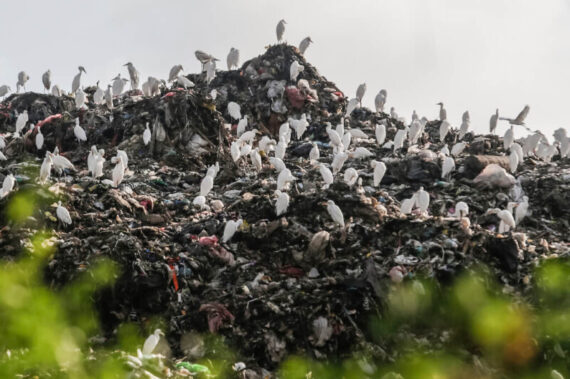
Food waste remains a vast and persistent global problem. The OECD notes that the UN Food and Agriculture Organization (FAO) first estimated in 2011 that around 30% of all food produced is lost or wasted, and according to the UN Environment Program (UNEP), households alone threw away over 1 billion meals per day in 2022.
The scale of the issue has major social, environmental, and economic implications. Food loss and waste contribute roughly 8–10% of global greenhouse gas emissions, while hundreds of millions of people face food insecurity.
OECD modelling shows that achieving SDG target 12.3 — halving per capita food waste and reducing supply chain losses by 2030 — could cut agricultural emissions by 4% and lift 137 million people out of hunger within the next five years.
Despite this, progress has stalled. The report highlights that few countries have included FLW reduction in their Nationally Determined Contributions (NDCs) under the Paris Agreement, and most rely on awareness campaigns or voluntary industry pacts rather than binding laws or fiscal measures.
The OECD warns that the proliferation of overlapping initiatives — what it calls “policy layering” — risks undermining effectiveness. Many countries now have five or more separate policy instruments to tackle food loss and waste, yet these are often implemented in isolation and without coordination across ministries or supply chain sectors.
“When strategies multiply without coherence, stakeholders struggle to understand what they are expected to do,” the report cautions.
Household and retail stages receive the strongest policy attention, typically through soft approaches such as public information campaigns and voluntary collaboration initiatives. By contrast, primary production and post-harvest handling — where substantial losses occur — receive far less policy focus.
Governance structures also complicate coordination, with responsibilities spread across ministries for agriculture, environment, and consumer affairs. This fragmentation makes it harder to track outcomes and assess which measures actually work.
The OECD points to several countries that have developed more coherent, measurable, and effective approaches.
Japan has made food loss measurement mandatory since 2000, carrying out regular sampling across the food processing, retail, and hospitality sectors. This long-term data collection has enabled Japan to set quantifiable targets and monitor private-sector performance.
France has taken a legislative approach, expanding its National Pact to Fight Food Waste to cover more stages of the food chain and more types of businesses, while linking waste reduction to food security and redistribution efforts.
Australia, meanwhile, emphasizes public–private partnerships that allow food industry stakeholders to develop innovative solutions, such as repurposing surplus food and valorizing by-products.
“These examples demonstrate that clear targets, stakeholder engagement, and regular evaluation can drive real progress,” the OECD report says.
One of the report’s central recommendations is for the creation of a harmonized measurement framework to improve data comparability across countries. At present, inconsistent definitions and metrics make it difficult to track global progress.
Only a handful of countries currently use both the FAO Food Loss Index and UNEP Food Waste Index, the two leading international benchmarks.
The OECD also calls for regular monitoring and evaluation mechanisms, including ex ante and ex post policy assessments to measure cost-effectiveness and real-world impact. Few countries currently conduct such evaluations, leaving major gaps in understanding what policies deliver the best results.
“Peer-to-peer country exchanges and shared learning could help improve measurement, evaluation, and implementation practices,” the report notes.
Recommended
The OECD urges governments to move beyond voluntary pledges and pilot projects toward integrated national strategies that include binding targets, regular reporting, and clear accountability.
“Reducing food loss and waste is central to feeding a growing population, improving rural livelihoods, and meeting climate goals,” the report concludes. “Governments must ensure that policy ambitions translate into measurable outcomes.”
The report, approved by the OECD Working Party on Agricultural Policies and Markets in September 2025, draws on data from 42 national ministries and the European Commission, providing the most comprehensive cross-country review of FLW policies to date.
(Source: OECD)

Politics Today is dedicated to publishing insightful analyses in order to understand the changing nature of contemporary politics. It aims to contribute to the sound and constructive discussion of international affairs.
You can see how this popup was set up in our step-by-step guide: https://wppopupmaker.com/guides/auto-opening-announcement-popups/

Stay informed by subscribing to
our weekly newsletter.
You can see how this popup was set up in our step-by-step guide: https://wppopupmaker.com/guides/auto-opening-announcement-popups/
You can see how this popup was set up in our step-by-step guide: https://wppopupmaker.com/guides/auto-opening-announcement-popups/
You can see how this popup was set up in our step-by-step guide: https://wppopupmaker.com/guides/auto-opening-announcement-popups/
You can see how this popup was set up in our step-by-step guide: https://wppopupmaker.com/guides/auto-opening-announcement-popups/