Orbán’s Election Defeat Resonates in Washington, Tel Aviv
Orbán’s defeat is also being closely watched in Israel, where Prime Minister Benjamin Netanyahu has long counted the Hungarian leader among his closest European allies.
April 14, 2026
U
.S. Vice President JD Vance has described Hungarian Prime Minister Viktor Orbán’s electoral defeat as “very bad” for the United States, while pledging that Washington would maintain strong relations with Hungary’s incoming government.
Speaking in an interview with Fox News on Monday, Vance acknowledged that the loss had been anticipated but expressed disappointment at the outcome. “We certainly knew there was a very good chance that Viktor would lose that election,” he said, referring to the U.S. administration’s backing of Orbán ahead of the vote. “He’s one of the few European leaders willing to stand up to the bureaucracy in Brussels.”
Vance praised Orbán’s 16-year tenure as “transformational,” portraying him as a key ally who challenged European Union policies that Washington has also criticized in recent years. Despite his concerns, Vance struck a pragmatic tone, emphasizing continuity in bilateral ties. “I’m sad that he lost. We’ll work very well, I’m sure, with the next prime minister of Hungary,” he said.
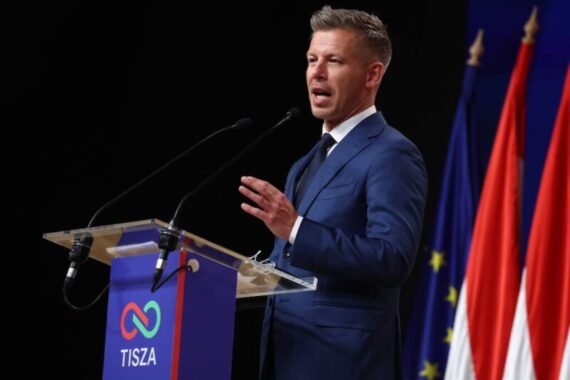
Hungary’s opposition leader Péter Magyar and his Tisza party secured a decisive victory in Sunday’s election, according to official results. Orbán conceded defeat shortly after, stating that his party would “serve our nation from the opposition,” marking a dramatic shift in Hungarian politics after more than a decade and a half of his leadership.
Orbán’s defeat is also being closely watched in Israel, where Prime Minister Benjamin Netanyahu has long counted the Hungarian leader among his closest European allies.
The relationship between the two leaders has been both ideological and strategic. Netanyahu publicly endorsed Orbán during the campaign, describing him in a pre-recorded message as a guarantor of “safety, security, and stability.” His son, Yair Netanyahu, has also cultivated ties with Orbán’s Fidesz party and attended campaign-related events in Budapest.
Following the election, Netanyahu referred to Orbán as a “true friend of Israel” in a social media statement, while also congratulating Magyar on his victory — signaling a careful diplomatic balancing act as Israel adjusts to the new political reality in Hungary.
The partnership between Netanyahu and Orbán has extended beyond rhetoric. In 2025, Hungary announced its withdrawal from the International Criminal Court after the court issued arrest warrants against Netanyahu related to the Gaza war. The move made Hungary one of the few countries where Netanyahu could travel without legal risk.
Orbán also played a key role within the European Union by blocking joint statements critical of Israel, leveraging the bloc’s requirement for unanimity in foreign policy decisions. His departure from power could therefore alter EU dynamics regarding Israel.
In Israel, Orbán’s defeat is being interpreted by opposition figures as a sign that entrenched political systems can be challenged successfully.
Efrat Rayten, a member of the left-leaning Democrat party, described the result as “a message of hope.” She argued that the outcome demonstrated that even leaders with significant control over institutions and media are not immune to electoral defeat.
“The idea that a leader who controls the institutions and the media is immune to defeat has been shattered,” Rayten told CNN. “The lesson for Israel is unity, perseverance, and faith in civil society.”
Since Netanyahu returned to power in 2023, critics have frequently pointed to Hungary under Orbán as a model of democratic backsliding. Protests against judicial reforms in Israel have often included the slogan “Israel will not become Hungary,” reflecting concerns about institutional weakening.
A March 2026 report by the Zulat think tank characterized Israel as moving toward a “partially authoritarian” system, drawing parallels with Orbán’s governance. While noting differences between the two leaders, the report argued that recent policies in Israel risk undermining democratic checks and balances.
Recommended
Despite the optimism among Netanyahu’s opponents, analysts caution that Orbán’s defeat does not guarantee similar outcomes elsewhere. Israel’s political landscape remains deeply fragmented, and opposition unity — cited as a key factor in Hungary’s election — has historically been difficult to achieve.
Rayten emphasized that electoral change requires sustained public engagement beyond formal political institutions. “Change does not happen only in the corridors of Parliament,” she said. “It begins in the streets, with people who refuse to give up.”
As Hungary prepares for a new government under Magyar, both Washington and Jerusalem are recalibrating their strategies. For the United States, the transition represents a test of its ability to maintain alliances despite political shifts. For Israel, it marks the loss of a reliable ally within Europe — and potentially, a symbolic moment in its own ongoing political debates.
(Source: CNN and Anadolu)

Politics Today is dedicated to publishing insightful analyses in order to understand the changing nature of contemporary politics. It aims to contribute to the sound and constructive discussion of international affairs.
You can see how this popup was set up in our step-by-step guide: https://wppopupmaker.com/guides/auto-opening-announcement-popups/

Stay informed by subscribing to
our weekly newsletter.
You can see how this popup was set up in our step-by-step guide: https://wppopupmaker.com/guides/auto-opening-announcement-popups/
You can see how this popup was set up in our step-by-step guide: https://wppopupmaker.com/guides/auto-opening-announcement-popups/
You can see how this popup was set up in our step-by-step guide: https://wppopupmaker.com/guides/auto-opening-announcement-popups/
You can see how this popup was set up in our step-by-step guide: https://wppopupmaker.com/guides/auto-opening-announcement-popups/