Released US Documents Reveal Camera Failures in Epstein Case
Email exchanges show Seckel asking Epstein whether he wanted negative online content about him removed from Google search results.
February 11, 2026
N
ewly declassified documents in the United States are shedding additional light on the investigation surrounding billionaire Jeffrey Epstein, who was found dead in his prison cell in 2019 while awaiting trial on charges of running a sex trafficking ring involving underage girls.
Among the latest revelations are statements from a prison employee responsible for the surveillance system at the Manhattan Metropolitan Correctional Center, where Epstein died. The testimony raises fresh questions about the condition and operation of the cameras in the facility in the days leading up to his death.
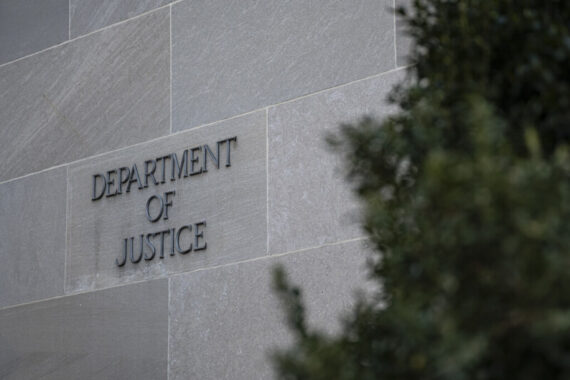
According to the documents released by the US Department of Justice, an unnamed staff member said he had taken responsibility for all prison cameras in 2016. He described the equipment as old, the recording devices as prone to frequent malfunctions, and the overall analog system as poorly maintained.
The employee said that when the digital video recorder (DVR) failed, cameras stopped recording altogether. He cited a series of problems with the system known as “DVR 2”: a malfunction on July 29, 2019, a motherboard failure on Aug. 8, and a hard drive breakdown on Aug. 10 — the day Epstein was found dead.
The staff member noted that two replacement hard drives were available, but installing them would have erased existing data. He said the prison warden had requested the footage and that he was instructed to reinstall the DVR.
While he began removing the faulty disks, he said the device itself was ultimately taken away by a US Federal Bureau of Investigation (FBI) official.
The witness added that he had warned prison personnel beforehand that replacing both drives would wipe all information stored in the system.
The files also include material about a September 2010 conversation between Epstein and American collector Al Seckel.
Email exchanges show Seckel asking Epstein whether he wanted negative online content about him removed from Google search results. Seckel allegedly said he could handle the matter for around $20,000 to $25,000, an offer Epstein appeared to accept.
In one email, Seckel jokingly wrote: “Did you say yes to hacking the websites to make all this nonsense disappear, or just for the island issue, or were you being cheap and said yes to everything? ;-)”
Seckel described a strategy in which positive articles would replace negative ones. If Epstein’s name appeared on a site or blog without “approval,” the content would either be removed or the link redirected to unrelated negative material.
He concluded one of the messages by writing, “Isn’t technology fun when you have the right friends?”
In another email, Seckel discussed altering Epstein’s Wikipedia page. He suggested that Epstein’s mugshot could be removed and replaced with an image of Epstein’s choosing, with a caption describing him as a businessman and philanthropist.
Seckel further claimed that references labeling Epstein a sex offender had been removed from the introductory section. He wrote that they had tracked the IP addresses of users who reversed the edits and blocked them by hacking the site.
Recommended
The documents also show that a press release by the Justice Department regarding Epstein’s death was dated Aug. 9, 2019 — one day before he was officially reported dead.
Responding to questions, the department told the BBC’s verification service that the document was only a draft and that the date resulted from a typographical error.
Epstein was arrested on charges of sexually abusing dozens of girls under the age of 18 and operating a trafficking network. He was found dead in his cell on Aug. 10, 2019.
Previously released case files have mentioned a number of high-profile figures, including Britain’s Prince Andrew, US President Donald Trump, former President Bill Clinton, former Israeli Prime Minister Ehud Barak, former Vice President Al Gore, actor Kevin Spacey, singer Michael Jackson, illusionist David Copperfield, lawyer Alan Dershowitz and former New Mexico Governor Bill Richardson.
After an investigation with the Justice Department, the FBI said it found no evidence that a “client list” of prominent individuals existed. Authorities concluded that Epstein died by suicide in his cell, rejecting claims that he had been killed to cover up others’ involvement.
(Source: Anadolu Agency)

Politics Today is dedicated to publishing insightful analyses in order to understand the changing nature of contemporary politics. It aims to contribute to the sound and constructive discussion of international affairs.
You can see how this popup was set up in our step-by-step guide: https://wppopupmaker.com/guides/auto-opening-announcement-popups/

Stay informed by subscribing to
our weekly newsletter.
You can see how this popup was set up in our step-by-step guide: https://wppopupmaker.com/guides/auto-opening-announcement-popups/
You can see how this popup was set up in our step-by-step guide: https://wppopupmaker.com/guides/auto-opening-announcement-popups/
You can see how this popup was set up in our step-by-step guide: https://wppopupmaker.com/guides/auto-opening-announcement-popups/
You can see how this popup was set up in our step-by-step guide: https://wppopupmaker.com/guides/auto-opening-announcement-popups/