Russia Launches Oreshnik Missile and Drone Assault on Kyiv
According to Ukraine’s air force, Russia launched 90 missiles and 600 drones during the hours-long overnight attack.
May 25, 2026
R
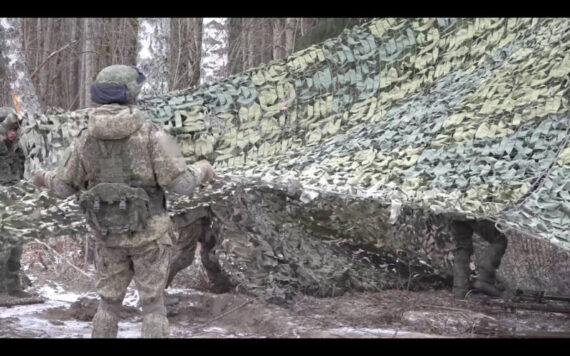
ussia launched one of its largest aerial assaults on Kyiv since the start of the war, firing hundreds of drones and missiles overnight, including a rare strike using the nuclear-capable Oreshnik hypersonic missile, Ukrainian officials said Sunday.
The massive bombardment killed at least four people in and around the Ukrainian capital and wounded nearly 100 others, while damaging residential neighborhoods, schools, cultural landmarks, and government buildings across the city.
Ukrainian President Volodymyr Zelenskiy condemned the attack and called on Western allies to respond more forcefully.
“It’s important that this does not remain without consequences for Russia,” Zelenskiy said on Telegram. “Decisions are needed — from the United States, from Europe and others.”
According to Ukraine’s air force, Russia launched 90 missiles and 600 drones during the hours-long overnight attack. Officials said it was only the third time Moscow had used the Oreshnik missile since the full-scale invasion began in February 2022.
The strike targeted Kyiv and surrounding areas, including the city of Bila Tserkva, located about 64 kilometers south of the capital. Analysts reviewing footage of the attack said the Oreshnik warhead appeared to split into dozens of submunitions before impact.
European leaders swiftly denounced the attack, particularly Russia’s use of the Oreshnik missile, which is capable of carrying nuclear warheads and has a range of several thousand kilometers.
Kaja Kallas accused Moscow of engaging in “reckless nuclear brinkmanship” and using the missile as a political intimidation tactic.
Britain and Germany also described the use of the missile as a dangerous escalation in the conflict, now entering its fifth year.
Russia’s Defense Ministry said the strikes were retaliation for alleged Ukrainian attacks on civilian targets inside Russia. Moscow claimed it had targeted military command centers, intelligence facilities, air bases, and defense-industrial infrastructure using Oreshnik, Iskander, Kinzhal, and Zircon missiles.
Ukraine denies targeting civilians in Russia and says Moscow continues to deliberately strike civilian infrastructure in Ukrainian cities.
The assault also caused minor damage to Ukraine’s cabinet building and the Foreign Ministry headquarters. Cultural institutions suffered heavily, including Kyiv’s national art museum and philharmonic hall, both located in the city center.
“This is a war against our culture, memory, and identity,” said Kyrylo Budanov. “For centuries, Moscow has tried to destroy everything that makes us Ukrainian.”
One strike destroyed a newly opened museum dedicated to the 1986 Chornobyl nuclear disaster, drawing anger from Ukrainian officials.
Recommended
Much of the destruction was concentrated in Kyiv’s Lukyanivka district, an area north of the city center that houses a missile production plant and has repeatedly been targeted during the war.
A shopping center and nearby market were engulfed in flames, while apartment buildings sustained severe damage. Mayor Vitali Klitschko said around 30 buildings across the capital were damaged or destroyed.
As air raid sirens sounded overnight, thousands of residents sought refuge in metro stations and underground shelters.
“It was terrifying, scary,” said 62-year-old resident Nataliia Zvarych, who fled to a subway station as explosions rocked the city.
In central Kyiv, workers at a café that had celebrated its opening only a day earlier swept shattered glass and debris from the floor while continuing to serve customers.
“Once the emotions die down a bit, we’ll think about whether to restore everything,” said co-owner Yevhenii Prusak.
The latest attack comes amid heightened tensions following weeks of intensified fighting and stalled diplomatic efforts. Ukrainian officials warned that Russia’s strikes on water supply facilities suggested Moscow may be attempting to create additional humanitarian pressure ahead of the summer months.
Despite international condemnation, there was no immediate indication that the assault would alter the course of the conflict, which remains locked in a prolonged and increasingly destructive phase.
(Source: Reuters)

Politics Today is dedicated to publishing insightful analyses in order to understand the changing nature of contemporary politics. It aims to contribute to the sound and constructive discussion of international affairs.
You can see how this popup was set up in our step-by-step guide: https://wppopupmaker.com/guides/auto-opening-announcement-popups/

Stay informed by subscribing to
our weekly newsletter.
You can see how this popup was set up in our step-by-step guide: https://wppopupmaker.com/guides/auto-opening-announcement-popups/
You can see how this popup was set up in our step-by-step guide: https://wppopupmaker.com/guides/auto-opening-announcement-popups/
You can see how this popup was set up in our step-by-step guide: https://wppopupmaker.com/guides/auto-opening-announcement-popups/
You can see how this popup was set up in our step-by-step guide: https://wppopupmaker.com/guides/auto-opening-announcement-popups/