The Archetypal Betrayal Stretching from the Sanctity of the Holocaust to Gaza
Israel is reproducing the trauma it suffered in the past from the position of the perpetrator.
May 5, 2026
M
odern international law has aimed to re-establish the conscience of humanity through the normative framework constructed in the aftermath of the Second World War. However, this legal architecture is a fragile structure built upon historical traumas. Beneath this structure lies a deep fissure: the dark past that Western civilization has been unable to confront. Whilst the Holocaust originally functioned as an ethical wound at the heart of this past, its role has shifted over time; it has moved away from its function of remembrance to become a mechanism of repression. This form of collective repression, conceptualized by Carl Gustav Jung as the ‘shadow’ archetype, is becoming increasingly visible today as international law effectively loses its efficacy.
Jung’s theory of the collective unconscious and archetypes analyses the irrational layers of individuals and societies. Human beings are not confined to the level of rational consciousness; they exist alongside myths, symbols and repressed shadows. States act in a similar manner. The superficial language of international law is losing its determinative power; archetypal images are becoming the guiding force. In the case of Israel, the ‘victim archetype’ arising from the collective pain of the Holocaust is transforming into a ‘shadow archetype’ that demands absolute inviolability and derives legitimacy through violence. The Holocaust continues to be one of the most shattering collective traumas residing in humanity’s collective unconscious.
However, this trauma is gradually stripped of its meaning and reduced to the mechanism Jung termed “psychic compensation”. Repressed trauma returns in various forms within the unconscious. According to Jung, every repressed element inevitably emerges as the “shadow”. Israel does not merely limit itself to making the collective pain of the Holocaust a component of its founding identity; it sanctifies this identity, transforming it into a shield of inviolability. When assessed within the framework of Jung’s concept of the “persona”, Israel’s “victim” persona takes on the nature of an artificial mask; the shadow beneath it, with its perpetrator-like qualities, is becoming visible in Gaza.
Benjamin Netanyahu’s political persona aligns with Jung’s “arrogant shadow” archetype. This archetype arises from the fusion of repressed insecurities and the illusion of legitimacy produced by collective myths. Netanyahu does not content himself with positioning himself as an ordinary statesman; he presents himself as a figure imbued with historical and sacred significance. This narcissistic persona interacts with the collective unconscious, fostering irrational loyalty. The psychic intensity of the sacred—which Jung defined as the ‘numinous experience’—becomes evident here.
When this intensity finds no counterpart at the level of consciousness, it generates sacred wrath, fanaticism and, ultimately, anarchy. The elevation of the Holocaust to a sacred status immune to criticism generates violence through this very sanctity. The sanctity of the victim transforms into the legitimacy for creating new victims. This situation is explained within the framework of Jung’s principle of ‘enantiodromia’: every phenomenon turns into its opposite. The victim becomes the perpetrator; violence is perpetrated in the name of the sacred. This transformation transcends the boundaries of legal analysis. The driving forces do not operate on a rational plane; they possess mythological and archetypal qualities.
Today, international law is not limited to examining the actions and conduct of states; it must also take into account the collective unconscious archetypes that shape these acts. The sanctification of the Holocaust, the re-production of Israel as a perpetrator under the guise of a victim, and Benjamin Netanyahu’s personalisation of this unconscious mythology raise questions about the psycho-political foundations of international legitimacy. Jus cogens norms lose their effectiveness to the extent that they cannot cope with the repressed shadows of the collective unconscious.
In this situation, the future of law becomes vulnerable to the influence of myths. Myths do not dispense justice; they generate loyalty and anger. At this point, the law falls silent. Unconscious mythologies, enemy images and sacred missions are becoming decisive. Jung’s warning is clear: politics that surrenders to the mythological unconscious produces destructive results. This transformation is clearly observable in the case of Netanyahu. The victim identity is transforming into an inherent power within the perpetrator; jus cogens norms remain ineffective in the face of this irrational structure.
This unconscious process is becoming particularly visible through the actions in Gaza. These actions transcend the boundaries of conventional security policy; they manifest as ritualised violence stemming from collective trauma. Israel constructs its founding myth upon the Holocaust and transforms this myth into the absolute foundation of its political legitimacy. This foundation is becoming sacrosanct. The irrefutability of the Holocaust is transforming into a dogma that criminalizes criticism.
This dogmatic structure determines the political stances of the West. Rather than confronting historical responsibility, European states sanctify the trauma, rendering it untouchable. From a Freudian perspective, this situation is assessed as a masochistic tendency towards guilt. In the case of Germany, historical guilt is transforming into an irrational dependency that influences current political decisions. Like societies that deny Jung’s ‘shadow’, these states are forming a covert alliance with darkness.
At this point, Roger Garaudy’s analyses take on significance. In his work Israel, Myths and Terror, Garaudy examines the political instrumentalization of modern myths. The transformation of the Holocaust from a historical catastrophe into a sacred symbol is regarded as a harbinger of a new form of fascism. This new form operates through sanctified myths rather than military force. Israel stands as the principal beneficiary of this process. The fusion of sanctity with fascist nationalism silences the language of justice and subjects the law to dogma.
Recommended
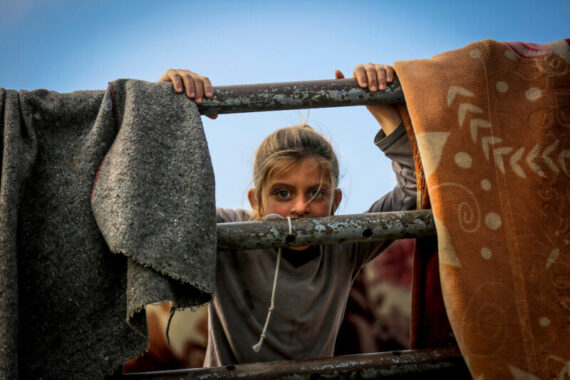
International law does not operate independently of this structure. Clear war crimes such as the targeting of civilians in Gaza, the killing of children and the obstruction of basic humanitarian needs are disappearing into a legal silence. This silence bears the nature of a manifestation of the unconscious. Jung’s concept of the ‘collective shadow’ explains modern civilization’s inability to confront its own barbarism.
Israel is reproducing the trauma it suffered in the past from the position of the perpetrator. In this context, the rising student movements in Western universities represent a form of ethical resistance. These movements embody, in Jung’s words, the courage to confront the shadow. The mask of the myth is being torn away, and the sanctification of trauma is being challenged. This action possesses an ethical quality. Nurettin Topçu’s concept of the “Ethics of Rebellion” offers a powerful theoretical framework to explain this situation: the moral struggle of the self that sacrifices itself for the sake of truth.
(Originally published in Turkish by Kriter)
Dr. Hayrettin Kurt completed his undergraduate education at Ankara University Faculty of Law, his graduate education at Kırıkkale University, and his doctoral education at Ankara University Faculty of Law. He worked as a Denizcilik Uzman (Maritime Expert) at the Denizcilik Müsteşarlığı (Ministry of Maritime Affairs), as a Daire Başkanı (Director) at the Ulaştırma ve Altyapı Bakanlığı (Ministry of Transport and Infrastructure) and as an I. Hukuk Müşaviri (Senior Legal Advisor) at the Enerji ve Tabii Kaynaklar Bakanlığı (Ministry of Energy and Natural Resources). During this period, he was appointed as a member of the Atomic Energy Commission at the Turkey Atomic Energy Agency. After serving as a member of the Energy Market Regulation Board (EPDK) in 2018, he was appointed as the General Director of the Treasury and Finance Ministry's Chief Legal Advisor and Litigation Department. He continues to work as the Chairman of the Audit Committee and the Chairman of the Legal Working Group at the World Energy Council Turkish National Committee (WEC-TMK). He was elected to the TCMB Denetleme Kurulu in 2019 and was reelected to the same position in the TCMB Olağan Genel Kurulu in 2021. Additionally, Kurt served as the President of the Mali Suçları Araştırma Kurulu (MASAK) of the T.C. Ministry of Finance from 2020 to 2022 and as the President of the Kamu Gözetimi Muhasebe ve Denetim Standartları Kurumu from 2022.
You can see how this popup was set up in our step-by-step guide: https://wppopupmaker.com/guides/auto-opening-announcement-popups/

Stay informed by subscribing to
our weekly newsletter.
You can see how this popup was set up in our step-by-step guide: https://wppopupmaker.com/guides/auto-opening-announcement-popups/
You can see how this popup was set up in our step-by-step guide: https://wppopupmaker.com/guides/auto-opening-announcement-popups/
You can see how this popup was set up in our step-by-step guide: https://wppopupmaker.com/guides/auto-opening-announcement-popups/
You can see how this popup was set up in our step-by-step guide: https://wppopupmaker.com/guides/auto-opening-announcement-popups/