The Chagos-Diego Garcia Case and the Language of New Geopolitics
Diego Garcia Island is important because of its role as a symbol of access and continuity in the Indian Ocean.
February 20, 2026
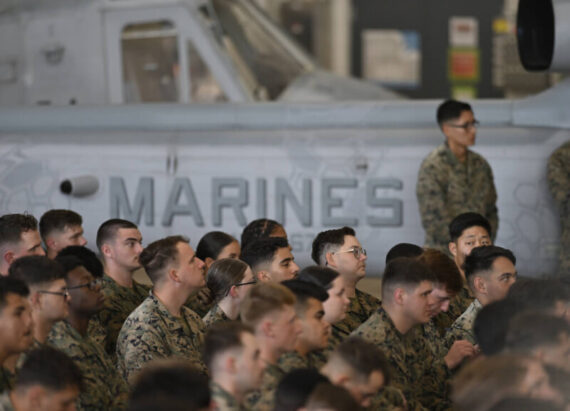
The Diego Garcia base in the Indian Ocean has recently been in the news due to the deployment of heavy bombers allegedly targeting Iran. It is now in the spotlight again amid a dispute between the US and the UK over the transfer of authority and control of the island, with both sides leveling accusations at each other. Facing harsh criticism from Trump for its decision to transfer the island to its former colony, Mauritius, the UK defends itself by claiming that it will never compromise on national security.
However, the Chagos Islands and Diego Garcia dispute is often portrayed as a transfer of British sovereignty, but this perspective obscures the true nature of the issue. Although sovereignty is being transferred to Mauritius, the US–UK base on Diego Garcia is intended to remain under a 99-year arrangement. In other words, the flag is changing, but military access, deployment and operational continuity will remain the same.
Therefore, the Chagos case represents much more than the closure of a colony. Diego Garcia, home to the base, demonstrates how power politics, legal legitimacy and alliance governance can coexist in the world of 2026.
During the colonial period, the Chagos Islands were administered by Britain as an extension of the Mauritian administration. However, this changed in the mid-1960s during the decolonization process. When Mauritius gained independence, Britain separated the Chagos Islands from Mauritius, creating a separate colony called the British Indian Ocean Territory (BIOT) in 1965.
This move was criticized at the time as ‘dividing decolonization’. The sole objective behind this separation was to prepare Diego Garcia for a permanent United States military base. Between 1968 and 1973, the indigenous inhabitants of the islands, the Chagossian people, were gradually removed and sent to Mauritius and the Seychelles.
In the following years, there were continued legal and political battles stemming from the legacies of separation and forced displacement. In 2019, the International Court of Justice ruled that the decolonisation process of Mauritius was not legally complete due to the separation of Chagos. This transformed the BIOT’s status into a constantly challenged structure. The current discussion about a transfer of power is based precisely on this historical burden. The framework emerging in 2025 aims to grant sovereignty to Mauritius while maintaining the Diego Garcia base through a 99-year lease arrangement.
In other words, although the colonial separation appears to be coming to an end, military access is secured in the long term through a contract. Therefore, while the Chagos Islands are a historical colonial issue, they are also a concrete example of new power politics in the 2026 geopolitical landscape, where sovereignty and access are separate considerations.
To view this issue solely through the lens of decolonization or security would be incomplete. The true meaning of Chagos lies in the simultaneous operation of two processes. On the one hand, Britain is trying to reduce the cost of legitimacy in the face of pressure from international law. Conversely, the US and Britain are seeking to de-escalate one of the most critical nodal points in the Indian Ocean and establish a long-term framework for it. Therefore, the hardening of the debate is not so much about an island itself, but rather about how power is negotiated through geography.
To understand this situation, it is first necessary to dispel the misleading nature of the word ‘transfer’. At the heart of the debate is not the fear of losing the base, but rather the fragility of the agreement’s political and legal foundations, and the fact that it is being used as a tool for domestic politics in Washington. Eight months later, Trump’s characterization of the agreement as ‘a complete weakness’ brought the issue back into the headlines. Thus, while the issue relates to the geography of the Indian Ocean, the process can also be interpreted as a display of strength involving trust among allies, domestic political pressures and strategic symbols.
In 2019, the International Court of Justice’s advisory opinion and UN General Assembly Resolution 73/295 strongly suggested that the separation of the Chagos Islands from Mauritius was legally questionable. This made the status of the British Indian Ocean Territory (BIOT) a persistently contested political burden for the UK. The UK’s primary motivations for pursuing the agreement were to close the case, avoid carrying a legacy that conflicted with international law and limit the erosion of its legitimacy.
However, this same agreement also expands neocolonial territory. What is being transferred here is not merely sovereignty. While sovereignty is being transferred, a regime of access to the base is being established that will endure for generations. In this context, 99 years is not a technical detail, but rather the protection and consolidation of strategic interests through a contract. Moreover, the moral weight of this issue remains. The question of how to address the forced displacement of the Chagossians in the past, and their subsequent rights, creates a structure that renders any claim of decolonization fragile. Therefore, the issue cannot simply be closed because colonialism ended. The debate about people, rights and return is not over.
Diego Garcia is important because of its role as a symbol of access and continuity in the Indian Ocean. This island is a strategic location from which South Asia, the Gulf, East Africa and the wider Indo-Pacific region can be reached simultaneously. For the U.S., therefore, Diego Garcia is seen as more than just a territory: it’s a guarantee of security. In times of crisis, it facilitates deployment, supply and logistics, ensuring continuity. Any political uncertainty that threatens this is perceived by Washington as a direct risk to deterrence.
Diego Garcia’s strategic value is not just about its runway and fuel depot. It is also measured by its network infrastructure. In today’s world, power projection means not only sending troops, but also transporting data, maintaining command and control, and monitoring space. Therefore, connecting Diego Garcia to the global digital backbone is of critical importance. Supporting the Diego Garcia base with a high-capacity submarine cable link strengthens the U.S.’s economic and military power. Furthermore, official U.S. Space Force documents explicitly state that Diego Garcia has a GPS ground antenna and tracking station. This demonstrates that the island is a logistical hub and a node for satellite-based navigation and network continuity.
Read in conjunction with the example of Pituffik in Greenland, the picture is complete. While Pituffik is a geographical outpost, its mission is to serve the alliance’s early warning architecture, providing missile warning, missile defence, and spatial awareness with its radar and tracking capabilities. The Chagos and Greenland cases therefore reveal that, in the 2026 geopolitical landscape, competition will be waged over both land and invisible infrastructures, such as cable communication and satellite tracking.
This perspective must also be considered when looking at the competition with China. Competition is not solely measured by the number of ships. It is important to note that competition is driven by access and infrastructure. Port ecosystems, trade routes, diplomatic influence and logistical continuity are the true instruments of power projection in the Indian Ocean. Diego Garcia therefore remains a constant point of reference. Trump’s statement that ‘China wins’ must be taken seriously. However, it also needs to be interpreted correctly.
In this context, it can be interpreted as meaning that if the transfer of sovereignty leads to political pressure in the future, it will create uncertainty regarding the base and reduce the US’s operational flexibility. The UK, however, seems to be arguing the opposite. The message being conveyed is that they are legally closing the base and reducing uncertainty by agreement. Therefore, the debate is less about whether the base will exist and more about how to manage the risk of uncertainty.
Recommended
Although the Chagos file is outside the NATO remit, it touches upon one of NATO’s most sensitive areas. This highlights the erosion of trust between allies. While the UK claims to be providing legal legitimacy and protecting the base, the Trump administration in the US believes that the UK is undermining security. Such rhetoric turns technical agreements into tests of political loyalty. This is where the greatest vulnerability of alliances becomes apparent. Once a debate over trust begins, every decision is interpreted as a sign of weakness or compromise.
It is no coincidence that the issue of Greenland is included in the same package. By describing Greenland as an international security matter, Trump is creating open tension with Denmark and Europe. While Greenland’s strategic value is undeniable, the early warning and space surveillance capabilities at Pituffik are critical to the US’s missile warning, missile defense, and space awareness missions. This is explicitly stated in official mission statements. Thus, Trump’s framework is becoming clearer. In this context, strategic hubs form part of national security. However, the appearance of alliance governance descending into crisis when this issue conflicts with allied sovereignty presents a separate problem.
While the Chagos-Diego Garcia case appears to be primarily an issue in the Indian Ocean, it will therefore serve as a reflection of the geopolitics of the new era. This mirror reflects that sovereignty is no longer measured solely by flags, but by access rights, the language of agreements and trust within alliances. Today’s power politics are not about the land itself, but about managing the access regime established on it. Sometimes, even decolonization can be a means of institutionalizing this access in a more sophisticated way.
(This article was originally published in Turkish by Kriter)

Assistant Professor of International Relations at Mersin University and a researcher at the SETA Foundation. His research focus is the Horn of Africa.
You can see how this popup was set up in our step-by-step guide: https://wppopupmaker.com/guides/auto-opening-announcement-popups/

Stay informed by subscribing to
our weekly newsletter.
You can see how this popup was set up in our step-by-step guide: https://wppopupmaker.com/guides/auto-opening-announcement-popups/
You can see how this popup was set up in our step-by-step guide: https://wppopupmaker.com/guides/auto-opening-announcement-popups/
You can see how this popup was set up in our step-by-step guide: https://wppopupmaker.com/guides/auto-opening-announcement-popups/
You can see how this popup was set up in our step-by-step guide: https://wppopupmaker.com/guides/auto-opening-announcement-popups/