The Dynamics of Escalating Tensions on the Washington-Tehran Axis
Tehran is prepared to bear enormous economic and military costs rather than yield to US demands because simply surviving American pressure is a victory in itself.
May 14, 2026
S
ince the war began on February 28, the US administration has suffered from profound strategic blindness in assessing the crisis between Washington and Tehran. This is particularly evident in its misjudgement of Iran’s strategic resilience and decision-making mechanisms. Washington continues to formulate strategy based on a flawed analogy with Venezuela, one entirely detached from on-the-ground realities, just as with its decapitation strategy aimed at regime change in Iran.
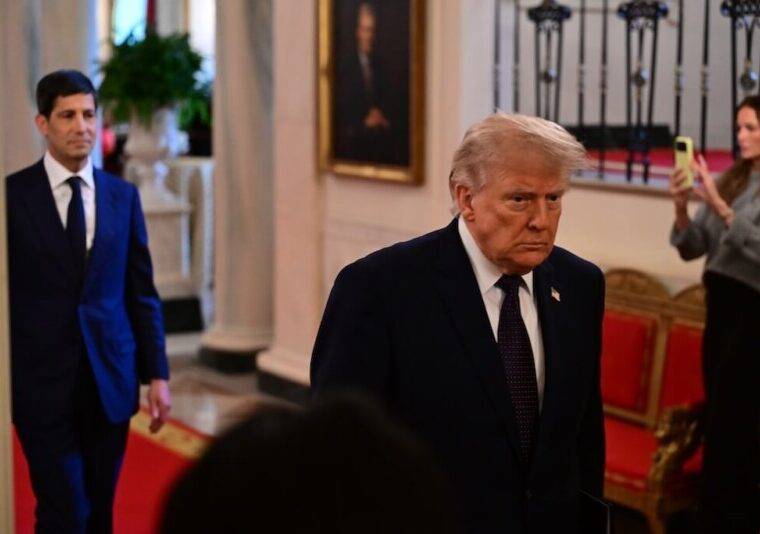
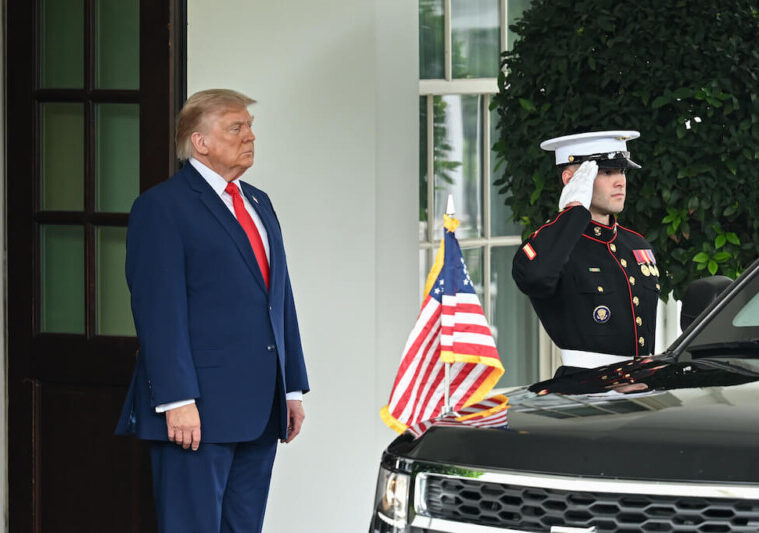
The idea that President Donald Trump and Vice President JD Vance see Iranian Parliament Speaker Mohammad Baqer Qalibaf as similar to Venezuela’s pragmatic politician Delcy Rodríguez and believe he could be pressured to negotiate is wishful thinking. In reality, however, the final decision-making authority in Iran does not lie with civilians or individual politicians. Rather, it is the exclusive preserve of a rigid military-security core consolidated around the Islamic Revolutionary Guard Corps (IRGC).
This new hegemonic elite, which includes Kalibaf, is firmly committed to the fundamental ideological tenets of the Islamic Republic. The idea that individuals like Kalibaf could transcend military tutelage, alter Iran’s strategic trajectory, and become negotiating partners is a delusion on Washington’s part. This notion disregards the regime’s decision-making structure.
At the heart of the current impasse between Washington and Tehran is the asymmetry between the U.S.’s coercive approach to diplomacy and Iran’s survival priorities. The Trump administration’s classic “carrot-and-stick” approach, based on the assumption that every actor will yield at a certain cost, is ineffective against Tehran. The issues that the US brings to the negotiating table—the right to enrich uranium in its nuclear program, ballistic missile capabilities, regional proxy forces, and freedom of movement in the Strait of Hormuz—are not negotiable for Tehran.
The Iranian leadership interprets American demands that would undermine these existential pillars as a call for surrender. Tehran is prepared to bear enormous economic and military costs rather than yield to these demands because simply surviving American pressure is a victory in itself. As long as both sides persist in their mutual illusion of self-confidence—believing that their gains on the ground have forced the other side to make concessions and that the other side has suffered more damage from this crisis than they have—the formation of a credible basis for diplomatic agreement seems highly unlikely.
The Trump administration’s decision to extend the ceasefire was not a quest for peace but a strategy of attrition aimed at altering the nature of the conflict in the US’s favor. Tehran perceives the indefinite extension of the ceasefire while the de facto naval blockade against Iran continues as the worst-case scenario, which is intended to gradually erode its strategic capabilities. Iran rejects this state of suspension — this “neither war nor peace” limbo. A report in The Wall Street Journal on April 28 detailed Donald Trump’s directive for an expanded naval blockade aimed at choking off Iran’s oil exports. This indicates that the crisis has not subsided, but rather been tactically recalibrated. However, according to Iran’s strategic community, this move is a psychological delaying tactic designed to create the illusion that active hostilities have ended. This would weaken the country’s security mechanisms and pave the way for a surprise US-Israeli attack.
Conversely, the belief that Washington could force Iran to submit through a naval blockade is as misguided as expecting regime change. Iran has developed asymmetric resistance against economic sanctions for decades, so a naval blockade is not just another routine embargo for them; it is a declaration of war waged through other means. Therefore, from Iran’s perspective, the current situation is not a de-escalation, but rather the beginning of an escalation phase that will, sooner or later, trigger a more intense wave of asymmetric conflict. Iran will not confine its response to its own waters but will spread the cost across the global system.
Although its conventional navy has largely been destroyed, the DMO has built a massive, asymmetric “mosquito fleet” in the Strait of Hormuz. This fleet comprises hundreds of low-cost speedboats, unmanned systems, and advanced sea mines, such as the Maham series. Rather than focusing on controlling the strait, this structure enables Iran to block rivals’ access and retain the leverage to provoke a crisis in the Bab el-Mandeb Strait, as well as the Strait of Hormuz, should the blockade intensify.
Military action is also far from resolving the structural issues between the US and Iran. Attacks by the U.S. and Israel targeting missile or unmanned aerial vehicle (UAV) facilities in the region only temporarily reduce capacity. This tactic, known in military literature as “mowing the grass,” does not permanently eliminate the threat. Iran’s military infrastructure is deeply integrated into the geography and relies largely on domestic production, so it can be rapidly replenished.
Furthermore, the maximum military and economic pressure being applied has created an extremely dangerous paradox regarding the nuclear program. Rather than deterring Iran from its nuclear objectives, the growing existential threat and successive conflicts are reinforcing the belief in nuclear armament within the DMO. In the eyes of Iranian decision-makers, achieving nuclear capability is no longer merely desirable; it is now viewed as an indispensable guarantee of the regime’s survival.
Looking back at the recent past, Supreme Leader Ali Khamenei presented a pragmatic profile despite being an ideological leader. He possessed the flexibility to reach a nuclear agreement with the Obama administration and was cautious enough to avoid risks while responding to the period following October 7, 2023, and the direct Israeli attacks in 2024. However, with his death, this delicate balance vanished, giving rise to an Iran that is far more unpredictable and dangerous to regional security. Terminating the 2015 Nuclear Agreement (JCPOA) without a concrete alternative was a major political blunder rather than a strategic move. This move removed international restrictions and monitoring mechanisms on Iran, creating an opportunity for the regime to expand its nuclear capabilities.
As a result, Iran has increased its uranium enrichment level from 3.67 percent to 60 percent, shortened the time needed to acquire a nuclear weapon from one year to a few weeks, and effectively become a “nuclear threshold state.” For Iran, 90 percent enrichment is now a matter of choice, not capability. Since crossing the technological critical threshold, Iran has the ability to process its existing stockpile of 440 kilograms of enriched uranium to the final stage in small-scale facilities. Completely halting the nuclear program by military means would require a ground operation that is virtually impossible in the current situation.
Recommended
The gap between Iran’s unwavering stance and the US’s minimum acceptable limits is so wide that diplomatic efforts have devolved into mutual accusations rather than compromise. There is no credible way out, nor any room for flexibility, to defuse the tension. Washington’s reliance on sanctions and temporary military interventions, dubbed “mowing the lawn,” is insufficient to resolve this strategic impasse.
Consequently, unless Washington scales back its maximalist objectives or Iran fundamentally alters its security approach, this spiral of coercive pressure will yield neither compromise nor capitulation. This scenario, in which no sustainable diplomatic solution exists, is more likely to usher in a far more destructive phase of conflict. In this phase, costs would be spread across the global system through asymmetric means, transcending borders and rendering predictability entirely lost. This phase would be far worse than simply plunging the parties into a conventional war of attrition.
(Originally published in Turkish by Middle East Africa)

İsmail Sarı graduated from the Department of History at Istanbul University in 2001 and received his master's degree in History and International Relations from the same university. Receiving the best doctoral dissertation award in 2016, Sari served as a post-doctoral researcher at Columbia University between 2018 and 2019 and as a visiting professor at the Missouri State University during his studies in the United States. Sarı's research focus concerns Iranian foreign policy and contemporary Iranian and US politics. Sari is currently working as a lecturer at Ankara Hacı Bayram Veli University.
You can see how this popup was set up in our step-by-step guide: https://wppopupmaker.com/guides/auto-opening-announcement-popups/

Stay informed by subscribing to
our weekly newsletter.
You can see how this popup was set up in our step-by-step guide: https://wppopupmaker.com/guides/auto-opening-announcement-popups/
You can see how this popup was set up in our step-by-step guide: https://wppopupmaker.com/guides/auto-opening-announcement-popups/
You can see how this popup was set up in our step-by-step guide: https://wppopupmaker.com/guides/auto-opening-announcement-popups/
You can see how this popup was set up in our step-by-step guide: https://wppopupmaker.com/guides/auto-opening-announcement-popups/