Superpower Armada Failed to Effectively Subdue Iran
The attempt to construct a kinetic cage around Iran’s economy, relied on the flawed assumption that Iran would passively accept its own economic strangulation.
April 17, 2026
I
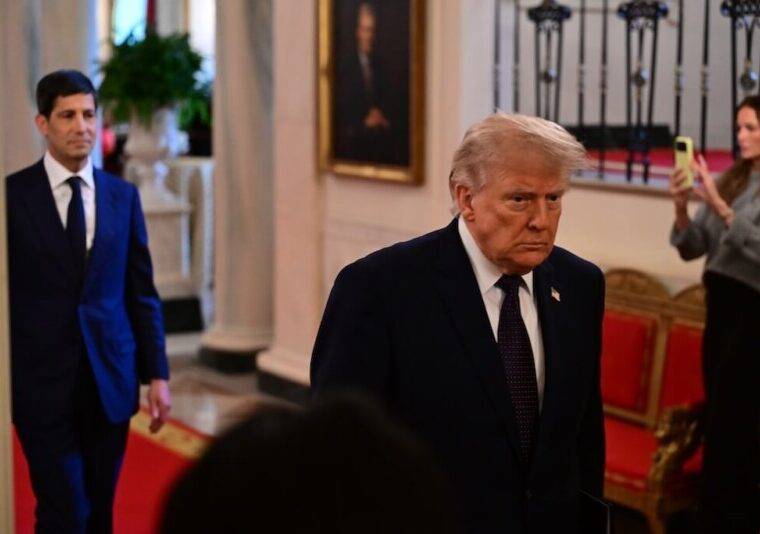
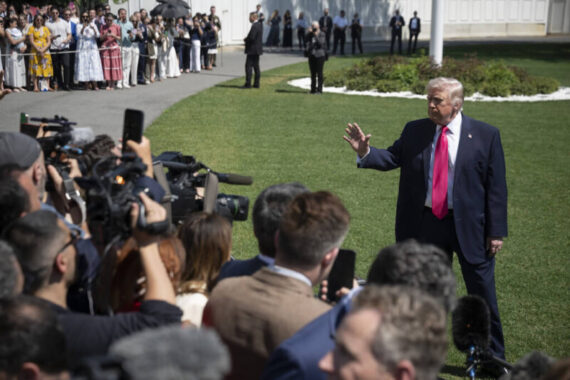
n hubris, President Trump tweeted, “A whole civilization will die tonight, never to be brought back again.”
Washington attempted to bypass a conventional stalemate, by using the nuclear threat as a first line negotiating tactic. In doing so, it exposed the erosion of its structural power. The U.S. ended up in a weaker negotiating position, desperate for a ceasefire that could allow it an off ramp without admitting defeat.
In subsequent remarks, Trump has now stated that the war is “close to over,” hinting at a possibility of imminent second round of talks.
U.S. is currently trapped in a logistics of exhaustion, purportedly a superpower cannot wage a ground attack, the world economy cannot afford $150 barrel of oil, and Trump certainly cannot afford to look weak before the midterms.
However, this American desire for a safe exit is being torpedoed by Israel’s expansionist designs.
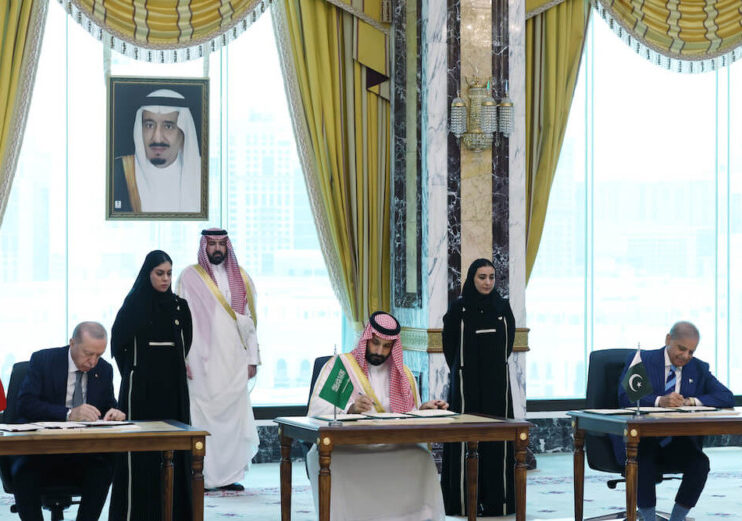
The Pakistani-mediated ceasefire on April 8, 2026, bought forth an apparent divergence between American and Israeli regional objectives. Within hours of the ceasefire announcement, Israel explicitly declared that Lebanon is excluded from this truce and instead of de-escalating the IDF launched its most lethal aerial barrage in history. Over 100 airstrikes hit Lebanon in a span of just 10 minutes, targeting Beirut, the Beqaa Valley, and the South. The assault killed over 350 people in a single afternoon, overwhelming the last operational hospitals in Beirut and rendering this two-week truce virtually rudderless.
The U.S. and Israel have used a regime-change narrative while pursuing a broader strategy aimed at weakening organized resistance and reshaping the regional balance of power in the Levant. By excluding Lebanon from the ceasefire framework, Israel appears to be pursuing a separate track that isolates Hezbollah from its supply and coordination lines with Iran, with the objective to pressure the Lebanese state into a distinct political settlement.
This strategic objective has been consistently framed through a humanitarian lens, a familiar rationale that echoed earlier interventions in Iraq and Afghanistan
The U.S. administration projected the reported deaths in Iranian protests as a casus belli, yet remains the primary financier and arms supplier for the genocide in Palestine that has killed over 70,000 people, more than 20,000 of whom were children. The discrepancy in the “value of life”, to any observer, would expose the “liberation” of Iranian women and protesters as a mere rhetorical tool used to potentially justify the same level of destruction in Iran that the U.S. has endorsed in Gaza.
The reality of this “liberation” manifested on the very first day of the offensive, when a U.S.-Israeli strike targeted a primary school in Minab, Iran, killing over 150 girls. Since then, a staggering 942 schools have been damaged, while 339 health centers in Iran and dozens in Lebanon have been struck. Social and physical infrastructure required for a population to survive and rebuild have been deliberately dismantled.
In Lebanon, the destruction of the final bridges over the Litani River has isolated over 150,000 people in the south, a move Human Rights Watch notes prevents the delivery of essential food, water, and medicine. Simultaneously, the relentless bombardment of Beirut’s Dahiyeh district, home to 400,000 civilians, has forced the closure of basic bakeries and pharmacies.
Washington claimed that decapitating the Iranian leadership would lead to a total collapse of the clerical system. While the decapitation strike killed Supreme Leader Ali Khamenei and high-ranking IRGC officials, the “regime” as a functional entity simply decentralized. Replacing one leadership circle with another. The U.S. achieved nothing and created a more profoundly seeped ideological state, that may now consider nuclear arsenal essential for its very survival.
The attempt to construct a kinetic cage around Iran’s economy, relied on the flawed assumption that Iran would passively accept its own economic strangulation. They effectively eliminated Iran’s stake in the stability of the global energy order, but the coalition inadvertently handed Iran the keys to the global economy’s most sensitive choke point. No longer bound by the need to maintain export quotas or customer relationships, Tehran turned into an asymmetric “Toll Booth Doctrine” within the Strait of Hormuz. This miscalculation has forced the U.S. into rapid depletion of the Strategic Petroleum Reserve and the suspension of environmental regulatory frameworks to mitigate a self-inflicted supply-side crisis.
Recommended
The United States has now adopted an all-or-none naval blockade, aimed at systematically interdicting any vessel entering or leaving Iranian ports but this move risks further escalation of the war. While the Trump administration projects a posture of absolute strength, the domestic and international foundations of this strategy are visibly cracking. The blockade has driven global oil prices, forcing American voters to face gasoline prices exceeding $5.30 per gallon.
Internationally, the U.S. find itself increasingly isolated, unable to mobilize a unified Western Front; NATO allies like France and the UK have refused to join the blockade, instead opting for a separate defensive mission to restore freedom of navigation.
Russia has repositioned itself as the primary energy backstop. By March 2026, Russian crude exports surged to record highs, offering discounted rates that Western-aligned markets cannot match. To bypass the blockade’s financial chokehold, China has integrated its Cross-Border Interbank Payment System (CIPS) with Russian financial settlement frameworks.
As a people or a state perceive a conflict as existential, the standard levers of hegemonic power cease to function. This loss of direct leverage is why hegemons rely on intellectual colonization, regional containment, and social fragmentation to maintain control from within.
For decades, the U.S. operated on the assumption that global compliance could be bought or coerced. However, if the combined might of Washington and Tel Aviv cannot force an abject surrender, even after causing immense destruction, the so-called hegemonic order can no longer be enforced through sheer force.
This war has exposed the moral and material bankruptcy of a declining empire trying to maintain its stranglehold; the amplified necessity of a negotiated settlement is the ultimate indicator of the limits of American hegemony.
A state informed by civilizational continuity cannot be bombed into submission by sheer arrogance of power.

Noor Eman is an undergraduate student at Istanbul Aydin University, specializing in International Relations and Political Studies. Her work focuses on combining research, analysis, and storytelling to shed light on complex social and political issues.
You can see how this popup was set up in our step-by-step guide: https://wppopupmaker.com/guides/auto-opening-announcement-popups/

Stay informed by subscribing to
our weekly newsletter.
You can see how this popup was set up in our step-by-step guide: https://wppopupmaker.com/guides/auto-opening-announcement-popups/
You can see how this popup was set up in our step-by-step guide: https://wppopupmaker.com/guides/auto-opening-announcement-popups/
You can see how this popup was set up in our step-by-step guide: https://wppopupmaker.com/guides/auto-opening-announcement-popups/
You can see how this popup was set up in our step-by-step guide: https://wppopupmaker.com/guides/auto-opening-announcement-popups/