The NATO Summit and Turkey’s Rising Influence in the Global System

June 16, 2026

There is a Turkey that is working to prevent the spread of war in the Black Sea, capable of establishing grain corridor diplomacy, and able to maintain contact with both Moscow and Kyiv simultaneously.
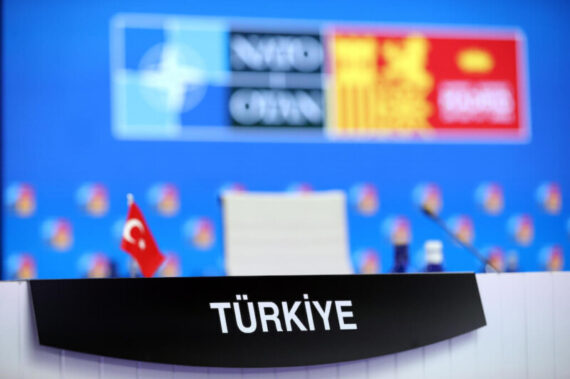
A sign written "Türkiye" is seen after the country name "Türkiye" is replacing "Turkey" at the UN during the NATO summit at the Ifema congress centre in Madrid, Spain on June 29, 2022. Photo by Anadolu Images.

T

oday’s international system heralds a new historical era marked by major upheavals and multi-layered power struggles. In this age, where global balances are being shaken, the Western-centred order is being called into question, and energy wars, proxy conflicts and economic competition are intensifying, states can only survive not merely through their military might, but through their diplomatic flexibility, historical depth and strategic acumen.

It is precisely in such a period that the decision to hold the NATO Summit in Turkey is not merely a routine organizational choice, but signifies the reaffirmation of Turkey’s weight within the global system on an international scale.

To assess this development merely as a technical preference within the diplomatic calendar would, of course, be an oversimplification. For the positioning of Turkey as a central nation by NATO—the world’s most powerful military-political alliance—during such a critical period is a clear consequence of the strategic influence Ankara has built up in recent years.

Undoubtedly, Turkey has become a state closely monitored by global power centres not merely due to its geographical advantages, but also because of its crisis-resolution capacity, multifaceted diplomatic approach and independent political reflexes.

Diplomatic paradigm and the ancient Turkish state mindset

The paradigm developed by Turkey under the leadership of President Recep Tayyip Erdoğan in foreign policy has largely transcended the classic ‘peripheral state’ mentality. For many years, Turkey was viewed merely as an outpost of the Western security architecture; today, it has transformed into a power centre capable of devising its own strategy, negotiating with global actors when necessary, and making independent moves when required. We cannot explain this transformation solely through the technical tools of modern politics; rather, behind this success lies the ancient Turkish state experience and the accumulated heritage of civilization.

In Turkish political thought, the state has been viewed not merely as an administrative mechanism, but as the bearer of the historical order. Indeed, Yusuf Has Hacib, in the Kutadgu Bilig, speaks of four fundamental elements that sustain the state: justice, reason, happiness and contentment. In other words, according to him, the greatness of a ruler is measured not merely by the strength of his army, but by his ability to interpret the changing conditions of the world. Today, the delicate balance Turkey has established between East and West is precisely a contemporary manifestation of this historical philosophy of the state. For Ankara is no longer a passive but a decisive actor.

There is a Turkey that is working to prevent the spread of war in the Black Sea, capable of establishing grain corridor diplomacy, and able to maintain contact with both Moscow and Kyiv simultaneously. There is a Turkey that shapes normalization processes in the Middle East, develops diplomatic influence in Africa, deepens integration with the Turkic world, and plays a central role in the European security architecture. The hosting of the NATO Summit in Turkey is, in fact, a natural consequence of this multi-layered influence.

One of the most striking aspects of President Erdoğan’s foreign policy is his transformation of Turkey from a country that merely reacts defensively into a state capable of making strategic moves. Self-confidence has been a defining element of this approach. Turkey has emerged not merely as a country exposed to the consequences of global decisions, but as an actor influencing the very process by which those decisions are shaped. Undoubtedly, this situation also represents a significant shift in mindset within modern Turkish foreign policy.

At the core of this changing mindset lies the historical continuity referred to as the ‘Turkish state mind’. The Turkish state tradition has always been noted for its ability to maintain balance even during chaotic periods. Nizam al-Mulk, the Grand Vizier of the Great Seljuk Empire, states in his Siyasetname (policy) that the survival of the state can be safeguarded not only through force, but also through reason, diplomacy and stability. In his view, a statesman must be able to employ both hard power and wisdom simultaneously. The multi-dimensional diplomacy pursued by today’s Turkey is a reflection of this historical legacy.

The Antalya Diplomacy Forum and the new narrative being forged

Indeed, in recent years Turkey has built up significant capacity not only in the military sphere but also in the diplomatic arena. One of the most significant examples of this is undoubtedly the Antalya Diplomacy Forum. Despite its relatively short history, the forum has become one of the key meeting places in global politics. The fact that leaders from vastly different political traditions—from Africa to Europe, and from Asia to Latin America—can come together on the same platform demonstrates the new sphere of influence Turkey has established in global diplomacy.

The success of our Ministry of Foreign Affairs at the Antalya Diplomacy Forum cannot be explained by organizational ability alone. The real issue is Turkey’s development of a new diplomatic discourse and paradigm. Whilst most Western-centric diplomatic platforms are now unable to adequately address global crises, a more inclusive and multi-polar approach is attracting attention in Antalya.

Here, Turkey is not merely the host but also the bearer of a new international discourse. The Antalya Diplomacy Forum has, in effect, become an intellectual showcase of the Turkish state’s vast capacity.

This is because the forum demonstrates Turkey’s claim to be not merely a military or economic power, but also an intellectual centre. Bringing together different actors in world politics around the same table is not merely a logistical achievement, but a capacity to generate trust. Diplomacy, after all, is not just the management of states, but also the management of trust.

This situation gains even greater significance when viewed from a civilizational perspective. Al-Farabi states that, in his conception of a virtuous state, the ruler’s fundamental duty is to establish social order based on justice and wisdom. According to him, politics is not brute force, but the art of guiding society through higher reason. The active diplomacy Turkey has pursued in recent years is, in every sense, an example of this very mindset.

This is one of the key aspects of the language President Erdoğan has established in international politics. He is striving to reposition Turkey not merely through economic or military parameters, but alongside its historical identity. The relations developed with the Turkic world, the outreach to Africa, diplomatic activities in the Islamic world, and the balanced relations maintained with the West are all components of this broad vision.

The hosting of the NATO Summit in Turkey is therefore not merely a security-focused development. This choice also demonstrates that Turkey is once again recognized as a central power within the international system. For the world of politics now realizes that it is impossible to achieve a balance without Turkey. From energy routes to migration crises, and from Black Sea security to the equations of the Middle East, Ankara now plays a decisive role in numerous issues.


Turkey’s diplomatic capacity and policy of balance

Another notable aspect here is Turkey’s policy of balance. Throughout history, great Turkish states have sustained their existence by maintaining a balance between different centres of power. Ottoman diplomacy is one of the most significant examples of this. Today, too, Turkey is able to develop its relations with Asia whilst being part of the Western alliance; defend Ukraine’s territorial integrity whilst maintaining contact with Russia; and establish strategic integration with the Turkic world whilst increasing economic cooperation with the Gulf. This multifaceted policy requires a high level of diplomatic capacity.

At the current juncture, Turkey is not a passive observer of crises, but one of the central nations demonstrating the will to produce solutions.

The hosting of the NATO summit in Turkey and the rising prestige of the Antalya Diplomacy Forum are reflections of this reality. The self-confidence displayed by Turkey under President Erdoğan’s leadership in foreign policy is, in fact, the re-emergence of historical state wisdom.

And perhaps the most significant aspect of this entire process is this: the Turkish state tradition has, throughout history, not only generated power; it has also brought order. This historical lineage, stretching from the Seljuks to the Ottomans and from the Ottomans to the Republic, is one of the rare political traditions that has managed to preserve its state reflex even during times of crisis. The multifaceted diplomacy Turkey is currently pursuing is, in fact, the continuation of this ancient state memory in the modern world.

(Originally published in Turkish by Kriter)

Engin Özekinci is a researcher and writer who produces analyses on the economy, foreign policy, and social issues.