The Occupation of Venezuela Is No Easy Task for Washington
Venezuela's ability to withstand a possible conventional war against the US depends on the logistical support it will receive from China and Russia.
December 24, 2025
T
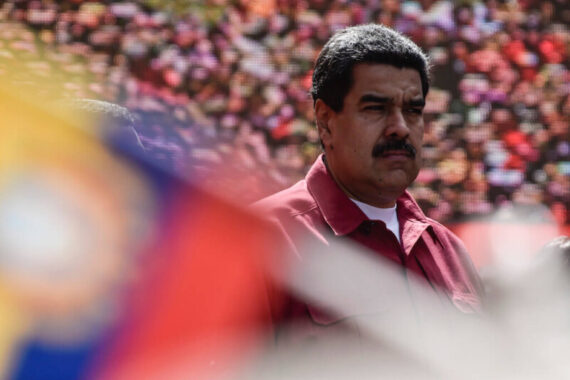
he US decision to add the Cartel de los Soles (Sun Cartel) to its list of Foreign Terrorist Organisations signals a new phase in Washington’s pressure strategy against Venezuela. The US claims that this organisation, which it alleges has long-standing links to high-ranking Venezuelan military personnel and officials, is an institutionalised smuggling network that transports a significant portion of Colombian cocaine through Venezuela to the US and Europe. Therefore, the decision is interpreted not merely as a measure to combat drug trafficking, but as a political step aimed at squeezing President Nicolas Maduro’s administration on the international stage and tightening diplomatic and economic sanctions.
Moreover, this classification grants Washington access to broader legal tools, such as financial sanctions, asset freezes, and pressure on third countries. Most importantly, it is argued that this step creates a legal basis for a potential military intervention in Venezuela. With this designation, Washington can more easily justify its actions internationally by stating that it is ‘conducting operations against drug cartel leaders.’ According to US claims, Maduro and his inner circle are at the top of the Cartel de los Soles. Therefore, the decision provides Washington with a strong justification that can withstand international reactions in the face of possible harsh measures.
Caracas, however, ‘categorically’ denies the cartel’s existence, arguing that this decision is an attempt to justify intervention in Venezuela. According to experts, the US military presence in the Caribbean region does not necessarily mean direct conflict; it can often serve the purpose of exerting pressure, increasing negotiating power and sending a message to the region. Therefore, although tensions are high in the region, international circles consider it more likely that developments will continue along the lines of diplomatic, economic and psychological pressure.
According to international security experts, Venezuela’s ability to withstand a possible conventional war against the US depends on the logistical support it will receive from China and Russia. Given its current military capacity, it is stated that the country would be unable to resist a coordinated and sudden attack by the US for long. Venezuela, which has been under heavy sanctions for years, has seen its maintenance, repair and logistical infrastructure weakened, while its army has become largely dependent on weapons supplied by Russia, Iran and China.
Venezuela ranks 50th among 144 countries in terms of military strength. The country has approximately 123,000 active military personnel, 220,000 militiamen and 8,000 reservists. Although senior military officials state that the number of militiamen is close to 8 million, regional experts do not consider this figure realistic.
Its inventory includes 23 Su-30MKV fighter jets acquired from Russia and 15 F-16A fighter jets procured during a period of good bilateral relations with the United States in the 1980s. It also possesses 8 Mi-17 helicopters, 12 radar systems, S-300VM air defence missiles, 44 S-125 Pechora systems and around 5,000 Russian-made Igla-S portable air defence missiles. It is known that Venezuela has recently received Pantsir-S1 and Buk-M2E air defence systems from Russia, as well as additional S-300VM and S-125 Pechora batteries.
Due to the economic crisis and sanctions that Venezuela has been experiencing for many years, maintenance activities for aircraft, radars, armoured vehicles and naval assets are lagging behind, and many platforms cannot operate at full capacity. It is stated that Caracas has no chance of sustaining a conventional war due to the superior military capacity of the United States. Let us not overlook an important detail: The US is conducting military exercises in the Caribbean country of Trinidad and Tobago, which is only 11 kilometres from the shores of Venezuela’s La Guaira city. If the US were to take this location, reaching the capital Caracas would be a matter of moments, as Caracas is only 27 minutes away from La Guaira by road.
Despite some modern systems at Caracas’ disposal, the weakness of its air defence in terms of integration and scope reinforces the view that the US could render these elements ineffective in a short time. However, it is important to bear in mind that, due to the country’s geography, militia structure and regional dynamics, a possible invasion could turn into a long and costly process for the US.
The majority of the Venezuelan army’s tanks and armoured units are outdated models, while a lack of spare parts and maintenance poses a significant vulnerability. The country’s navy is also small and fragile compared to that of the US. Due to the economic crisis, the sustainability of fuel, ammunition, and logistical capacity is also severely limited. This picture supports assessments that Caracas cannot resist Washington in an open confrontation.
Nevertheless, experts emphasise that it will not be possible for the US to gain complete control over Venezuela in the short term. The country’s mountainous regions, forests, the Amazon basin and the Venezuela–Colombia border are extremely conducive to guerrilla warfare. The militia structure that the Maduro administration has been promoting for a long time, although official figures are disputed, suggests that hundreds of thousands of armed volunteers could be involved in the conflict. The fact that large segments of the population oppose US intervention could also turn a possible occupation into a nationalist resistance. The cartels, armed groups and smuggling networks along the Colombian border will also create a multi-layered environment that is difficult for the US to control.
Experts therefore point out that the real problem for the US is not ‘winning the war’ but ‘managing the aftermath.’ Washington’s superior military power could quickly neutralise the Venezuelan army, but stabilising and controlling the country could take years. As in the cases of Iraq and Afghanistan, prolonged insurgencies, loss of control in border regions, and costs running into billions of dollars pose serious risks for the US. It is therefore stated that Washington’s priority is not direct occupation, but rather increasing economic pressure, deepening diplomatic isolation, and bringing about change in the internal political balance in Caracas.
Venezuela’s air defence systems are not resilient against modern US technology, the majority of its tank fleet consists of older models, and the weakness of its maintenance and logistics infrastructure due to the economic crisis seriously limits its operational capabilities. Venezuela’s dependence on Russia and Iran for most of its heavy weapons and ammunition also makes sustainability in a protracted conflict even more questionable.
Although the Maduro administration has claimed for years that it has expanded its militia force, the government’s frequently cited figure of ‘8 million militiamen’ is considered unrealistic by many analysts. Regional experts note that Maduro uses the emphasis on militias as a control mechanism in domestic politics. This approach sends a message of strength against both the opposition and potential divisions within the army. However, the convergence of heavy weapons, long-range systems, and irregular militia structures under one roof increases the risk of ‘miscalculation’ in the region. At a time when the US maintains a massive military presence in the Caribbean, even a minor provocation has the potential to trigger regional tensions.
Recommended
Drug trafficking plays a significant role in the backdrop of this political-military tension. The US Coast Guard’s ‘Operation Pacific Viper’ targets the Pacific Ocean as one of the main routes for cocaine smuggling. According to reports in the Latin American press, over 34 tonnes of cocaine were seized in the Pacific as part of the operation. The Pacific route has become a corridor that has grown in volume in recent years and has become increasingly difficult to detect. Shipments originating from Colombia’s Pacific coast reach the coasts of Panama, Guatemala and Mexico; from there, they either jump to the US by sea or are transported north by land.
Tracking and interception operations at sea are becoming increasingly difficult due to the use of semi-submersible boats, fishing boats and high-speed motorised vehicles on the water. In raids conducted by the US, mostly in the Caribbean Sea, on the grounds that they were transporting drugs, more than 80 people have lost their lives so far. While it remains to be confirmed whether these deceased individuals were drug traffickers, Colombian President Gustavo Petro has claimed that they were innocent.
Venezuela’s location is particularly noteworthy. According to data from independent international organizations, the country is a critical transit area for both land and air traffic due to its border with Colombia, the world’s largest cocaine producer. Although Venezuela’s transit role is increasing on routes heading to the east and south coasts of the United States via Colombia, the Dominican Republic and Puerto Rico, the Pacific route, which the United States ignores, still accounts for more than 80 per cent of drug trafficking.
(Originally published in Turkish by Kriter)
You can see how this popup was set up in our step-by-step guide: https://wppopupmaker.com/guides/auto-opening-announcement-popups/

Stay informed by subscribing to
our weekly newsletter.
You can see how this popup was set up in our step-by-step guide: https://wppopupmaker.com/guides/auto-opening-announcement-popups/
You can see how this popup was set up in our step-by-step guide: https://wppopupmaker.com/guides/auto-opening-announcement-popups/
You can see how this popup was set up in our step-by-step guide: https://wppopupmaker.com/guides/auto-opening-announcement-popups/
You can see how this popup was set up in our step-by-step guide: https://wppopupmaker.com/guides/auto-opening-announcement-popups/