The United States' ‘Uncooperative’ Venezuela
The U.S. accuses Maduro of being the leader of the Sun Cartel, but there is a peculiar situation: neither Venezuela, Mexico nor Colombia officially recognizes the existence of this organization.
October 22, 2025
T
he U.S.’s increased military activity in the Caribbean, the harsh statements from the government of Venezuelan President Nicolas Maduro, and regional balances point to a new wave of crisis rising in Latin America. To understand the U.S.’s stance towards Venezuela, it is useful to briefly look back at the past.
With Hugo Chavez coming to power in Venezuela in 1999, relations with the United States rapidly deteriorated. Chavez nationalized the state oil company PDVSA, channelling the revenues into social programs; he developed relations with China, Russia, Cuba and the Middle East. Under the banner of ‘21st-Century Socialism’, he sought to establish an anti-U.S. bloc in Latin America. Washington, however, labelled Chávez an ‘instability factor’ and attempted to oust him from power in 2002 by mobilizing his opponents.
Following the event, which went down in history as the 48-hour coup, U.S.-Venezuela relations reached a breaking point. Although Chávez later met with Obama, no progress was made in the relationship. After Chávez’s death, the Maduro administration, which came to power in accordance with his will, also faced similar pressures. In 2018, an assassination attempt against Maduro using a drone failed.
Subsequently, Juan Guaidó, the former Speaker of the National Assembly supported by the U.S., called for an uprising in Caracas with some soldiers, but the coup attempt was unsuccessful. Later, mercenaries backed by the U.S. and Colombia attempted an invasion from Venezuela’s northern coast. However, the attack was thwarted thanks to prior intelligence, and many individuals, including two Americans, were arrested and sentenced to 20 years in prison.
The U.S., which does not recognize Maduro as the legitimate head of state, accused the Venezuelan President of ‘international drug trafficking’ in March 2020 and offered a $15 million reward for his capture. This reward was later increased in stages to $25 million and finally to $50 million. The Washington administration deployed military pressure elements in addition to diplomatic and economic sanctions. It deployed warships, nuclear submarines and advanced fighter jets to the Caribbean region on the grounds of combating Latin American drug cartels.
Although official statements indicated that these elements would be used for ‘intelligence gathering, surveillance and intervention with small boats in the fight against drug trafficking,’ experts point out that military activity on this scale has not been seen in the region since the 1989 invasion of Panama.
Latin American experts I spoke to warned that Washington’s possible military intervention in Venezuela would destabilize not only the Caracas government but the entire region.
According to recent reports, the U.S. Navy has carried out operations against speedboats in the Caribbean allegedly ‘carrying drugs’. However, it remains unclear whether these boats were actually loaded with drugs and whether those killed were cartel members. Venezuela and Colombia have repeatedly stated that the boats that were hit had no connection to drug traffickers.
The U.S. accuses Maduro of being the leader of the Sun Cartel, but there is a peculiar situation: neither Venezuela, Mexico nor Colombia officially recognizes the existence of this organization. Cartel de los Soles is the name given to a drug network allegedly made up of high-ranking soldiers and government officials within Venezuela. The name comes from the sun symbol worn on the shoulders of generals in the Venezuelan army; therefore, ‘cartel of the suns’ actually means ‘cartel of the generals’. It first came to prominence in the 1990s with allegations that some Venezuelan officers were involved in drug trafficking.
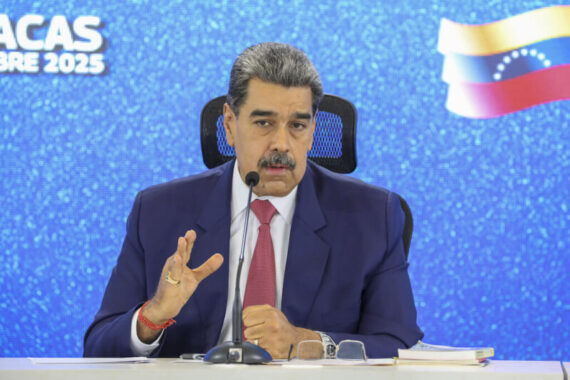
According to the U.S., this cartel collaborates with organizations such as the Marxist FARC in Colombia to ship cocaine to the U.S. and European markets and operates as an institutionalized structure within the upper echelons of the Venezuelan state. The Maduro government has repeatedly stated that these accusations are being used by the U.S. as a ‘pretext for regime change’ in Venezuela. Maduro stated in a recent television appearance that his country is free of drugs and that security forces have dealt significant blows to the cartels in recent years.
The Venezuelan government denies the existence of such an organization (the Sun Cartel), rejects the allegations, and labels them as ‘imperialist propaganda.’ Venezuela consistently informs the international community that the United States’ true intention is not to combat drugs, but to covet oil and natural resources.
The Maduro administration sent a letter to President Trump on September 6 via his special representative Richard Grenell in an attempt to normalize relations with the U.S. The letter clearly stated that the allegations against Venezuela of ‘links to mafia and drug trafficking gangs’ were completely unfounded. Maduro conveyed the message, ‘If your goal is to fight gangs, I am not the one to target; however, if you wish to engage in trade, I am open to discussion.’
Nevertheless, this olive branch extended by Maduro to Trump did not satisfy the U.S. administration. Washington has, for now, ignored this offer, but it would not be surprising to see new initiatives on the agenda in the coming period.
According to assessments received from colleagues in Venezuela, daily life in the country continues largely as normal. There is no noticeable abnormality in shopping centres, restaurants, cafes and commercial centres. Although the public is closely following developments, no significant change in daily habits has been observed. However, the opposition makes no secret of the fact that they would welcome a possible U.S. military intervention. We know that opposition leader Maria Corina Machado and other politicians living in exile abroad are conducting intensive lobbying activities in the U.S. Congress. Right-wing leaders in Latin America are also not holding back from calling on Washington to ‘come’ through black propaganda in the media.
As in every country, there are factions in Venezuela that want intervention from another power. The sole objective of Maduro’s ideological enemies in Latin America is to bring about regime change under the banner of ‘democracy.’ In the Turkish media, Venezuela is still being assessed based on conditions during the COVID-19 era. However, comments suggesting that the country is on the brink of a famine crisis do not reflect reality. The country has experienced steady growth over the past five years; the rapid rise of the dollar has stopped, and inflation is partially under control. If economic sanctions were lifted and the billions of dollars frozen were returned, conditions would undoubtedly improve significantly.
The most fundamental difference between the government and the opposition is clearly visible on the streets and squares of the country. While the opposition argues that there is rampant corruption and that this is the root cause of the crisis, the government accuses the opposition of encouraging economic sanctions. The government’s message in the squares can be summarised as follows: ‘Remember, the opposition encouraged economic sanctions, and billions of dollars were stolen from the country.’
Venezuela has made extensive preparations in recent years against possible foreign intervention. The Maduro administration first announced that there were 4.5 million militiamen, then 8 million. At the centre of this effort are large-scale exercises called ‘Escudo Bolivariano’ (Bolivarian Shield), involving land, air and sea forces as well as civilian militias. The aim of the exercises is both to demonstrate deterrence to the outside world and to show strength to the domestic public. Maduro has also established a paramilitary structure called the ‘Milicia Bolivariana’ alongside the army; the goal is to create a ‘people’s army’ by arming and training volunteers.
However, according to expert assessments, the training and equipment of these militias are limited, and they serve a more symbolic and political function. Venezuela’s defence preparations are based on an asymmetric approach: direct success against the U.S. military in a conventional conflict is not expected, but deterrence is sought through militias and popular resistance. Some experts in the region point out that this show of force in the Caribbean is not limited to Venezuela, but is part of a broader conflict between U.S. influence and Chinese/Russian influence.
Another contradiction frequently raised by Venezuela is this: according to data from the UN Office on Drugs and Crime, only 5 per cent of drugs coming from Ecuador, Peru, Bolivia and Colombia pass through Venezuelan territory. Pointing to this data, Maduro sends Washington the message: ‘If your goal is to eliminate drugs, we are not the target; the main route is the Pacific route. Your goal is not drugs; it is regime change.’
In summary, while the U.S. legitimizes its pressure on Venezuela on ‘security’ grounds, Caracas defines it as ‘preparation for invasion and colonial intervention.’ This rhetoric undoubtedly strengthens ‘anti-imperialist’ sentiments, particularly among the Chavista base. When one recalls the examples of the United States resorting to direct military intervention in Panama (1989) and Grenada (1983), it is clear that Venezuela’s concerns are not unfounded. The Caribbean’s proximity to Venezuela and the show of force by the U.S. Navy in the region constitute a tangible pressure factor for Caracas.
Washington, which is currently pressuring Venezuela with economic sanctions, is increasing this pressure both psychologically and strategically through military manoeuvres. Therefore, although the rhetoric has a strong propaganda dimension, the possibility that the U.S. may keep the military option on the table is causing serious security concerns for Venezuela.
Recommended
The stance of Colombia, which shares a 2,219-kilometre land border with Venezuela, is critical at this point. Historically the U.S.’s closest ally, Colombia is taking a different line under its current left-wing president, Gustavo Petro. Petro openly opposes the U.S. military presence in the Caribbean and has expressed concern that a possible military intervention in Venezuela could lead to a disaster similar to those in Iraq, Afghanistan or Vietnam. Russia could send bomber aircraft or naval vessels to the Caribbean, as it has done in the past. Russia is known to provide Venezuela with weapons, advisors and training support.
China, which is currently making significant investments in Venezuela, has become one of Latin America’s largest trading partners. Venezuela is active in countries such as Brazil and Argentina with oil, mining and infrastructure investments. Although Latin America has long been seen as the U.S.’s ‘backyard’, in recent years both China’s economic power and Russia’s strategic manoeuvres have brought the region back into the arena of global competition. The U.S.’s military activity in the Caribbean is also part of this picture.
(Originally published in Turkish by Kriter)
You can see how this popup was set up in our step-by-step guide: https://wppopupmaker.com/guides/auto-opening-announcement-popups/

Stay informed by subscribing to
our weekly newsletter.
You can see how this popup was set up in our step-by-step guide: https://wppopupmaker.com/guides/auto-opening-announcement-popups/
You can see how this popup was set up in our step-by-step guide: https://wppopupmaker.com/guides/auto-opening-announcement-popups/
You can see how this popup was set up in our step-by-step guide: https://wppopupmaker.com/guides/auto-opening-announcement-popups/
You can see how this popup was set up in our step-by-step guide: https://wppopupmaker.com/guides/auto-opening-announcement-popups/