Troop Shortage Crisis Grips Israeli Military as War Expands
Under current law, Israeli men are required to serve 32 months, while women serve 24 months in the army. Proposals under discussion could extend service to 36 months.
March 27, 2026
I
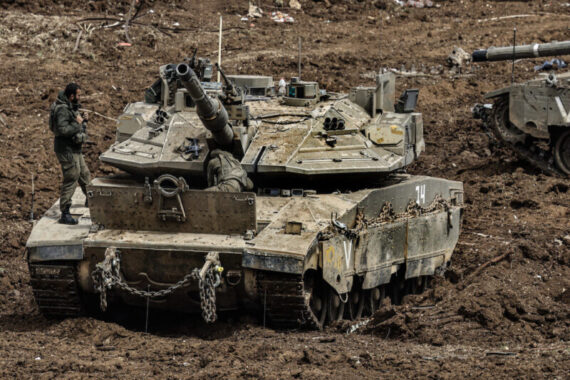
srael’s top military commander has warned that the country’s armed forces could face internal collapse if urgent steps are not taken to address a growing personnel shortage, according to local media reports. Speaking during a high-level security cabinet meeting, Chief of Staff Lt. Gen. Eyal Zamir said he was raising “10 red flags” about the army’s condition, cautioning that the strain on manpower has reached a critical level.
The warning comes as Israel continues to manage multiple military operations across several fronts, including Gaza, Lebanon, Syria, and the occupied West Bank. Military sources described “tremendous concern” within the ranks, noting that even in peacetime the army would require additional troops to maintain operational readiness. The ongoing war has significantly increased the burden, exposing gaps in personnel coverage that could undermine the military’s effectiveness.
Officials indicated that without a rapid increase in troop numbers, the army risks leaving key areas under-defended. The shortage has been exacerbated by the heavy reliance on reservists, many of whom have been repeatedly called up since the escalation of hostilities. Analysts say this reliance is becoming increasingly unsustainable, raising concerns about long-term readiness and morale.
In response to the growing crisis, Prime Minister Benjamin Netanyahu has signaled plans to extend mandatory military service and revise existing conscription laws. Speaking at the same cabinet meeting, Netanyahu said the government would move forward with reforms after the Jewish holiday of Passover, including potentially lengthening service periods for both men and women.
Under current law, Israeli men are required to serve 32 months, while women serve 24 months. Proposals under discussion could extend service to 36 months, reflecting the increased operational demands placed on the military. Government officials have also indicated that a new draft law aimed at expanding enlistment will be considered in the coming weeks.
The issue of conscription has become particularly contentious due to the longstanding exemption granted to the ultra-Orthodox, or Haredi, population. Efforts to expand mandatory service to include more Haredi men have repeatedly stalled due to political sensitivities. Netanyahu had previously set aside a proposed law to maintain unity within his governing coalition during wartime, but mounting pressure from military leaders and opposition figures has brought the issue back to the forefront.
Cabinet Secretary Yossi Fuchs confirmed that both extending service periods and advancing new legislation would be examined immediately after the holiday. Netanyahu dismissed objections from legal advisers regarding easing draft requirements, emphasizing that final decisions rest with the government.
The growing manpower shortage has intensified political tensions within Israel, with opposition leaders sharply criticizing the government’s handling of the issue. Yair Lapid warned that the failure to act decisively could lead to serious security consequences, stating that the government would not be able to claim ignorance in the event of future crises.
Other prominent figures have echoed these concerns, calling for sweeping changes to the conscription system. Avigdor Liberman has advocated for universal military service, while former Prime Minister Naftali Bennett urged the government to act without delay. Former military chief Gadi Eisenkot also stressed that mandatory service for all eligible citizens is “the need of the hour.”
The debate has exposed deep divisions within Israeli society, particularly over the role of the Haredi community in national defense. Some members of Netanyahu’s coalition have resisted changes to the current system, even boycotting parliamentary votes over proposed reforms. Critics argue that maintaining exemptions is no longer viable given the scale of the current conflict and the strain on the military.
Recommended
Meanwhile, the Israeli army has acknowledged a shortfall of approximately 15,000 troops, including around 8,000 combat soldiers. Military officials say the gap reflects both the expansion of operational responsibilities and a decline in available personnel. The army is currently engaged in sustained operations in Gaza, while also conducting strikes in Lebanon and responding to regional tensions involving Iran.
Recent escalations have further complicated the security landscape, including cross-border clashes with Hezbollah and broader regional confrontations. Analysts note that the increasing scope of military engagements has stretched Israel’s resources, making personnel shortages more acute and harder to manage.
As the government prepares to revisit conscription policies, the stakes remain high. Military leaders have made clear that without structural changes, the army’s ability to operate effectively across multiple fronts could be compromised. The coming weeks are expected to be critical in determining whether Israel can address its manpower crisis or face mounting risks to its national security.
(Source: Anadolu Agency)

Politics Today is dedicated to publishing insightful analyses in order to understand the changing nature of contemporary politics. It aims to contribute to the sound and constructive discussion of international affairs.
You can see how this popup was set up in our step-by-step guide: https://wppopupmaker.com/guides/auto-opening-announcement-popups/

Stay informed by subscribing to
our weekly newsletter.
You can see how this popup was set up in our step-by-step guide: https://wppopupmaker.com/guides/auto-opening-announcement-popups/
You can see how this popup was set up in our step-by-step guide: https://wppopupmaker.com/guides/auto-opening-announcement-popups/
You can see how this popup was set up in our step-by-step guide: https://wppopupmaker.com/guides/auto-opening-announcement-popups/
You can see how this popup was set up in our step-by-step guide: https://wppopupmaker.com/guides/auto-opening-announcement-popups/