

Trump Hints at Lifting F-35 Ban for Turkey After Talks With Erdoğan
Trump praised Erdoğan for what he described as “a decisive role” in shaping the post-Assad landscape.
September 26, 2025
A
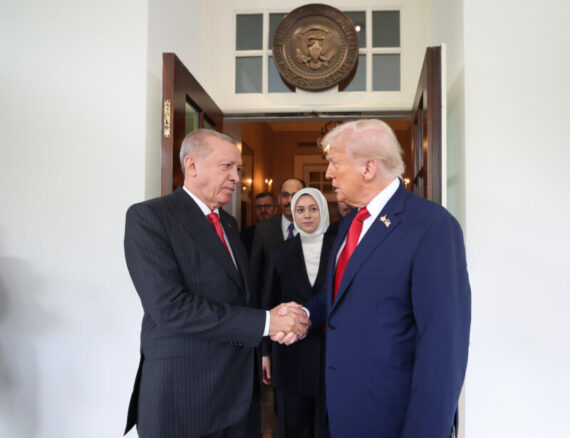
merican President Donald Trump has signaled that Washington could lift its ban on the sale of F-35 fighter jets to Turkey following high-level talks with Turkish President Recep Tayyip Erdoğan at the White House, marking a potential thaw in one of NATO’s most strained bilateral defense relationships.
The two-hour meeting on Thursday was the first face-to-face encounter between the two leaders since Erdoğan’s last visit to the White House in 2019. Speaking to reporters before the talks, Trump said the United States and Turkey could soon reach an understanding over the issue that has clouded defense cooperation for years.
“He needs certain things, and we need certain things, and we’re going to come to a conclusion,” Trump said. “You’ll know by the end of the day.”
The U.S. removed Turkey from its flagship F-35 fighter jet program in 2019 after Ankara purchased the Russian-made S-400 air defense system — a move Washington said compromised the security of NATO’s most advanced stealth aircraft.
After Thursday’s meeting, Trump described the talks as a “good meeting” but declined to elaborate on specific outcomes. Erdoğan, meanwhile, told Turkish media that he was encouraged by Trump’s openness to revisiting the F-35 issue, calling the discussion “productive and forward-looking.”
“It was clear that President Trump understands Turkey’s legitimate defense needs,” Erdoğan said. “We hope this dialogue will lead to a new chapter in our strategic partnership.”
Trump, who has repeatedly praised Erdoğan’s leadership style, nonetheless pressed the Turkish leader on Ankara’s continued energy trade with Moscow. Since early 2023, Turkey has purchased more than $90 billion (€77 billion) in Russian oil, coal, and natural gas—making it the third-largest buyer of Russian fossil fuels behind China and India, despite Western sanctions following Russia’s invasion of Ukraine.
“The best thing he could do is not buy oil and gas from Russia,” Trump said, adding that Erdoğan remains “respected by both Putin and Zelenskyy” and could play a “big role” in advancing peace efforts in Ukraine.
Erdoğan, who has maintained relations with both Moscow and Kyiv, has positioned himself as a mediator since the early stages of the war. Turkey’s role in brokering the now-collapsed Black Sea Grain Initiative won him praise internationally.
Erdoğan made it clear before arriving in Washington that lifting the F-35 suspension was a top priority. In an interview with Fox News earlier this week, he described the U.S. ban as “inconsistent with the spirit of strategic partnership.”
“I don’t think it’s very becoming of allies,” Erdoğan said. “We have been part of this program since its inception and have fulfilled all our obligations. It’s time to correct this mistake.”
Tensions between Turkey and Israel—another key U.S. ally—have also added strain to Ankara’s relations with Washington. Turkey’s vocal condemnation of Israel’s actions in Gaza and its repeated use of the term genocide to describe the civilian toll has drawn ire in Washington, though Trump appeared to avoid the topic publicly during Thursday’s meeting.
Recommended
Beyond defense, both leaders discussed the evolving situation in Syria following the fall of longtime president Bashar al-Assad in late 2024. The U.S. and Turkey are now coordinating on rebuilding efforts and counterterrorism operations against remaining extremist cells in northern Syria.
Trump praised Erdoğan for what he described as “a decisive role” in shaping the post-Assad landscape. “I think President Erdoğan is the one responsible for Syria—for the successful fight in ridding Syria of its past leader,” Trump said. “He doesn’t take the credit, but it’s actually a great achievement.”
Analysts say the warming tone between the two leaders could signal a broader realignment of U.S.-Turkey relations after years of tension.
After years of estrangement, Trump and Erdoğan’s handshake in the Oval Office was itself a message—to allies and rivals alike—that Washington and Ankara may once again be seeking common ground.
(Source: Euronews)

Politics Today is dedicated to publishing insightful analyses in order to understand the changing nature of contemporary politics. It aims to contribute to the sound and constructive discussion of international affairs.
You can see how this popup was set up in our step-by-step guide: https://wppopupmaker.com/guides/auto-opening-announcement-popups/

Stay informed by subscribing to
our weekly newsletter.
You can see how this popup was set up in our step-by-step guide: https://wppopupmaker.com/guides/auto-opening-announcement-popups/
You can see how this popup was set up in our step-by-step guide: https://wppopupmaker.com/guides/auto-opening-announcement-popups/
You can see how this popup was set up in our step-by-step guide: https://wppopupmaker.com/guides/auto-opening-announcement-popups/
You can see how this popup was set up in our step-by-step guide: https://wppopupmaker.com/guides/auto-opening-announcement-popups/

