B
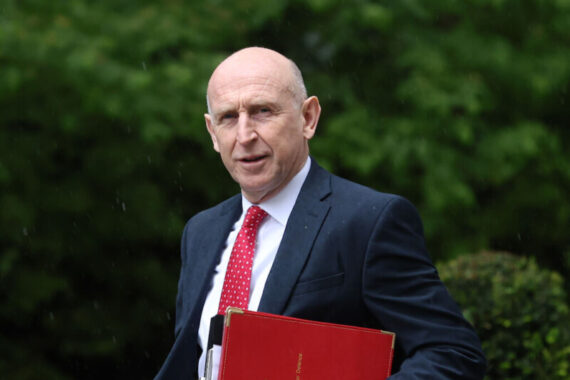
ritish Prime Minister Keir Starmer faced a major political setback on Thursday after Defense Secretary John Healey resigned from the government, accusing the prime minister of failing to provide the armed forces with the resources needed to address growing security threats.
The resignation, which came amid a heated dispute over military spending, was quickly followed by the departure of Armed Forces Minister Al Carns, deepening a crisis within the government just days before a crucial NATO summit and amid mounting pressure on Starmer’s leadership.
In a resignation letter addressed to the prime minister, Healey said the government’s planned defense spending levels were inadequate for the challenges facing Britain and its allies.
“The funding allocated falls well short of what is required for defence and the country at this dangerous time,” Healey wrote.
The departing defense secretary argued that the government had failed to match its rhetoric about growing international threats with the financial commitments needed to strengthen Britain’s military capabilities.
His resignation represents one of the most serious cabinet departures since Labour came to power in 2024 and raises fresh questions about divisions within the government over defense priorities.
Second resignation intensifies pressure
Shortly after Healey announced his resignation, Armed Forces Minister Al Carns also stepped down, delivering another blow to the government.
Carns, a former Royal Marine officer and one of the military’s most vocal advocates within government, criticized what he described as a widening gap between the demands placed on Britain’s armed forces and the resources available to meet them.
“The character of conflict is changing faster than our procurement can keep up with,” Carns wrote in a resignation letter posted on social media.
“We are asking our Armed Forces to operate in a more dangerous world on a budget written for a calmer one.”
Carns also accused the government of failing to show sufficient commitment to military personnel and veterans, saying ministers were not providing the support necessary for Britain’s armed forces to carry out their responsibilities effectively.
The dual resignations come at a sensitive moment for the government as it prepares to unveil a long-awaited defense investment plan intended to modernize Britain’s military and respond to growing international security challenges.
Debate over defense spending
At the heart of the dispute is the question of how much Britain should spend on defense in an increasingly volatile global security environment.
Like many NATO members, the United Kingdom faces pressure to increase military spending as concerns grow about Russia’s military ambitions and broader geopolitical instability.
Healey pointed to recent warnings from British intelligence services that Russia could potentially pose a threat to NATO territory within the next decade.
In his resignation letter, he argued that while the government publicly acknowledged the dangers facing Europe, it had failed to provide the funding necessary to prepare for them.
“You have been unable, and the Treasury has been unwilling, to commit the resources that the nation needs to defend the country at this time of rising threats,” he wrote.
The criticism centered on disagreements over the pace and scale of planned increases in military spending. Although the government has committed to raising defense expenditure significantly over the coming years, Healey and his allies reportedly pushed for faster and larger increases.
The dispute has delayed publication of the government’s defense overhaul strategy several times, reflecting deep disagreements within Whitehall over budget priorities.
Starmer defends record
Prime Minister Keir Starmer moved quickly to defend his government’s approach, insisting that Labour had already delivered the largest sustained increase in defense spending since the Cold War.
In a public response to Healey’s resignation, Starmer highlighted Britain’s military support for Ukraine, cooperation with Gulf allies, and efforts to strengthen security in strategically important regions, including the Strait of Hormuz.
“When we entered government in 2024, I took the decision to increase defence spending after the Conservatives hollowed out our armed forces,” Starmer wrote.
The prime minister argued that increased defense spending had required difficult choices elsewhere in government, including reductions to the international aid budget.
“I will always do what is needed to keep our country safe,” he said.
Starmer also defended the government’s forthcoming Defence Investment Plan, saying it would increase military spending in a financially sustainable way while supporting British industry and economic growth.
He acknowledged that additional investment would require significant reallocations of public spending but argued that such decisions were necessary to rebuild Britain’s military capabilities after years of underinvestment.
Recommended
Leadership under pressure
The resignations add to the political challenges confronting Starmer, whose popularity has declined sharply despite Labour’s landslide election victory two years ago.
The government has faced criticism over economic performance, public services, and a series of policy disputes that have unsettled parts of the Labour Party.
Last month’s local election results intensified questions about Starmer’s leadership, with some Labour members openly expressing concerns about the party’s direction.
Although no formal leadership challenge has emerged, political observers note that tensions within Labour have continued to grow.
Particular attention is focused on an upcoming parliamentary by-election in Makerfield, where Manchester Mayor Andy Burnham, widely viewed as one of Starmer’s most prominent rivals within the party, is contesting the seat.
A strong performance by Burnham could increase pressure on the prime minister and fuel speculation about a future leadership contest.
Seeking to contain the fallout, Downing Street announced the appointment of Dan Jarvis as the new defense secretary.
Jarvis, who previously served as security minister and has a military background, will immediately take charge of finalizing Britain’s defense modernization plans ahead of next week’s NATO summit.
His appointment is intended to reassure allies and military leaders that the government remains committed to strengthening Britain’s armed forces despite the high-profile resignations.
However, analysts say the departures of both Healey and Carns underscore broader concerns about whether Britain is moving quickly enough to adapt to a changing security environment marked by Russia’s military buildup, instability in the Middle East, and growing global competition.
With NATO allies pressing for higher defense spending and domestic political pressures mounting, Starmer now faces the challenge of restoring confidence in his leadership while convincing critics that Britain is prepared for the increasingly uncertain security landscape ahead.
(Source: CNN)