US Arms Sales to Taiwan Remain Flashpoint in US-China Relations
Analysts estimate Taiwan currently faces a weapons backlog approaching $30 billion. Some major systems approved years ago remain under production or awaiting delivery.
June 2, 2026
A
rms sales by the United States to Taiwan have once again become a focal point of tensions between Washington and Beijing following reports that President Donald Trump has delayed signing a $14 billion weapons package approved by Congress.
The issue gained renewed attention after Trump’s summit with Chinese President Xi Jinping earlier this month, during which Xi reportedly warned that Taiwan remains the most sensitive issue in relations between the two powers and could become “a very dangerous situation” if mishandled.
While Trump described the proposed arms package as a valuable negotiating tool in discussions with Beijing, Taiwan’s Defense Ministry said it had not received any official notification of a delay in military sales.
The debate highlights a long-running dispute that has shaped U.S.-China relations for decades and remains central to regional security in East Asia.
The foundation of U.S. military support for Taiwan dates back to 1979, when President Jimmy Carter switched diplomatic recognition from Taiwan to the People’s Republic of China.
The move ended Washington’s formal defense treaty with Taiwan, officially known as the Republic of China. In response, Congress passed the Taiwan Relations Act, requiring the United States to provide Taiwan with defensive weapons and maintain the island’s capacity for self-defense.
Beijing views Taiwan as part of China and has never ruled out using force to bring the island under its control. Chinese leaders strongly oppose U.S. arms sales, arguing that they interfere in China’s internal affairs and encourage Taiwanese resistance to reunification.
The United States, while recognizing Beijing diplomatically, maintains unofficial relations with Taiwan and continues to supply military equipment under the Taiwan Relations Act.
American officials have repeatedly stated that U.S. policy remains unchanged despite tensions over recent weapons sales.
Since 1979, Taiwan has purchased tens of billions of dollars in American military equipment, including fighter jets, warships, tanks, missile systems, and advanced defense technology.
However, many purchases have taken years to arrive.
Analysts estimate Taiwan currently faces a weapons backlog approaching $30 billion. Some major systems approved years ago remain under production or awaiting delivery.
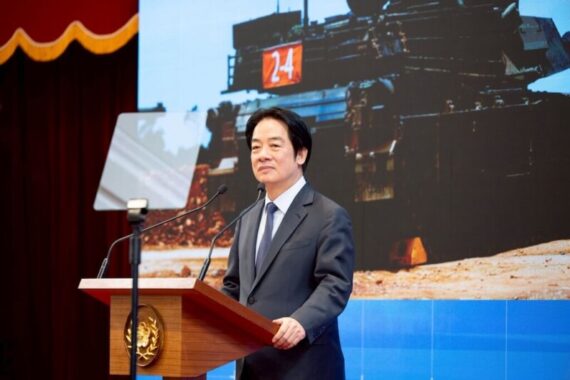
For example, 108 M1 Abrams tanks ordered in 2019 required nearly seven years to arrive. Meanwhile, advanced F-16V Fighting Falcon jets approved the same year are still undergoing production and testing.
Taiwan’s Defense Ministry says that among 23 major U.S. weapons packages approved over the past decade, only five have been fully delivered, while most remain in production.
The latest $14 billion package reportedly includes air-defense systems such as Patriot Missile System batteries and counter-drone capabilities. Analysts note that even if approved immediately, production timelines mean some systems would not reach Taiwan until 2028 or later.
The delays have intensified debate within Taiwan over whether it should continue purchasing expensive conventional platforms or focus more heavily on a so-called “porcupine strategy” emphasizing domestically produced drones, anti-ship missiles, and other asymmetric weapons designed to deter a larger Chinese military.
Recommended
For Beijing, U.S. arms sales to Taiwan represent more than a military issue. Chinese leaders see them as political support for a government they consider part of Chinese territory.
China argues that American weapons transfers violate past understandings between the two countries and undermine efforts toward eventual reunification.
Washington rejects that interpretation, maintaining that it has never agreed to end arms sales to Taiwan and that decisions regarding military support are made independently under U.S. law.
As strategic competition between the United States and China intensifies, Taiwan remains at the center of one of the world’s most sensitive geopolitical disputes. While military sales are intended to strengthen the island’s defenses, they continue to provoke strong objections from Beijing and remain a recurring source of friction between the two superpowers.
(Source: CNN)

Politics Today is dedicated to publishing insightful analyses in order to understand the changing nature of contemporary politics. It aims to contribute to the sound and constructive discussion of international affairs.
You can see how this popup was set up in our step-by-step guide: https://wppopupmaker.com/guides/auto-opening-announcement-popups/

Stay informed by subscribing to
our weekly newsletter.
You can see how this popup was set up in our step-by-step guide: https://wppopupmaker.com/guides/auto-opening-announcement-popups/
You can see how this popup was set up in our step-by-step guide: https://wppopupmaker.com/guides/auto-opening-announcement-popups/
You can see how this popup was set up in our step-by-step guide: https://wppopupmaker.com/guides/auto-opening-announcement-popups/
You can see how this popup was set up in our step-by-step guide: https://wppopupmaker.com/guides/auto-opening-announcement-popups/