US Signals Possible Return to Strikes on Iran as Ceasefire Deadline Looms

April 22, 2026

Trump indicated he did not intend to extend the 14-day truce, which is set to end on Wednesday. He framed renewed military action as part of a strategy to strengthen Washington’s position in negotiations.
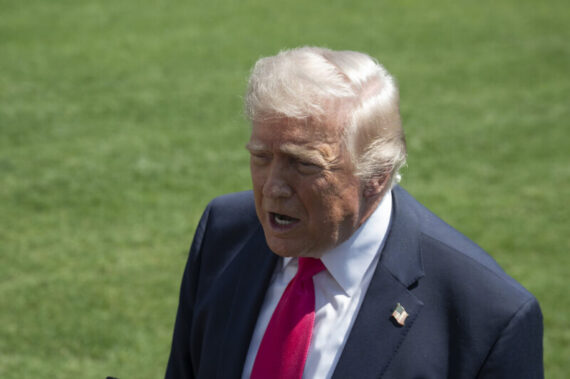
United States President Donald Trump speaks to the Press before departs at the White House to Las Vegas, Nevada on April 16, 2026, in Washington DC. Photo by Anadolu Images.

D

onald Trump has said the United States is likely to resume bombing Iran as a fragile ceasefire approaches its expiration, underscoring rising tensions despite ongoing diplomatic efforts.

Speaking on Tuesday, Trump indicated he did not intend to extend the 14-day truce, which is set to end on Wednesday. He framed renewed military action as part of a strategy to strengthen Washington’s position in negotiations, saying the US was prepared to act if talks failed to produce results.

“We’re ready to go. The military is raring to go,” he said, adding that he expected force would ultimately help secure a favorable agreement. However, he did not specify what such a deal would entail or how quickly it might be reached.

The remarks were accompanied by statements on Truth Social, where Trump accused Tehran of repeatedly violating the ceasefire. While such claims could serve as a basis for renewed strikes, they have not been independently verified.


Diplomatic channels remain open

At the same time, diplomatic channels remain open. A new round of talks is expected in Islamabad, where US Vice President JD Vance is set to meet Iranian parliamentary speaker Mohammad Bagher Ghalibaf. The discussions are seen as a last effort to extend the truce or reach a broader agreement before hostilities potentially resume.

Trump’s latest comments reflect a broader pattern of mixed messaging from the administration, alternating between warnings of escalation and suggestions that a deal may be within reach. Earlier in the week, he warned that “lots of bombs” could be used if negotiations collapsed, even as officials pointed to ongoing diplomatic engagement.

Senior figures in Washington have also adopted a hard line. Defense Secretary Pete Hegseth recently said US forces were “locked and loaded,” signaling readiness to target Iran’s infrastructure, including its energy sector.

Firm Iranian opposition to coercive diplomacy

Iranian officials have responded with firm opposition to what they describe as coercive diplomacy. Ghalibaf said Tehran would not negotiate “under the shadow of threats,” while military leaders warned that any renewed US strikes would prompt an immediate and decisive response.

The standoff has already had wider implications, particularly for global energy markets. Fatih Birol, head of the International Energy Agency, warned that the crisis could have unprecedented consequences, especially when combined with ongoing disruptions linked to Russian gas supplies.

Analysts say the next phase of the conflict will likely hinge on the outcome of talks in Islamabad. A breakthrough could stabilize the situation, but failure to reach an agreement may lead to a rapid return to military confrontation.

With the ceasefire deadline fast approaching, both sides appear to be preparing for multiple scenarios—keeping diplomacy alive while signaling readiness for escalation.

(Source: The Guardian)

Politics Today is dedicated to publishing insightful analyses in order to understand the changing nature of contemporary politics. It aims to contribute to the sound and constructive discussion of international affairs.