US, South Korea to Tackle Troop Costs, China, and North Korea
There is even talk within the Pentagon of reducing the U.S. military presence in South Korea if an agreement cannot be reached.
August 22, 2025
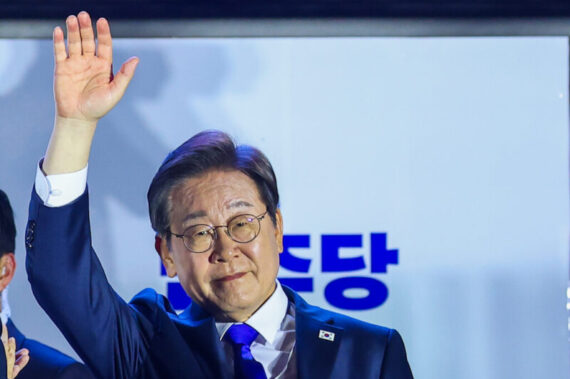
W
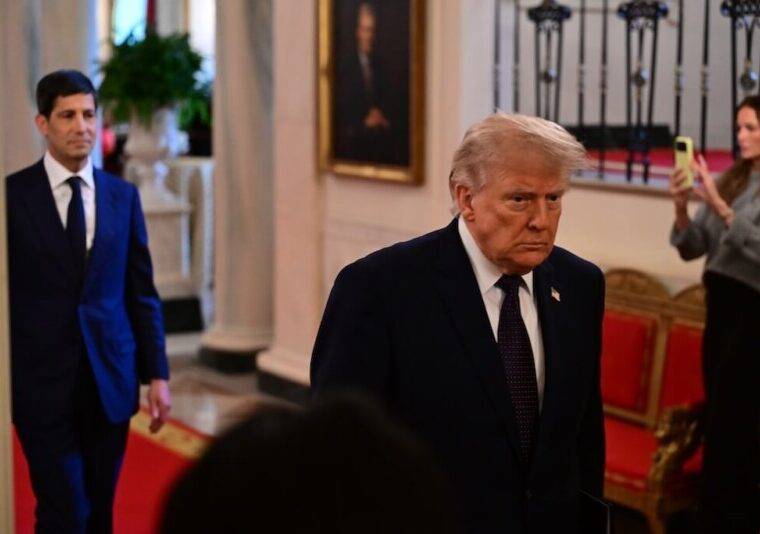
hen South Korean President Lee Jae Myung meets U.S. President Donald Trump next week in Washington for their first summit, the agenda will be dominated by security and defense costs, rising tensions with China, and the future of diplomacy with North Korea.
The White House talks come just weeks after a whirlwind of trade negotiations left Seoul largely sidelined, and they are expected to set the tone for the next phase of the alliance between the two nations.
At the heart of the talks will be the issue of “burden sharing”—the funding for 28,500 U.S. troops stationed in South Korea as part of a longstanding security arrangement dating back to the Korean War. According to U.S. officials, Trump is expected to push for a significant increase in Seoul’s contribution, despite South Korea already paying over $1 billion annually and having financed the construction of the massive Camp Humphreys base.
“President Trump clearly wants more,” said Victor Cha of the Center for Strategic and International Studies, noting previous calls for Seoul to pay as much as $5 billion to $10 billion per year. “He wants defense spending closer to 5% of GDP for all allies. South Korea is currently at 3.5%.”
There is even talk within the Pentagon of reducing the U.S. military presence if an agreement cannot be reached, though some officials are working to frame the alliance more broadly in terms of countering Chinese influence in the region.
While the summit is primarily framed as a security discussion, Washington is increasingly looking to its Asian allies to play a role in its wider competition with China. Discussions are expected to include how U.S. forces in South Korea might be used in a potential crisis involving Taiwan, though Seoul remains cautious about becoming entangled in Beijing’s disputes.
President Lee has pledged full support for the U.S. alliance but has also advocated for a “balanced approach” between Washington and Beijing—an approach that may be tested as pressure grows to align more closely with U.S. Indo-Pacific strategy.
“The more explicit the depiction of U.S. Forces Korea as having an anti-China mission, the more likely China will retaliate economically or politically,” said Bruce Klingner of the Mansfield Foundation, recalling Beijing’s response to the 2017 deployment of the THAAD missile defense system in South Korea.
Trump and Lee are likely to find common ground is North Korea. Both leaders have signaled openness to renewed engagement with Kim Jong Un, although Pyongyang has rebuffed recent overtures and deepened its ties with Russia.
“I doubt much substance will be said on North Korea beyond committing to diplomacy and reiterating a goal of denuclearization,” said Jenny Town of the Washington-based 38 North program.
Lee, in an interview with Japan’s Yomiuri Shimbun this week, reiterated that his administration would “lay the groundwork” for dismantling North Korea’s nuclear weapons program through talks and close coordination with Washington. However, Pyongyang has repeatedly insisted its nuclear arsenal is non-negotiable.
Recommended
The summit also comes amid domestic debate in South Korea about whether it should develop its own nuclear capabilities or pursue reprocessing of nuclear materials for energy and industrial purposes. Foreign Minister Cho Hyun told parliament that Seoul may seek U.S. approval to reprocess or enrich uranium—an idea met with skepticism by arms control experts.
“Too many South Korean politicians are flirting with the idea of their country acquiring the nuclear weapons option,” said Daryl Kimball of the Arms Control Association. “The foreign minister’s claims about the purpose of his government’s interest are hardly reassuring.”
Under the current U.S.–South Korea Agreement for Nuclear Cooperation, Seoul is prohibited from reprocessing or enriching nuclear materials, as these activities could provide the means to produce nuclear weapons.
With both leaders keen to project strength abroad while managing political challenges at home, the summit is likely to produce headline agreements on continued diplomacy with North Korea and shared commitment to the alliance. But the thorny questions—how much South Korea should pay for its security, and how far it is willing to go in supporting U.S. policy toward China—may remain unresolved.
(Source: Reuters)

Politics Today is dedicated to publishing insightful analyses in order to understand the changing nature of contemporary politics. It aims to contribute to the sound and constructive discussion of international affairs.
You can see how this popup was set up in our step-by-step guide: https://wppopupmaker.com/guides/auto-opening-announcement-popups/

Stay informed by subscribing to
our weekly newsletter.
You can see how this popup was set up in our step-by-step guide: https://wppopupmaker.com/guides/auto-opening-announcement-popups/
You can see how this popup was set up in our step-by-step guide: https://wppopupmaker.com/guides/auto-opening-announcement-popups/
You can see how this popup was set up in our step-by-step guide: https://wppopupmaker.com/guides/auto-opening-announcement-popups/
You can see how this popup was set up in our step-by-step guide: https://wppopupmaker.com/guides/auto-opening-announcement-popups/