T
he United States has announced it will begin enforcing a sweeping naval blockade on Iranian ports, marking a sharp escalation in tensions with Iran after high-stakes negotiations failed to produce a breakthrough.
The decision follows weekend talks in Islamabad—the first direct meeting between U.S. and Iranian officials in more than a decade—which ended without agreement despite efforts to extend a fragile two-week ceasefire. The ceasefire had been aimed at halting six weeks of intense fighting across the Gulf region that has already left thousands dead and disrupted global energy flows.
According to United States Central Command, the blockade will take effect Monday at 10 a.m. ET and will target all maritime traffic entering or exiting Iranian ports along both the Arabian Gulf and the Gulf of Oman. Military officials emphasized that the operation would be applied “impartially” to vessels of all nations interacting with Iranian ports, though shipping transiting to non-Iranian destinations through the Strait of Hormuz would not be directly impeded.
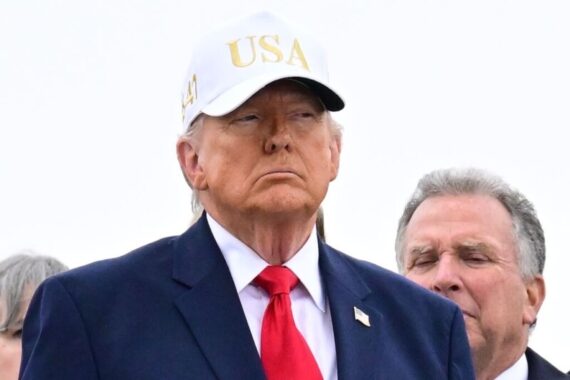
U.S. President Donald Trump further escalated rhetoric, warning that American forces would intercept vessels in international waters if they had paid what he described as “illegal tolls” to Iran. He also vowed that any Iranian attack on U.S. forces or commercial shipping would be met with overwhelming force. Additionally, the U.S. Navy has begun operations to clear naval mines reportedly deployed by Iran in the Strait of Hormuz, a chokepoint through which roughly 20% of global oil supplies pass.
Markets react to rising tensions
Global markets responded swiftly to the announcement. Oil prices surged more than 7%, pushing benchmark crude above $100 per barrel, while the U.S. dollar strengthened and stock futures fell. Shipping activity in the Strait of Hormuz slowed significantly, with tanker operators rerouting or delaying voyages amid fears of confrontation.
Analysts warn that prolonged disruption in the Gulf could drive sustained inflation worldwide. The conflict has already strained supply chains and energy markets, and the blockade threatens to further destabilize global trade flows.
Iranian officials reacted sharply, accusing Washington of pursuing “maximalist” demands and undermining diplomatic progress. The Islamic Revolutionary Guard Corps warned that any foreign military vessels approaching sensitive waters would be considered a violation of the ceasefire and would face a “decisive” response.
Iranian Foreign Minister Abbas Araqchi criticized the U.S. for shifting its negotiating position at the last moment, saying Tehran had been close to agreeing on a framework memorandum before talks broke down. He described the U.S. approach as inconsistent and confrontational, adding that goodwill had not been reciprocated.
At the heart of the dispute are longstanding disagreements over Iran’s nuclear program and regional influence. U.S. officials said Tehran rejected demands to halt uranium enrichment, dismantle key nuclear facilities, and cease support for regional groups including Hamas, Hezbollah, and the Houthis. Iran also resisted calls to fully guarantee open access through the Strait of Hormuz.
Iranian President Masoud Pezeshkian reiterated that Tehran remains open to a “balanced and fair agreement” but insisted that Washington must return to international legal frameworks to rebuild trust.

Recommended
What’s next?
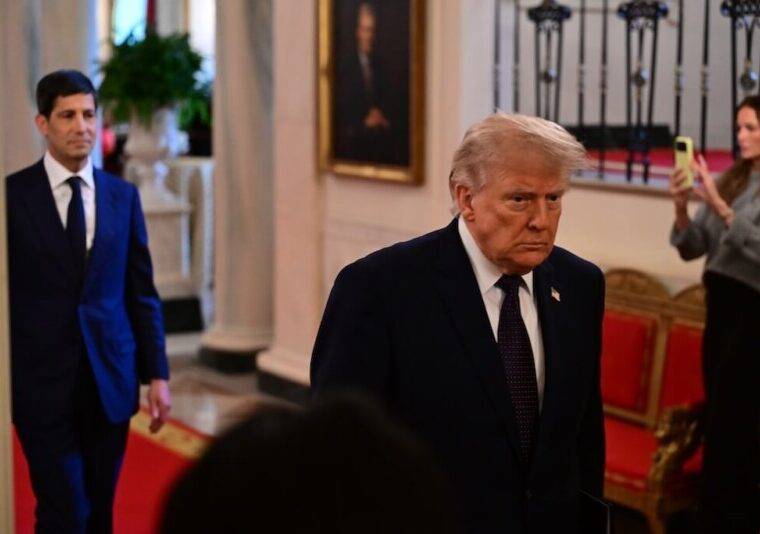
Despite the escalation, President Trump signaled mixed expectations about future diplomacy. While he initially expressed confidence that Iran would return to negotiations, he later stated that the U.S. could proceed without further talks if necessary.
The collapse of negotiations has raised concerns about a broader regional conflict. The Gulf remains heavily militarized, and any miscalculation in or around the Strait of Hormuz could trigger a wider confrontation involving multiple regional and global powers.
Experts caution that enforcing a comprehensive blockade against Iran could prove difficult to sustain over time without broader international support. The operation risks not only military escalation but also legal and diplomatic challenges, particularly if neutral shipping is affected.
Meanwhile, the economic consequences are already being felt. Rising fuel costs are expected to persist, with Trump acknowledging that high oil and gasoline prices could continue through upcoming U.S. midterm elections. Iranian officials have also highlighted the political impact, pointing to rising fuel prices in the United States as evidence of the blockade’s global repercussions.
As tensions mount, the prospects for a renewed diplomatic breakthrough remain uncertain. With both sides holding firm on key demands, the situation in the Gulf appears poised to remain volatile in the weeks ahead.
(Source: Reuters)