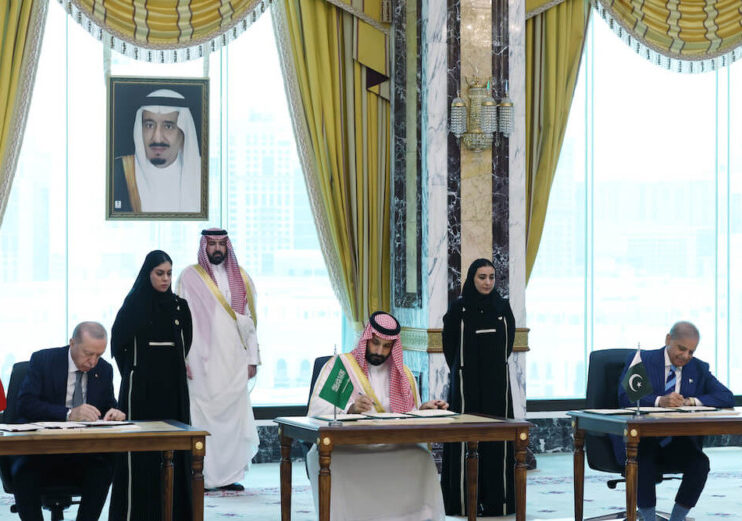
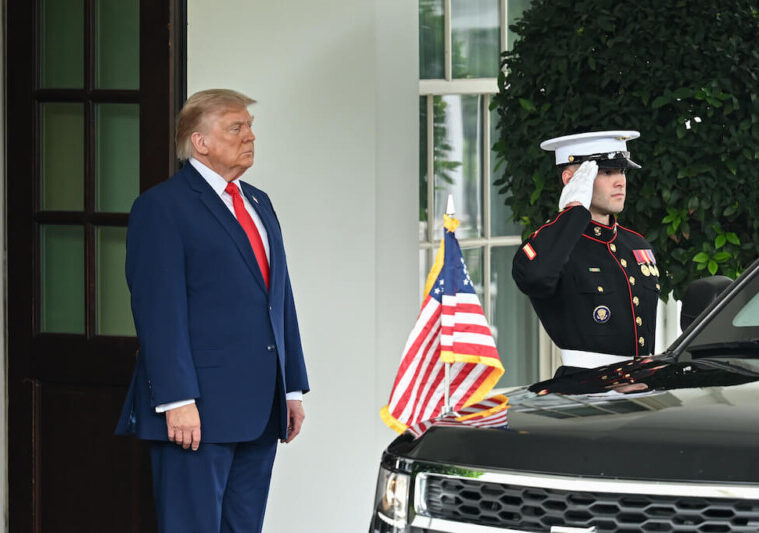
What Does the Memorandum of Understanding Signed Between the US and Iran Mean?
The sanctions imposed on Iran in connection with its nuclear program constitute one of the provisions contained in the Memorandum of Understanding with the United States.
July 6, 2026
F
ollowing approximately 100 days of tension, Iran and the US announced on Sunday 14 June that they had reached an agreement on a memorandum of understanding. On 17 June, the text of the 14-point memorandum of understanding was signed by US President Donald Trump and Iranian President Mesud Pezeşkiyan. Thus, an agreement has been reached that will launch a 60-day negotiation process between the two countries. The final outcome will be determined by the agreement reached at the conclusion of these 60 days of negotiations. From this perspective, it is fair to say that the current memorandum of understanding serves as a sort of ‘goodwill document’ to initiate the negotiation process between the two countries. This document also serves as a guide regarding the issues to be addressed during the negotiation process. In this context, it is worth examining in detail the matters covered by the Memorandum of Understanding.
The provisions set out in the 14-article Memorandum of Understanding are broadly divided into two categories. Some of these are provisions that come into force upon the signing of the Memorandum of Understanding, whilst others are provisions expected to come into force subject to the outcome of the 60-day negotiations.
Accordingly, Articles 1, 4, 5, 10 and 11 of the Memorandum of Understanding cover the matters that come into force upon its signing. Article 1 stipulates that the US, Iran and their allies must immediately and permanently cease hostilities on all fronts where tensions persist, particularly in Lebanon. This article also emphasises that the parties shall henceforth refrain from initiating war or military operations against one another, shall not issue threats, and that Lebanon’s sovereignty and territorial integrity shall be guaranteed. Consequently, the implementation of this article extends not only to the US and Iran but also to Israel and Hezbollah. Indeed, Iranian Foreign Minister Abbas Arakchi stated in a statement that one party to the agreement consists of the US and Israel, whilst the other comprises Iran and Hezbollah. From this perspective, any potential conflict between Hezbollah and Israel is of critical importance. Given Israel’s statements that it will not withdraw from the territories it occupies in Lebanon, it is clear that this provision is also one of the factors rendering the agreement fragile.
Another important issue—the keeping of the Strait of Hormuz open and the regulation of transit—is addressed in Articles 4 and 5 of the Memorandum of Understanding. Accordingly, the US will lift its naval blockade against Iran within 30 days, commencing immediately after the signing of the agreement. In return, Iran will ensure that traffic through the Strait of Hormuz returns to pre-war levels within 30 days. It has been stated that Iran will not charge fees to ships transiting through the Strait of Hormuz for a period of 60 days. Once the 60-day period has ended, it is envisaged that Iran will reach an agreement with Gulf states, primarily Oman, regarding transit arrangements. It has also been stated that the US will withdraw its troops from the vicinity of Iran. According to statements by US officials, this does not imply that the US will withdraw from its bases in the region; rather, it refers to the restoration of the US military presence to its pre-war status.
Another issue expected to be implemented following the signing of the memorandum of understanding concerns Iran’s frozen assets and restrictions on its oil sales. Under Articles 10 and 11 of the Memorandum of Understanding, the US Department of the Treasury will issue the necessary authorizations regarding Iran’s oil sales and related insurance, transport and banking transactions, which will remain in force until sanctions are lifted. In addition, Iran’s frozen assets will be released. The details regarding the implementation of these articles will be determined during the negotiation process.
In addition to the provisions of the Memorandum of Understanding that come into force upon signature, there are also provisions that will come into force with the final agreement, which is expected to be signed following 60 days of negotiations. These provisions cover more fundamental issues than those that come into force upon the signing of the Memorandum of Understanding and require detailed technical information.
The sanctions imposed on Iran in connection with its nuclear program also constitute one of the provisions contained in the Memorandum of Understanding. The sanctions are addressed in Articles 6 and 7 of the Memorandum of Understanding. Accordingly, all sanctions imposed on Iran – primarily those enacted through United Nations Security Council (UNSC) resolutions and those unilaterally imposed by the US – will be lifted. In addition, the US will plan an investment program worth at least 300 billion dollars, with the assistance of its regional allies, to support Iran’s economic development. The program will operate entirely under US supervision. It is stated that this program has been established by the US as an alternative to Iran’s claim for war reparations. [OO1] The implementation of the program is contingent upon a final agreement following the negotiations. The issue of sanctions, meanwhile, constitutes one of the first matters to be addressed upon the commencement of negotiations.
An examination of the articles of the Memorandum of Understanding reveals that, alongside operational provisions, there are also articles containing general provisions. For example, Article 2 of the Memorandum emphasizes that Iran and the US shall respect each other’s sovereignty and territorial integrity and shall not interfere in each other’s internal affairs.
Finally, Articles 12, 13 and 14 regulate the operation of the Memorandum of Understanding. According to these articles, a mechanism will be established to monitor the implementation of the Memorandum of Understanding. Once the provisions set out in Articles 1, 4, 5, 10 and 11 of the Memorandum of Understanding have entered into force, the two parties will commence 60 days of negotiations. The final agreement reached following the 60-day negotiations will also be confirmed by a UN Security Council resolution.
Recommended
One of the most significant aspects envisaged by the Memorandum of Understanding concerns Lebanon. Accordingly, it provides for an immediate cessation of hostilities in Lebanon and guarantees of Lebanese sovereignty and territorial integrity. However, Israel has stated that it will not withdraw from the territories it occupies in Lebanon; not content with this, it has also launched attacks on Lebanese territory following the announcement that an agreement had been reached between Iran and the US. Similarly, the memorandum of understanding signed between Iran and the US has drawn predominantly negative reactions from within Israeli domestic politics.
Channel 14, based in Israel and a staunch supporter of Netanyahu, has levelled harsh criticism at Trump over the signed memorandum of understanding. This situation has prompted a reaction from US Vice-President JD Vance. Consequently, it is evident that the memorandum of understanding is highly fragile, given that Israel – one of its indirect parties – has adopted such an adversarial stance. However, as can be inferred from the reactions of Trump and his deputy Vance, the US administration appears determined to secure a final agreement. Yet, only time will tell whether this US determination will be sufficient to rein in Israel.
Another risk factor is the potential for new regulations governing transit through the Strait of Hormuz. According to the provision in the memorandum of understanding, Iran will temporarily allow transit through the Strait of Hormuz without charging any fees. However, once the 60-day period has expired, a new arrangement will be put in place in consultation with other Gulf states, primarily Oman. Indeed, Iran has previously held discussions with Oman on this matter. Iran maintains that transit through the Strait of Hormuz should be under the control of both Oman and Iran. In this regard, it proposes that a specific fee be charged in return for the service provided. Furthermore, Iran has raised the issue of distinguishing between military and civilian transit. Iran’s refusal to back down from these demands, coupled with the other side’s refusal to accept them, poses a risk to the negotiation process.
Although the signed memorandum of understanding contains elements of risk, it represents the highest-level interaction between the two countries since the 1979 Iranian Revolution. For the first time since then, the presidents of the two countries have signed a document aimed at securing peace. This not only signals the beginning of a new era but also demonstrates that 47 years of hostility have borne no fruit. The most concrete example of this is the tensions and conflicts that have arisen between the two sides over the past year. For this reason, the memorandum of understanding signed is more likely to evolve into a lasting agreement than previous ones.
Unlike other negotiations, the current talks are taking place against a backdrop where other options – primarily war – have already been tried alongside diplomacy. Given that war, as the most radical option, has proved fruitless, it is clear that the two sides have no alternative to diplomacy. Consequently, it is highly likely that the new process that has been initiated will result in peace. However, given that the negotiations leading to the KOEP lasted 18 months, it is clear that a 60-day period is not sufficient for a comprehensive agreement. It is therefore reasonable to assume that this period will be extended and that a longer-term process is on the cards.
(Originally published in Turkish by SETA Foundation)

İsmet Horasanlı, who earned his bachelor’s degree from the Department of International Relations at Uludağ University, completed his master’s degree in the same department at the same university with a thesis titled “Post-Revolutionary Iran’s Foreign Policy Toward the Gulf Region.” While in the United States in 2014, Horasanlı was selected to participate in and successfully completed the “CIEE Civic Leadership Summit” program organized by CIEE. Horasanlı worked at İRAM from 2017 to 2021. Horasanlı earned his second master’s degree from the Institute of International Relations and Strategic Studies (ULİSA) at AYBÜ, in the Security Studies program, with his thesis titled “The Rise of ISIS in Afghanistan: Islamic State-Khorasan (IS-K).” Horasanlı is currently pursuing his Ph.D. at Ankara University of Social Sciences and works at SETA Ankara. Horasanlı’s research focuses on Afghanistan and Iranian foreign policy. He is fluent in English and Farsi, and has intermediate proficiency in Pashto and Arabic.
You can see how this popup was set up in our step-by-step guide: https://wppopupmaker.com/guides/auto-opening-announcement-popups/

Stay informed by subscribing to
our weekly newsletter.
You can see how this popup was set up in our step-by-step guide: https://wppopupmaker.com/guides/auto-opening-announcement-popups/
You can see how this popup was set up in our step-by-step guide: https://wppopupmaker.com/guides/auto-opening-announcement-popups/
You can see how this popup was set up in our step-by-step guide: https://wppopupmaker.com/guides/auto-opening-announcement-popups/
You can see how this popup was set up in our step-by-step guide: https://wppopupmaker.com/guides/auto-opening-announcement-popups/