Who Is Responsible for What is Happening in Iran?
Many times before in Iran, demonstrations that were enthusiastically supported by one segment of the population have been viewed with concern by another.
February 24, 2026
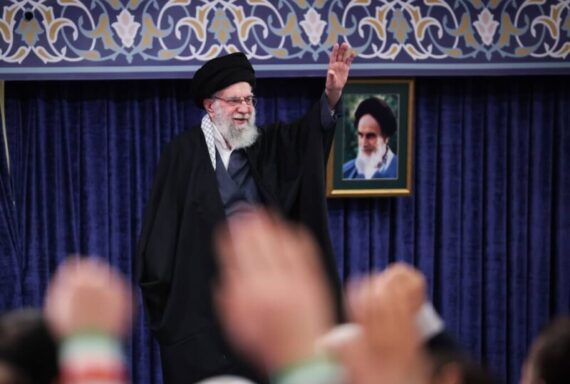
The protests in Iran, which began on 28 December and continued intensely for around three weeks, resulted in widespread destruction and a high number of casualties, as well as sparking significant debate. Although this wave of protests was not structurally different from previous ones in terms of nature and scope, the context in which it occurred intensified the debates, and the death toll was far higher than in previous protests. However, before addressing the points of contention, some important aspects of the protests must be highlighted.
While it is significant in itself that a certain group of people took to the streets to start a protest movement, it is important not to jump to conclusions about how widely these protests resonate with the general public. Generally, assessments of Iran under such circumstances are largely based on ideological considerations, either for or against the regime, so a degree of caution is necessary. Indeed, many times before in Iran, demonstrations that were enthusiastically supported by one segment of the population have been viewed with concern by another. Therefore, it is crucial not to overlook the fact that the vast majority of people do not want the country to descend into chaos, and this should be taken into account in discussions surrounding the protests in Iran and the wider region.
The first point of contention was what exactly happened after the internet was shut down in the country on 8 January. While it is certain that protests intensified in various regions during this time and that thousands died when security forces responded harshly to protesters, many questions remain unanswered.
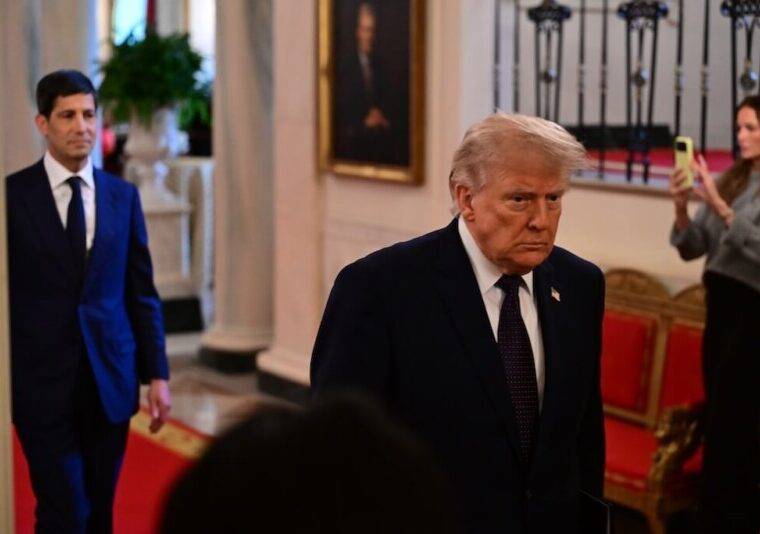
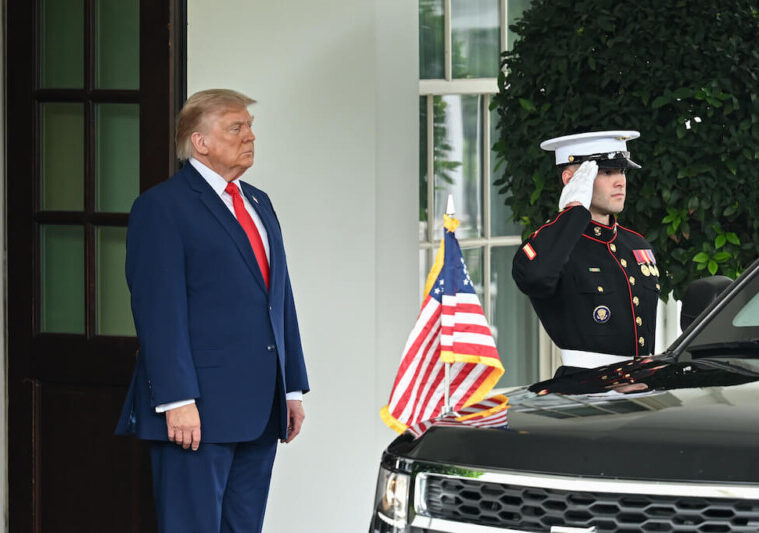
Another point of contention is the impact that the protests will have on the already high level of tension between Iran, the US and Israel. Tensions have already escalated due to US actions, particularly the announcement by US Central Command (CENTCOM) that the USS Abraham Lincoln (CVN 72) aircraft carrier is being deployed to the Middle East. As US President Donald Trump stated, the situation is “fluid” and its direction is currently unclear.
The third point of contention, and the subject of this article, is who is responsible for the events that have occurred. This issue will be the subject of intense debate in Iran in the coming period and is likely to cause divisions among the Islamic Republic elites, who are currently united by the threat to their security. As the question of responsibility is directly linked to the protesters’ demands and grievances, it is appropriate to address this aspect of the issue first.
As Iranian society is not monolithic, demands vary depending on factors such as age, socioeconomic status, political views and collective identity. However, economic grievances provide common ground for many social classes and groups. Indeed, the general economic situation and the uncontrollable rise in the exchange rate were influential factors in the outbreak of protests. Frequently discussed economic problems in the country include unemployment, the housing crisis (especially in large cities) and high inflation. Another frequently raised issue is the emigration of young people because they see no future for themselves in Iran.
Conversely, political discontent amplifies the reaction to deteriorating living conditions. Therefore, unlike in most Gulf Arab states, where potential problems arising from discontent over limited political freedoms are resolved through widespread prosperity, Iran lacks this balance. In other words, Iran lacks the economic means necessary for ‘authoritarian bargaining’.
The impact of Iran’s long history of politicization and its politically strong societal structure should also be considered alongside its economic problems. The problem arises precisely here: those governing Iran have failed to develop policies that address the economic demands of a growing segment of society, nor have they been able to meet its political expectations. The recent protests in Iran have once again highlighted the intricate relationship between economics and politics. So, who is responsible?
Read: The Real Threat to Iran
In a speech delivered in Urumiye in October 2025, Iranian President Masoud Pazeshkian criticised his country’s economic system and its officials. He stated: ‘Turkey has no oil or gas, and neither do Japan or Korea. They buy oil, yet their situation and living conditions are much better than ours. We have oil and gas, yet we are hungry. We have problems. So where is the problem?” Pazeshkian continued, ‘The problem lies with us. How can it be that we both sell oil and gas yet the people suffer? The fault is ours.
While there’s no simple way to describe Iran’s problems, ‘lack of policy’ is an apt concept. The chronic inability to take the necessary political steps to move the country forward is exacerbating the problems and making solutions more difficult. Indeed, Pezeshkian’s statement, made immediately after the protests began, that some decisions had been and would be made in a desperate attempt to resolve the situation, is a simple manifestation of this. Reports produced by various official Iranian institutions also highlight this issue, emphasising that economic policies are particularly reactive, unsustainable and focused on short-term solutions.
Another issue discussed was US pressure on the Iranian economy. The US is indeed a country that Iranian officials frequently hold responsible for what is happening to their country, as seen in the recent protests.
In a speech on 18 January, Iranian Supreme Leader Ali Khamenei stated that the US was responsible for the events, saying: “We hold the US President responsible for the loss of life, damage and slander in Iran.” He added: “I can say with certainty that America’s aim in the recent uprising was to swallow Iran. In past uprisings, the Western media intervened, but this time the US President himself encouraged the insurgents”.
Various Iranian officials have also claimed that the wave of protests is a continuation of military attacks planned for June 2025. There is apparently another factor worrying Iranian officials in this context: increasing US influence in Iran.
Recommended
This complex phenomenon has various dimensions. However, given that the principles and slogans of the Islamic Revolution are no longer relevant to large sections of society and social media is used so intensively, it is clear that young people in Iran are highly susceptible to external influence, particularly US influence. This is also behind Khamenei’s accusation that Trump is responsible for loss of life in Iran. Over the years, protests in Iran have demonstrated the increasing power of the US to influence Iranian society. Khamenei implies that some protesters took to the streets and resorted to violence with US encouragement.
Furthermore, contrary to popular belief, this group is not composed of ethnic or sectarian minorities, but rather of young people with average identities in Iran. It is also clear that their numbers are growing. The existence of political and economic problems is expanding and radicalising this group, who feel mentally and spiritually alienated from the current political system.
In November 2025, during a speech to students on the occasion of the Day of Struggle Against Global Imperialism — celebrated annually in Iran to commemorate the 4 November 1979 siege of the US embassy — Khamenei reiterated the dangers posed by the US to Iran. ‘In these troubled times, it is only when our youth are strong internally and religiously, and believe in and trust in divine power, that they can literally say “Death to America” and stand against the power and tyranny of the pharaohs of this age.’ Perhaps not the Supreme Leader himself, but high-ranking officials who are more closely connected to the people know that these words no longer hold real meaning, and that people are seeking political solutions to their problems, not slogans.
The recent wave of protests has taught the Iranian establishment a shocking lesson in this respect. Those who failed to develop an effective and persuasive political strategy to address the country’s unresolved political and economic problems in the past are responsible for the current situation. If such a strategy cannot be produced in the current situation, decision-makers will be held responsible.
Serhan Afacan holds a BA in history and international relations. He also has a PhD in Iranian studies. His research focuses on the modern Iranian history and politics.
You can see how this popup was set up in our step-by-step guide: https://wppopupmaker.com/guides/auto-opening-announcement-popups/

Stay informed by subscribing to
our weekly newsletter.
You can see how this popup was set up in our step-by-step guide: https://wppopupmaker.com/guides/auto-opening-announcement-popups/
You can see how this popup was set up in our step-by-step guide: https://wppopupmaker.com/guides/auto-opening-announcement-popups/
You can see how this popup was set up in our step-by-step guide: https://wppopupmaker.com/guides/auto-opening-announcement-popups/
You can see how this popup was set up in our step-by-step guide: https://wppopupmaker.com/guides/auto-opening-announcement-popups/