Why is Riyadh Seeking a Joint Defense Platform with Ankara and Islamabad?
Recent official statements from Ankara indicating that it will strengthen its partnership with Riyadh and Islamabad.
February 6, 2026
R
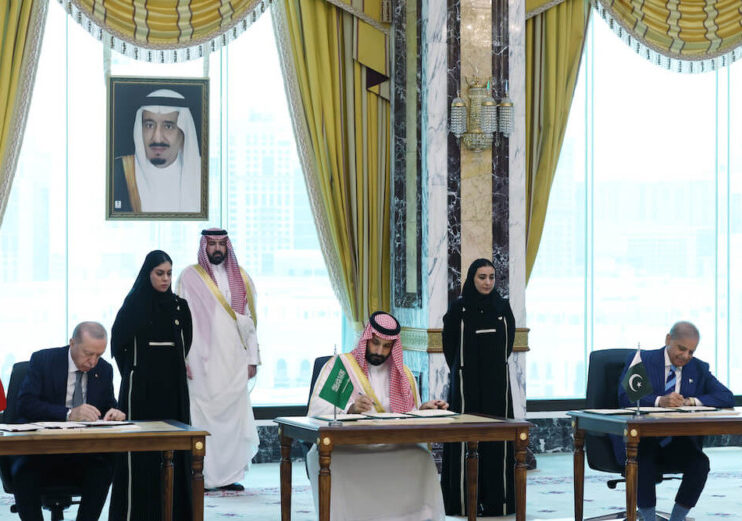
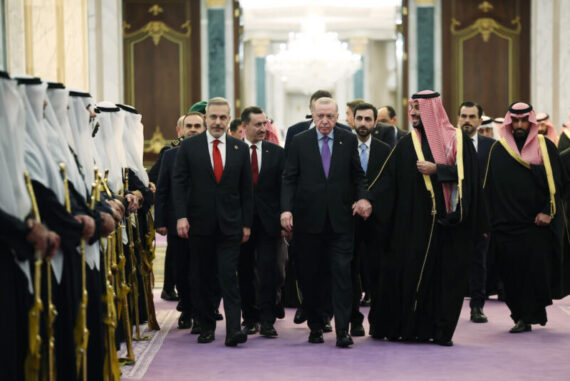
ecent contacts between Riyadh, Ankara and Islamabad regarding defense and security policy are the result of a long-term search for a joint defesce platform. According to Pakistani officials, a draft text has been prepared as part of this ten-month process of joint defense cooperation. It is clear, therefore, that the process is not a reaction to sudden developments. In fact, the process is not new, as evidenced by the consultative meetings held between the three countries in Riyadh in 2023. The issue demonstrates the three major power centers’ will to enter a period of more coordinated, joint and consultative defense partnerships as a result of long-term security assessments.
Each of the three countries has reasons to strengthen its defense partnership with the other two. From Riyadh’s perspective, defense and security cooperation with Islamabad does not represent a new era. This is because the two countries have enjoyed a long-standing strategic and tactical defense and security partnership for many years. For many years, Riyadh has benefited from Islamabad’s strategic assets, including its deep-rooted military tradition and human resources. At the same time, Riyadh considers Islamabad to be a reliable partner, not only for providing military personnel, but also for its contributions in the areas of training, consultancy and operational experience. The depth of the two countries’ military relations can be traced back to the Cold War era, the Gulf Wars, counter-terrorism operations and the strengthening of defense infrastructure.
However, military instability centered on Israel and Iran recently spiraled out of control, reaching its peak when Qatar was attacked by Iran in June 2025 and by Israel in September 2025. Perceptions that the US has not acted decisively enough on regional security issues have prompted Riyadh to strengthen ongoing military, defense and security cooperation, resulting in the signing of a Strategic Mutual Defense Agreement between Saudi Arabia and Pakistan. Consequently, recent geopolitical developments have made Riyadh’s cooperation with Islamabad more meaningful from a geopolitical perspective.
Recent official statements from Ankara indicating that it will strengthen its partnership with these two countries are not seen by Riyadh as a substitute for its structural security relations with other actors, but rather as a complementary factor in these processes. Since 2020–21, Ankara and Riyadh have elevated the climate of normalization in their bilateral relations through high-level visits, consolidating their cooperation to include strategic sectors such as the defense industry. The strengthening of Riyadh’s defense industry localization goals within this framework of cooperation, and the statements by the Saudi Arabian Military Industries General Authority (GAMI) that localization had reached 20 per cent by early 2025, demonstrate the benefits of strengthening relations between the two countries.
Fundamentally, therefore, Riyadh’s entry into the existing trilateral defense partnership involves primarily institutionalizing and strengthening its relations with Islamabad and Ankara.
From Riyadh’s perspective, the talks held within the framework of the tripartite platform are based on several reasons. The fundamental reasons behind Riyadh’s desire to formalize the platform as an institution can be summarized as follows:
Firstly, Riyadh and Abu Dhabi have been engaged in a long-standing, covert rivalry; Abu Dhabi does not accept Riyadh’s role as the most influential country in the Gulf. Within this framework, the two countries are engaged in geostrategic and geoeconomic competition as they essentially pursue the same goals through different means. As Arab Gulf monarchies, both countries have a strategy of diversifying their economic resources for the post-oil era. Their efforts to accelerate the transition to the post-oil era through their vision programs, as well as their policies of halting or expanding conflicts in the region according to their own interests, have brought this increasingly prominent competition to the fore.
Rather than adopting a reactive stance, therefore, Riyadh’s policy is to develop defence relations with other power centres in the region, preventing the possibility of isolation within the Gulf power balance without severing ties with Abu Dhabi. Riyadh is expanding its political, economic, and security ties with partners such as Ankara, Islamabad, Doha, and Cairo, seeking to give its foreign policy strategic depth beyond the Gulf and thereby narrow Abu Dhabi’s room for manoeuver. The talks held in late January 2026, which resulted in an agreement between Abu Dhabi and New Delhi to develop economic, political and military relations, confirm these parameters of intra-Gulf balances.
Riyadh’s pursuit of defense partnerships with Ankara and Islamabad is linked to efforts to bolster state capacity and bolster support for central governments in the Middle East. Since 7 October 2023, Israel’s destabilizing, unlawful and disproportionate political and military actions in the Middle East, combined with its previous actions, have given rise to the idea that a new military and political order will be established in the region. Indeed, following its occupation of southern Syria after 8 December 2024, Israel initiated activities in support of Druze communities in Deraa, Suwayda and Quneitra. It also established a political-military partnership with Greece and the Republic of Cyprus, and officially recognized Somaliland, an autonomous region affiliated with Somalia.
These actions necessitated the formation of an opposition bloc to the divisions and structures that threaten regional stability and the integrity of the state. Therefore, Riyadh has positioned its foreign policy within this framework in response to these developments, seeking to institutionalize cooperation with constructive regional actors such as Ankara and Islamabad. By positioning itself against Israel’s vision for the region, Riyadh is able to demonstrate political deterrence and take a collective stance without engaging in direct warfare.
Recommended
In this context, the tripartite platform expected to be established between Turkey, Pakistan and Saudi Arabia should not be interpreted as a new ‘military alliance’ for Riyadh, nor as a radical departure from existing partnerships. On the contrary, Riyadh’s actions may reflect a fundamental redefining of its security aspirations in light of changing regional and global geopolitical conditions and its surrounding environment. Eroding confidence in the US-centric security architecture, deepening intra-Gulf competition and the simultaneous pressure of multi-faceted and multi-layered crises such as those in Yemen, Sudan and Gaza are pushing Riyadh towards more flexible, multi-partner security frameworks.
In this context, the tripartite platform provides Riyadh with an opportunity to share military risks, expand political attention, and increase deterrence. Considering Turkey’s defense industry capacity and strategic experience, Pakistan’s military experience, and Saudi Arabia’s financial, economic, and political influence, the resulting picture shows greater deterrence and strategic influence for each actor in terms of their own balance of power. At the same time, this framework offers Riyadh the opportunity to offset, albeit to a limited extent, the erosion of its legitimacy on the Israeli–Palestinian issue, thereby strengthening its claim to regional leadership.

Gökhan Ereli, PhD. is a scholar specializing in the political economy of the Middle East, with a particular focus on the geoeconomic competition between Saudi Arabia, the United Arab Emirates, and Qatar. He earned his PhD in International Relations from Middle East Technical University (METU) in the 2024-2025 academic year, where his research examined the strategic economic rivalry between Saudi Arabia and the UAE. Beyond his primary research, Dr. Ereli has engaged in interdisciplinary studies, contributing to Middle Eastern studies, American identity studies, and contemporary French philosophy. His academic work integrates geopolitical analysis with critical theoretical perspectives, offering nuanced insights into the intersection of economic strategies and political dynamics in the Gulf region. Dr. Ereli has published in leading academic journals and contributed to international research projects that explore the evolving power structures and economic transformations in the Middle East.
You can see how this popup was set up in our step-by-step guide: https://wppopupmaker.com/guides/auto-opening-announcement-popups/

Stay informed by subscribing to
our weekly newsletter.
You can see how this popup was set up in our step-by-step guide: https://wppopupmaker.com/guides/auto-opening-announcement-popups/
You can see how this popup was set up in our step-by-step guide: https://wppopupmaker.com/guides/auto-opening-announcement-popups/
You can see how this popup was set up in our step-by-step guide: https://wppopupmaker.com/guides/auto-opening-announcement-popups/
You can see how this popup was set up in our step-by-step guide: https://wppopupmaker.com/guides/auto-opening-announcement-popups/