China and Russia Launch Joint Pacific Patrol

August 6, 2025

China and Russia are intensifying their security cooperation, not only to strengthen their own military capabilities, but also to reshape the security architecture of the Indo-Pacific — on their own terms.

C

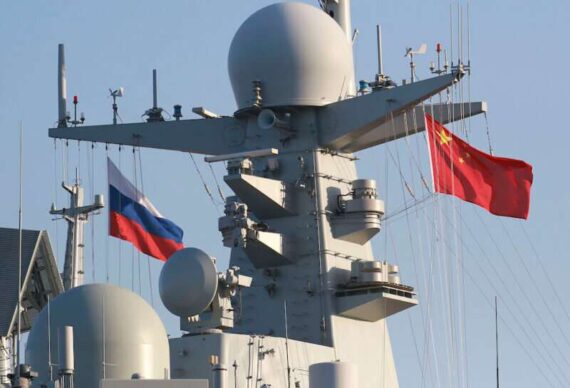
hina and Russia concluded their Joint Sea-2025 naval exercises near Vladivostok on Tuesday, August 5, 2025, and immediately transitioned into a maritime joint patrol in the Western Pacific, signaling intensified bilateral military cooperation amid mounting tensions with the West.

The five-day naval drills, held from August 1 to 5, involved warships from both countries executing a series of complex maritime operations, including joint air defense, anti-submarine warfare, naval combat, and submarine rescue missions. The exercises underscore a deepening strategic partnership and a shared message of deterrence in a region increasingly defined by great power competition.

According to Chinese state media, the joint maritime patrol, which commenced Wednesday, will focus on “jointly safeguarding strategic maritime routes” and countering security threats in the Western Pacific — a theme featured for the first time in the Joint Sea series, according to Chinese military experts.

New capabilities

One of the key highlights of the sea phase was the international debut of the PLA Navy’s newly commissioned rescue ship Xihu, which performed a mock submarine rescue operation involving a grounded Russian submarine. Using sonar and underwater television systems, Xihu deployed a deep-submergence rescue vehicle to dock with the distressed submarine and successfully “rescue” its crew in record time, according to a PLA Daily report.

Military expert Wang Yunfei noted the significance of deploying real submarines during the exercise, as this typically involves exposing sensitive acoustic signatures. He interpreted the transparency and trust on display as a sign of deepening military interoperability between China and Russia.

The Xihu, commissioned earlier in 2025, is capable of conducting both surface-level and deep-sea rescue operations, and is being positioned as a vital asset in China’s expanding maritime ambitions.

Strategic signals in the Western Pacific

Chinese and Russian vessels formed integrated combat formations and carried out joint maneuvers in waters off Vladivostok before moving south for patrol operations in the broader Western Pacific. The region has become a geopolitical flashpoint, especially amid increased U.S. and allied naval activity around Taiwan, the East China Sea, and the South China Sea.

Chinese military expert Zhang Junshe emphasized that the theme of “jointly countering security threats” was introduced to reflect the new strategic dynamics in the Western Pacific. While the PLA insists that the drills are not directed at any third country, the timing and location send a clear signal of resistance to U.S.-led security initiatives in Asia.

“The patrols show our joint determination to maintain peace and stability, and to deter potential threats,” Zhang told the Global Times, adding that they also serve to enhance operational coordination between the two militaries.

Countering U.S.-allied military activity

The drills and patrols occur amid a surge in U.S. and Japanese joint military exercises in the Indo-Pacific. Zhang criticized these activities as relics of Cold War-style containment strategies, accusing Washington and Tokyo of undermining regional stability.

By contrast, he framed the China-Russia collaboration as defensive in nature, focused on sovereignty protection, and aligned with the United Nations Charter. Both nations, as permanent members of the UN Security Council, are also marking the 80th anniversary of the World Anti-Fascist War — a symbolic backdrop to their growing military ties.

“China and Russia are united in opposing the revival of militarism and in preserving the post-war international order,” Zhang added, referring indirectly to the rise of U.S. influence in Asia and ongoing tensions with NATO.

Harbor diplomacy and military signaling

Prior to the sea phase, the exercises included tactical coordination meetings, professional exchanges, shipboard receptions, and mutual visits, underscoring not only military training but also broader diplomatic messaging. The drills demonstrated high levels of technical and operational integration, from air defense maneuvers to actual weapons use.

While both nations deny targeting any third party, the narrative contrasts sharply with that coming from Washington, where officials have voiced concern about the growing scope and intensity of China-Russia military coordination.

The Joint Sea-2025 exercises and follow-up patrols reinforce a clear message: China and Russia are intensifying their security cooperation, not only to strengthen their own military capabilities, but also to reshape the security architecture of the Indo-Pacific — on their own terms.

As the U.S. and its allies increase their naval presence in the region, Beijing and Moscow appear intent on asserting strategic parity through military coordination and symbolic power projection.

(Source: Global Times)

Politics Today is dedicated to publishing insightful analyses in order to understand the changing nature of contemporary politics. It aims to contribute to the sound and constructive discussion of international affairs.