Report: Zelensky Willing to Cede Some Territories to Russia
For Ukraine, the calculus is complex. Ceding territory already in Russian hands could bring an end to the fighting but would require constitutional changes or a nationwide referendum.
August 12, 2025

U
krainian President Volodymyr Zelensky has indicated that Kyiv may accept freezing the current front lines and allowing Russia to retain the territory it already holds, marking a significant shift in his negotiating stance ahead of a high-profile peace summit between U.S. President Donald Trump and Russian President Vladimir Putin in Alaska on Friday.
According to the Telegraph, in recent discussions with European leaders, Zelensky urged them to reject any peace settlement proposed by Trump that would require Ukraine to surrender further land still under its control. However, he acknowledged that Moscow could be allowed to keep the areas it currently occupies in Luhansk, Donetsk, Zaporizhzhia, Kherson, and Crimea—amounting to about 20% of Ukraine’s internationally recognized territory.
The move appears aimed at presenting a united front with Europe and preventing Trump from brokering a separate deal with Putin that could sideline Kyiv. “The plan can only be related to the current positions held by the militaries,” said one Western official, describing an intense round of weekend diplomacy between Kyiv and its allies.
European capitals have thrown their support behind Ukraine’s revised position, framing it as a “red line” to maintain solidarity while leaving the door open to limited territorial concessions. Poland’s Prime Minister Donald Tusk emphasized that borders should not be changed by force, stating, “Russia’s war with Ukraine must not bring benefits to the aggressor.” Leaders from France, Germany, Italy, the U.K., and Finland issued a joint declaration that “the current line of contact should be the starting point of negotiations.”
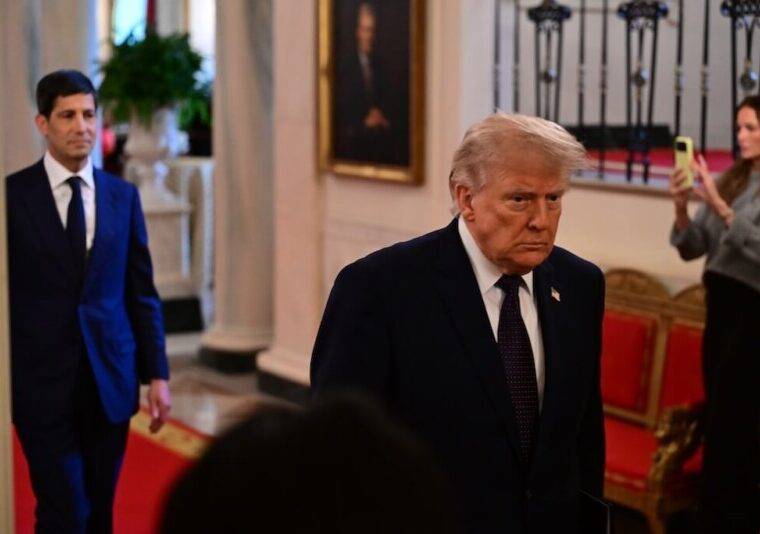
The shift comes amid growing fears in Kyiv and European capitals that Trump and Putin could agree to end the war without Ukraine’s consent. Trump has signaled that he wants to push for “some swapping, some changes to land,” and promised to “try to get some of that territory back for Ukraine” during his meeting with the Russian leader. He described Friday’s summit as a “feel-out meeting” to determine whether a deal is possible, adding, “That’s what I do. I make deals.”
For Ukraine, the calculus is complex. Ceding territory already in Russian hands could bring an end to the fighting but would require constitutional changes or a nationwide referendum. Zelensky has so far resisted any plan that would give up Ukrainian-held land, and analysts say such concessions could be politically explosive.
While public opinion in Ukraine remains split, some polls suggest that a growing number of citizens might accept surrendering occupied areas as the price for peace. However, military leaders warn that giving up more of Donetsk or other eastern regions could allow Russian forces to bypass fortifications built since 2014 and threaten deeper incursions.
Zelensky has previously acknowledged that Ukraine lacks the military capacity to retake all occupied areas by force, suggesting that diplomacy might eventually be the only path to restoring territorial integrity. In earlier talks, he had even floated the idea of trading territory in Russia’s Kursk region controlled by Ukraine—a bargaining chip that has since been lost after Russian forces regained control.
Moscow, meanwhile, has shown no sign of softening its demands. According to the Washington-based Institute for the Study of War, Putin’s objectives remain the full capitulation of Kyiv, the prevention of NATO membership, and the demilitarization of Ukraine. Ukrainian intelligence also warns that Russian troop movements indicate preparations for new offensive operations, not a wind-down of hostilities.
Recommended
NATO Secretary General Mark Rutte has stressed the need to distinguish between the “factual situation” of Russia holding Ukrainian territory and its legal status. “We can never accept that in a legal sense,” he said. “A part of Ukraine has to be on the table, but any discussion going forward will be with Ukrainians deciding on what they want to do.”
Internationally, leaders have been cautious about the direction of the Trump-Putin talks. UK Prime Minister Sir Keir Starmer and Canadian Prime Minister Mark Carney issued a joint statement welcoming peace efforts but warning against any agreement imposed on Ukraine. “Ukraine’s future must be one of freedom, sovereignty, and self-determination,” the statement said, adding that peace must be “built with Ukraine—not imposed upon it.”
The Alaska summit is set against a backdrop of shifting power dynamics in the war’s fourth year, with the front lines largely static but the human and economic toll mounting. Whether Zelensky’s softer stance will pave the way for a breakthrough—or simply embolden Moscow—remains uncertain.
For now, Kyiv’s strategy appears focused on ensuring that any deal is struck with its active participation, backed by Europe’s collective voice, and includes binding security guarantees. But as Trump prepares for his high-stakes meeting with Putin, Ukraine’s fate may hinge on decisions made thousands of miles from the battlefield.
(Source: The Telegraph)

Politics Today is dedicated to publishing insightful analyses in order to understand the changing nature of contemporary politics. It aims to contribute to the sound and constructive discussion of international affairs.
You can see how this popup was set up in our step-by-step guide: https://wppopupmaker.com/guides/auto-opening-announcement-popups/

Stay informed by subscribing to
our weekly newsletter.
You can see how this popup was set up in our step-by-step guide: https://wppopupmaker.com/guides/auto-opening-announcement-popups/
You can see how this popup was set up in our step-by-step guide: https://wppopupmaker.com/guides/auto-opening-announcement-popups/
You can see how this popup was set up in our step-by-step guide: https://wppopupmaker.com/guides/auto-opening-announcement-popups/
You can see how this popup was set up in our step-by-step guide: https://wppopupmaker.com/guides/auto-opening-announcement-popups/