Trump Shock Pushes Japan Toward Rethinking Nuclear Taboo
Japan faces formidable political and cultural obstacles before it could even consider acquiring nuclear weapons.
August 20, 2025
F
or decades, Japan has stood as the only country ever to have suffered the horrors of nuclear attack, maintaining a pacifist constitution and a firm pledge never to produce, possess, or host nuclear weapons. But amid shifting global security dynamics and growing uncertainty over U.S. security guarantees under President Donald Trump, voices within Japan’s political establishment are beginning to question whether those long-standing principles can hold indefinitely.
At the center of this debate is Rui Matsukawa, a lawmaker from the ruling Liberal Democratic Party (LDP) and a former deputy defense minister. During a recent high-level conference in the United Kingdom, she was struck by how European leaders had accepted the reality that the U.S. might no longer be a reliable security partner. That realization, she says, applies equally to Japan, which currently hosts the largest overseas deployment of American troops. “You can’t really take the U.S. presence for granted,” Matsukawa observed. “Plan B is maybe go independent, and then go nukes.”
Her comments reflect a broader trend: a slow but significant shift in Japanese strategic thinking. For decades, Japan has relied on the U.S. “nuclear umbrella” as protection against nearby nuclear powers—China, North Korea, and Russia. Yet Trump’s combative stance toward allies, his tariffs on Japanese goods, and his erratic diplomacy have shaken faith in Washington’s commitment to defend Tokyo. This uncertainty has emboldened some Japanese policymakers to at least explore options such as nuclear sharing—a model in which a non-nuclear country takes part in nuclear planning and training while still depending on an ally’s weapons.
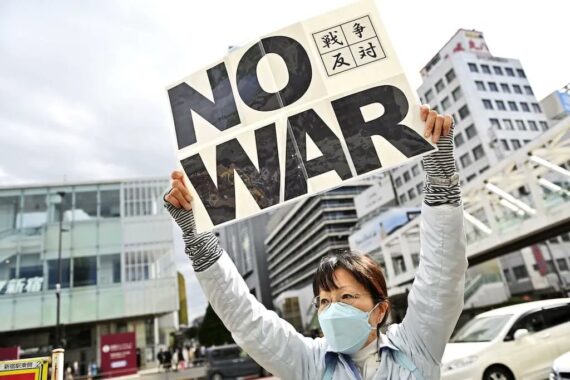
Public sentiment, too, appears to be changing. While outright support for Japan developing its own nuclear arsenal remains relatively low, opinion polls suggest a growing willingness to reconsider the nation’s traditional “Three Non-Nuclear Principles.” Hiroshima native Tatsuaki Takahashi, whose grandfather survived the atomic bombing in 1945, noted that as the trauma of that tragedy recedes into history, more Japanese are open to rethinking the nation’s nuclear policy.
The debate is not confined to Japan. In South Korea, which also depends on U.S. deterrence, polling shows as much as 75% of the public supports developing indigenous nuclear weapons. The election of President Lee Jae Myung, who is less confrontational than his conservative predecessors, has slowed the momentum toward nuclear armament. Still, discussions of “nuclear latency”—possessing the technological capability to quickly build nuclear weapons if necessary—have gained traction even within his Democratic Party.
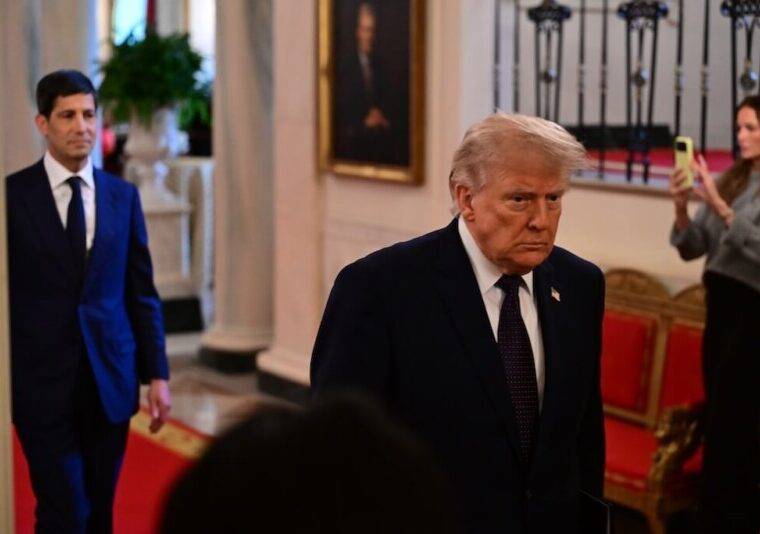
In both Tokyo and Seoul, the anxieties are fueled by the same source: the unpredictable U.S. president. Trump has long questioned the value of America’s defense commitments, openly chastising NATO allies, imposing trade restrictions on Japan and South Korea, and floating unorthodox ideas such as absorbing Canada into the U.S. Although his administration insists that U.S. alliances in Asia remain strong, his rhetoric has unsettled partners who see themselves on the frontline of potential conflicts with China or North Korea.
Officially, both Japan and South Korea maintain faith in Washington’s commitments. Japan’s foreign ministry has reiterated that it views the U.S. alliance as “unwavering,” while its defense ministry emphasizes confidence in America’s nuclear deterrent. Seoul has echoed similar assurances, calling its alliance with the U.S. the “foundation of our diplomacy.” Yet behind these public statements, private doubts are mounting. Interviews with more than a dozen lawmakers, former military officials, and diplomats reveal growing unease with leaving their nations’ survival entirely in American hands.
Still, Japan faces formidable political and cultural obstacles before it could even consider acquiring nuclear weapons. The nation’s pacifist constitution, public memory of Hiroshima and Nagasaki, and its commitment to non-proliferation treaties all stand as major barriers. Matsukawa herself acknowledges that the U.S. remains an indispensable ally, and that persuading the Trump administration to stay engaged in Asia remains Tokyo’s priority. But by openly discussing nuclear options, she and others are breaking a decades-old taboo.
The implications of this shift extend far beyond Japan. If Tokyo were to pursue nuclear arms, it could trigger a dangerous regional arms race, potentially prompting South Korea to follow suit and destabilizing the security balance in Northeast Asia. It would also mark a dramatic departure from the global non-proliferation regime, undermining efforts to contain nuclear ambitions in Iran and other flashpoints.
For now, the nuclear debate in Japan remains largely theoretical. But as Trump’s America-First policies continue to unsettle allies, the once-unthinkable is now being quietly considered in Tokyo and Seoul. In a region surrounded by nuclear-armed powers and facing escalating tensions over Taiwan and the Korean Peninsula, the question is no longer whether Japan should think about nuclear weapons—but whether it can afford not to.
(Source: Reuters)
Recommended

Politics Today is dedicated to publishing insightful analyses in order to understand the changing nature of contemporary politics. It aims to contribute to the sound and constructive discussion of international affairs.
You can see how this popup was set up in our step-by-step guide: https://wppopupmaker.com/guides/auto-opening-announcement-popups/

Stay informed by subscribing to
our weekly newsletter.
You can see how this popup was set up in our step-by-step guide: https://wppopupmaker.com/guides/auto-opening-announcement-popups/
You can see how this popup was set up in our step-by-step guide: https://wppopupmaker.com/guides/auto-opening-announcement-popups/
You can see how this popup was set up in our step-by-step guide: https://wppopupmaker.com/guides/auto-opening-announcement-popups/
You can see how this popup was set up in our step-by-step guide: https://wppopupmaker.com/guides/auto-opening-announcement-popups/