A New Dimension in Israel's Lawlessness: The Attack on Qatar
In addition to this strategic objective, the Israeli attack in Doha was also intended to derail the ceasefire negotiations.
September 19, 2025
T
he occupying state’s attack in Doha, the capital of Qatar, targeting Hamas’ leadership cadre has been recorded as one of the important developments that could trigger profound transformations in Middle Eastern politics after 7 October 2023. This act, which is a continuation of Tel Aviv’s reckless and unrestrained aggression, carries considerable strategic significance not so much because of its timing but because of where it took place, and could be considered a new milestone in the region following the attacks on Iran.
As is well known, over the past two years, the Zionist regime has carried out numerous attacks on Lebanon, Syria, Iraq, Yemen, and Iran. The fundamental factor that distinguishes the attack in Doha from the others is the target country’s position vis-à-vis Tel Aviv. Considering that all of the aforementioned countries are perceived as threats by the occupying state, this attack, which violated Qatar’s sovereignty, is also indicative of the implementation of a new strategy by the Zionist regime.
Indeed, Benjamin Netanyahu and his cabinet, composed of extremist members, have for the first time demonstrated a political practice that breaks with convention by targeting one of the United States’ closest allies in the region, with whom it has never had hostile relations.
Senior leaders of the Zionist administration had long been threatening Hamas’s leadership. The psychological breakdown caused by Operation Al-Aqsa Flood, the resulting shift in global perceptions, Tel Aviv’s loss of epistemological superiority during this process, and the steadfast stance of the people of Gaza despite all odds have rendered all claims of Hamas’s demise futile. Netanyahu and his team, planning to cross another critical threshold to realize their theopolitical vision by annexing Gaza, continued one of history’s bloodiest genocides without pause, driven by their ideal of eliminating Hamas, paying no heed to the rising international outcry. Well aware of Hamas’ role in consolidating Palestinian politics and strengthening resistance, Zionist leaders and elites prioritised dismantling Hamas’ organisational and ideological structure during the last two years, which saw all manner of aggression and savagery.
The assassinations of Salih Aruri, the movement’s second-in-command, and leader Ismail Haniyeh were an attempt to undermine Hamas’ cohesion and weaken the spirit of resistance in Gaza and even Palestine. The fact that Haniyeh’s martyrdom did not have the expected negative impact on Hamas and that the resistance, under Yahya Sinwar’s leadership, produced an even stronger rhetoric meant an even greater danger for Tel Aviv. In particular, the repeated announcements that moves to purge the entire leadership of the movement after Haniyeh would be carried out worldwide reflected the Zionist administration’s desire to deal Hamas a significant blow not only organisationally but also ideologically.
The eventual collapse of all the fabrications about Yahya Sinwar and Hamas, and Sinwar’s martyrdom while fighting the occupying forces on the front lines, led to Hamas’ political perspective having a broader impact globally. Despite the occupying state’s attempt to destroy Gaza with its heaviest weapons and starvation, the determined resistance of the Palestinians and Hamas’s negotiation process, conducted without compromising its principles, deepened Tel Aviv’s strategic defeat on the global stage, even though it gained a significant advantage on the ground. Consequently, Netanyahu and his team saw the sudden elimination of Hamas’s leading figures as the most direct route to achieving their strategy and consolidating their gains.
The daily narrowing of the operational space in Gaza and the significant losses suffered by the Kassam Brigades’ command structure were factors that brought the Zionist administration closer to annexing Gaza. However, Hamas’s preservation of its organisational integrity and the presence of charismatic figures with influence over the movement meant that resistance against the occupier would be carried out in different environments and forms. On the other hand, eliminating most of Hamas’ leadership in one fell swoop could accelerate the movement’s dissolution and lead to the crushing of resistance in Gaza. This would make it extremely difficult for the movement to survive while maintaining its integrity, and it could also experience ideological drift.
In addition to this strategic objective, the attack in Doha was also intended to derail the ceasefire negotiations. Netanyahu has reached a point where he must incite violence and expand the limits of his aggression to maintain his political existence. The failure to achieve any success within the framework presented to the domestic public since the beginning of Operation Al-Aqsa Flood, coupled with the loss of image on the global stage, will lead to major crises in domestic politics when Netanyahu and his team return to a relatively moderate political style.
For this reason, the Netanyahu government is pursuing a consolidation strategy through new attacks in order not to lose the support of the US and mainstream European states until the annexation of Gaza is complete. The efforts of Zionist leaders to spread the war across the region using religious references clearly reveal their desire to maintain their own positions.
The targeting of the delegation convened to discuss the ceasefire text presented by US President Donald Trump is, of course, the most unambiguous indication that Netanyahu and his team do not wish to end their aggression. In this way, the Zionist administration has sought to convey the message that it will not refrain from taking any step to expand the borders of the occupation and that attacks on Hamas officials could occur in unexpected places.
Furthermore, considering the low probability of such an action occurring without the involvement of the US in the process, it has become clear that the White House could adopt a similar stance against many of its close allies if necessary to serve the interests of the occupying state.
Israeli Prime Minister Netanyahu and Defense Minister Yisrael Katz, as the main architects of the attack in Doha, have issued a significant challenge not only to Hamas but also to Qatar, one of Hamas’s biggest supporters. This attack on Qatar, which Tel Aviv does not see as a direct threat and which is one of the White House’s closest allies, necessitates stronger steps by regional actors against the Zionist regime.
Netanyahu and his team, who are seeking to expand their territory in Syria and Lebanon in addition to Palestine, and who aim to reaffirm the political status quo in the Middle East through their attacks in Yemen, Iraq, and Iran, have signed off on an action that falls outside the current paradigm with the Doha attack. This attack, which undermines the perception of the inviolability of US allies, marks a turning point that will likely lead to a range of both negative and positive consequences in the coming period.
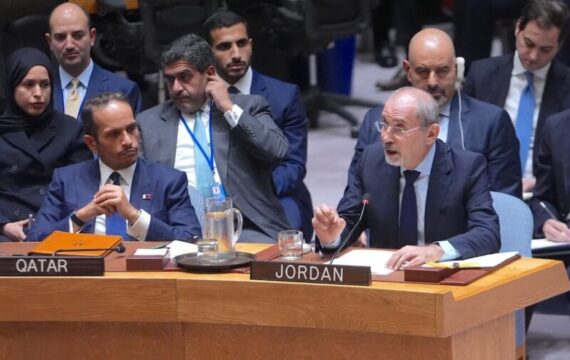
Considering the distance covered by numerous warplanes belonging to the occupying state’s air force and the number of countries whose airspace was used, it is also possible that this situation will turn into a trust issue between Doha and Washington. Furthermore, the aforementioned attack may also cause a similar problem in bilateral relations in the Gulf or the Arab world. Qatar, which has made significant efforts to resolve many crises in the region with its moderate stance, has been subjected to an attack that violates its sovereignty rights. This incident may negatively affect Doha’s position in the region in the coming period.
Therefore, Qatar should not merely present the option of ‘reserving the right to retaliate’ as rhetoric, but instead establish a realistic roadmap for deterrent measures.
Recommended

This attack on Qatar, which is undergoing a significant transformation in the Middle East and playing a pivotal role in this process, presents Doha with a challenging test of its political capabilities and limitations. Failure to implement a strategy of responding strongly in the political, legal, diplomatic, and economic spheres against the occupying state will seriously damage Qatar’s effective role in regional politics.
Qatar’s mission will be pretty limited not only in Palestine but also in the reconstruction process in Syria, and this situation may bring about a gradual shift in the balance of power in the Gulf, to the detriment of the Doha administration. Therefore, the only option under the current circumstances is for Doha to adopt a much stricter stance against Tel Aviv and, in this way, rapidly mobilise the Arab world. Furthermore, the US dimension of the attack should not be overlooked, and strong messages should be sent to the White House regarding such an attack, even if it was unaware of it or not involved.
If Trump was aware of this attack, Qatar should then re-evaluate its alliance with the US and, if necessary, take some steps towards closing the American base in its country with a radical move. Suppose the American administration was genuinely unaware of the attack. In that case, Doha should exert pressure on Trump to increase his influence over Netanyahu and his team and demand that he issue a strong ultimatum to Tel Aviv to secure a ceasefire.
The main lesson learned in the period following 7 October is that the policy of ‘strategic patience’ towards the occupying state has not yielded any gains. Therefore, the Doha administration must pursue a much more active policy, using its financial power, to constrain Tel Aviv and encourage the Western world to adopt a more consistent approach. Strong support for international initiatives to establish a ceasefire in Gaza and steps taken by Doha to break the blockade will undoubtedly be the most significant and effective response to the attack in question. If Doha chooses to remain silent during this process, it will result in a deepening of the crisis in Gaza and the region as a whole, and Qatar will face the risk of losing a significant position in the Middle East’s political equation.

Muhammed Hüseyin Mercan is a faculty member in the Department of International Relations at Ankara Yıldırım Beyazıt University, generally conducts research on Middle Eastern politics.
You can see how this popup was set up in our step-by-step guide: https://wppopupmaker.com/guides/auto-opening-announcement-popups/

Stay informed by subscribing to
our weekly newsletter.
You can see how this popup was set up in our step-by-step guide: https://wppopupmaker.com/guides/auto-opening-announcement-popups/
You can see how this popup was set up in our step-by-step guide: https://wppopupmaker.com/guides/auto-opening-announcement-popups/
You can see how this popup was set up in our step-by-step guide: https://wppopupmaker.com/guides/auto-opening-announcement-popups/
You can see how this popup was set up in our step-by-step guide: https://wppopupmaker.com/guides/auto-opening-announcement-popups/