H
amas has released the first group of Israeli captives as part of a highly anticipated ceasefire agreement aimed at ending the devastating genocide in Gaza, marking a tentative step toward peace after nearly two years of relentless fighting.
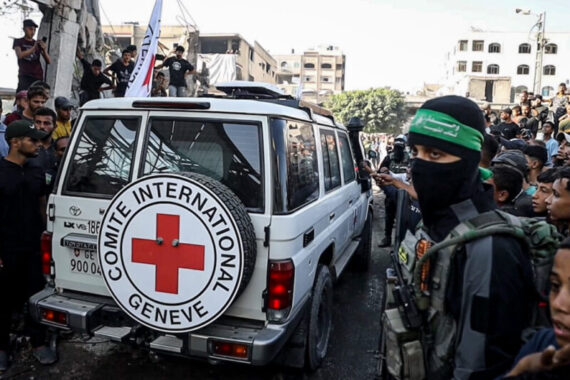
The International Committee of the Red Cross (ICRC) confirmed on Monday that it had taken custody of seven Israeli captives released by Hamas in the initial phase of the deal. In Tel Aviv’s “Hostages Square,” crowds erupted in cheers as local television channels announced that the captives were now in Red Cross custody. The release was hailed as the first tangible success of a broader agreement that envisions the return of 20 living captives in exchange for nearly 2,000 Palestinian prisoners held in Israeli jails.
Officials involved in the operation told Reuters that the freed captives were being transported to the Israeli military base at Re’im, near the Gaza border, where they were expected to undergo medical examinations, showers, and clothing changes before being reunited with their families. They will then be transferred to hospitals for further treatment and psychological care.
The DPA news agency reported that Israeli authorities were preparing to receive additional captives on Monday morning, while Hamas sources told Al Jazeera Arabic that the remaining 13 captives would be handed over at around 07:00 GMT in central Gaza.
A landmark exchange
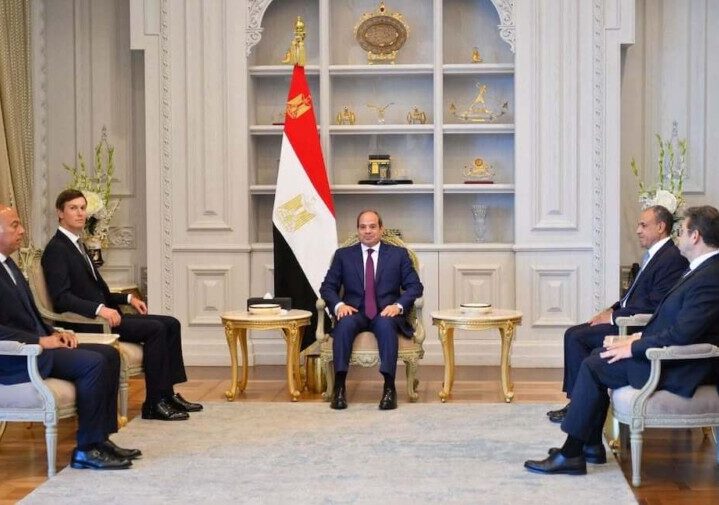
The deal, negotiated with mediation from Qatar, Egypt, and the United States, represents the first significant breakthrough in months of diplomatic deadlock and military stalemate.
Under the terms of the agreement, Hamas will release all 20 surviving captives it holds in Gaza. In return, Israel will free approximately 2,000 Palestinian prisoners, many of whom have been detained without formal charges under Israel’s administrative detention system.
Among those expected to be freed are 250 Palestinians serving life sentences, though high-profile detainee Marwan Barghouti — a leading figure in Palestinian politics — will not be among them, Israeli officials said.
Israel has also agreed to receive the bodies of 28 Israeli captives confirmed to have been killed in Gaza due to Israeli bombardment.
The prisoner exchange will begin once Israel confirms that all living captives are back within its territory.
‘A new path’
Israeli Prime Minister Benjamin Netanyahu described the release as a “moment of unity” in a nation deeply divided over his handling of the genocide.
“This is an emotional evening … because tomorrow, our children will return to our borders,” Netanyahu said in a televised address on Sunday night. “Tomorrow is the beginning of a new path — a path of rebuilding, a path of healing, and, I hope, a path of united hearts.”
However, the prime minister continues to face sharp criticism from families of captives, many of whom accuse him of prioritizing military objectives over the safe return of their loved ones.
‘Trump’s show’
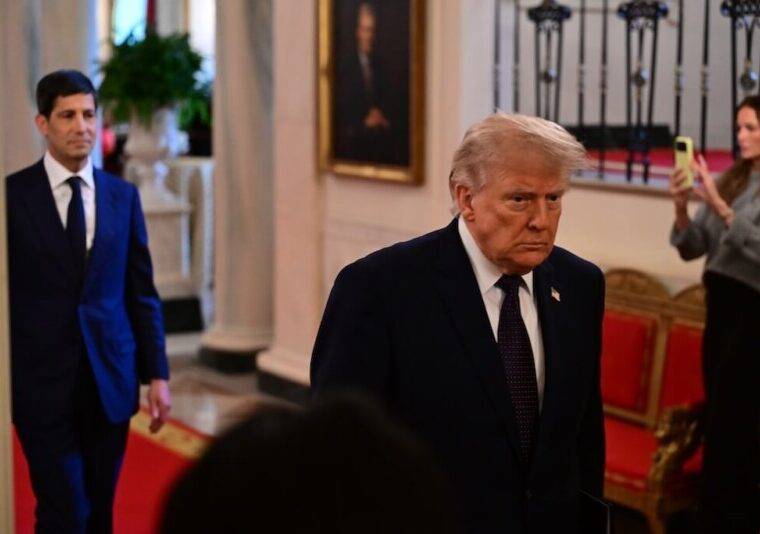
The exchange comes as U.S. President Donald Trump — the chief architect of the ceasefire — arrived in Israel on Monday ahead of a major regional summit in Egypt’s Sharm el-Sheikh.
Trump, who has made the ceasefire a centerpiece of his second-term foreign policy, departed Washington on Sunday afternoon accompanied by Secretary of State Marco Rubio, Secretary of War Pete Hegseth, and CIA Director John Ratcliffe.
“This is going to be a very special time,” Trump told reporters before boarding Air Force One. “Everybody’s cheering.”
During the flight, Trump said the release might occur “a little early” and praised Qatar for its role in brokering the agreement. “The war is over. You understand that,” he said.
Al Jazeera’s correspondent Nour Odeh, reporting from Amman due to the network’s ongoing ban in Israel, described the developments as “Trump’s show.”
“He will be arriving in Israel, meeting with the families of captives, addressing the Knesset, and then going to Egypt’s Sharm el-Sheikh, where he has summoned the leaders of more than 20 countries,” Odeh reported.

Read: Gaza and Trump 2.0
Ceasefire and devastation
As part of the deal, Israeli forces have withdrawn from Gaza City and parts of northern Gaza, though they continue to control more than half of the enclave’s territory.
Palestinians have begun returning to neighborhoods that were reduced to rubble during months of Israeli bombardment. Al Jazeera’s Ibrahim al-Khalili, reporting from Gaza City, described scenes of widespread destruction: “People are walking through wastelands — entire districts flattened. There’s almost nothing left.”
In Deir Al-Balah, in central Gaza, humanitarian convoys have started trickling in under the ceasefire framework. Dozens of aid trucks entered the enclave on Sunday, carrying food, medical supplies, and tents.
But aid agencies warn that distribution remains painfully slow, with many areas inaccessible due to damaged infrastructure and unexploded ordnance.
Al Jazeera’s Hind Khoudary reported that after two years of siege and bombardment, Gaza’s population faces extreme deprivation:
“People are not waiting only for food,” she said. “They need tents, solar panels, medical equipment — everything. Most have lost their savings, can’t access bank accounts, and depend entirely on humanitarian assistance.”
Recommended
Challenges ahead
While the initial handover has been celebrated as a breakthrough, analysts warn that the fragile ceasefire could unravel without sustained diplomacy and accountability especially on Israel’s side.
The deal, structured in multiple phases, includes provisions for ongoing humanitarian relief and eventual political talks over Gaza’s governance once Hamas cedes control to a new, internationally supported interim body.
For now, as the first captives return home and Palestinian families await their loved ones’ release, both in Gaza and Israel — however briefly — the possibility of a different future.
(Source: Aljazeera)