Dozens Killed in Pakistan-Afghanistan Clashes, Border Crossings Closed
Afghanistan accuses Pakistan of violating its sovereignty through cross-border shelling and airstrikes.
October 13, 2025
H
eavy fighting erupted along the Pakistan-Afghanistan border over the weekend, leaving dozens dead on both sides and prompting the closure of all major crossings, officials said on Sunday, in the most serious confrontation between the neighbors since the Taliban returned to power in Kabul four years ago.
Pakistan’s military said that 23 of its soldiers were killed and several others wounded in overnight clashes after Afghan forces attacked border posts. The Taliban government confirmed that nine of its fighters had died but claimed to have inflicted heavy casualties on Pakistani forces.
Each side said it had destroyed border positions of the other, but neither provided evidence, and the figures could not be independently verified. Pakistani officials said their forces killed more than 200 Afghan Taliban and allied fighters, while Afghan officials said 58 Pakistani soldiers were dead.
Tensions between Islamabad and Kabul have soared in recent months amid Pakistani accusations that militants behind a surge in attacks in Pakistan are operating from Afghan territory. The Taliban administration has repeatedly denied the allegation, insisting it does not allow any group to threaten neighboring countries.
The weekend clashes followed a series of Pakistani airstrikes on Thursday that reportedly hit targets in Kabul and in a marketplace in eastern Afghanistan. Taliban authorities and Pakistani security sources confirmed the strikes, though Islamabad has not officially acknowledged them.
In retaliation, Afghan troops launched attacks late Saturday on Pakistani border posts, triggering hours of heavy exchange involving artillery, rockets and small arms. Fighting was reported in multiple locations along the rugged frontier, including Kurram district in Pakistan’s northwest, where intermittent gunfire continued on Sunday, according to residents.
A Taliban defense ministry statement said their forces had targeted “enemy posts that had bombarded Afghan villages,” while Pakistan’s military said it was “responding decisively to unprovoked aggression.”
By early Sunday, major exchanges had largely ceased. The Taliban’s defense ministry said it halted attacks at midnight local time following requests for restraint from Qatar and Saudi Arabia, both of which issued statements expressing “grave concern” over the escalation.
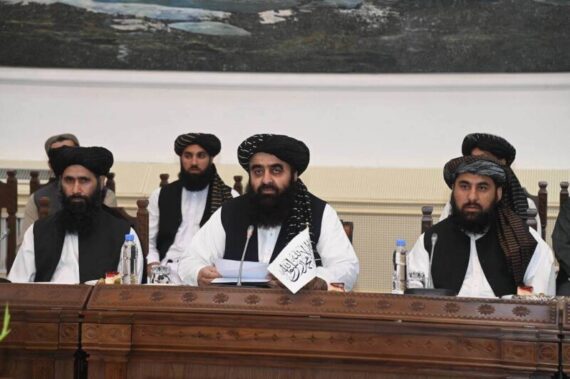
“There is no kind of threat in any part of Afghanistan’s territory,” Taliban spokesman Zabihullah Mujahid said. “The Islamic Emirate and the people of Afghanistan will defend their land and remain resolute and committed in this defense.”
Pakistani officials described the situation as “tense but under control” and said communications with Kabul had been established through diplomatic and military channels to prevent further escalation.
Pakistan announced the closure of all crossings along the 2,600-kilometre (1,600-mile) border, a disputed frontier known as the Durand Line, drawn up by British colonial authorities in 1893.
The key trade routes at Torkham in Khyber Pakhtunkhwa province and Chaman in Balochistan were sealed on Sunday morning, halting cross-border movement of people and goods. At least three smaller crossings — Kharlachi, Angoor Adda and Ghulam Khan — were also shut, Pakistani local officials said.
Video footage from Chaman showed long lines of stranded trucks and people carrying belongings, as Afghan nationals living in Pakistan sought to return home. “Thousands are stuck on both sides,” said a customs official in Balochistan. “Trade and daily wage work have completely stopped.”
The border closures threaten to deepen economic hardship for Afghanistan, which depends heavily on imports through Pakistan for food, fuel and medical supplies.
Recommended

The outbreak of fighting came just days after a rare visit to India by Taliban foreign minister Amir Khan Muttaqi. The trip — the first by a senior Taliban official since 2021 — resulted in an agreement to upgrade diplomatic and trade relations between Kabul and New Delhi.
India, which has long supported governments opposed to the Taliban, said on Friday it would reopen full consular services in Kabul and increase humanitarian aid. The visit has caused unease in Islamabad, where officials view closer India-Afghanistan ties as a potential strategic setback.
“Pakistan will be watching India’s moves in Afghanistan very closely,” said retired Pakistani diplomat Maleeha Lodhi. “The timing of these clashes, coinciding with the Taliban’s outreach to New Delhi, will only deepen Islamabad’s mistrust.”
Pakistan was one of the few countries to maintain ties with the Taliban after their takeover in 2021, but relations have since deteriorated. Islamabad accuses Kabul of failing to curb the Pakistani Taliban, or Tehreek-e-Taliban Pakistan (TTP), which has intensified attacks on Pakistani security forces.
Afghanistan, meanwhile, accuses Pakistan of violating its sovereignty through cross-border shelling and airstrikes.
The two countries share deep historical, ethnic and economic links, but the porous frontier has long been a flashpoint. Previous border skirmishes have led to temporary closures, but the scale of the current fighting suggests a new level of confrontation between the uneasy neighbors.
Analysts warn that prolonged hostilities could destabilize the region further, complicating efforts by other powers — including China, which has major infrastructure projects in Pakistan and growing interests in Afghanistan — to maintain regional stability.
For now, both sides have signaled a pause, but the border remains tense and closed, with local residents fearing that the weekend’s clashes could mark the beginning of a broader conflict between two uneasy allies.
(Source: Reuters)

Politics Today is dedicated to publishing insightful analyses in order to understand the changing nature of contemporary politics. It aims to contribute to the sound and constructive discussion of international affairs.
You can see how this popup was set up in our step-by-step guide: https://wppopupmaker.com/guides/auto-opening-announcement-popups/

Stay informed by subscribing to
our weekly newsletter.
You can see how this popup was set up in our step-by-step guide: https://wppopupmaker.com/guides/auto-opening-announcement-popups/
You can see how this popup was set up in our step-by-step guide: https://wppopupmaker.com/guides/auto-opening-announcement-popups/
You can see how this popup was set up in our step-by-step guide: https://wppopupmaker.com/guides/auto-opening-announcement-popups/
You can see how this popup was set up in our step-by-step guide: https://wppopupmaker.com/guides/auto-opening-announcement-popups/