Is the Dollar's Throne Shaky?
Although the dollar still reigns supreme today, the leading actors in the global system are aware that its dominance is waning.
November 10, 2025
F
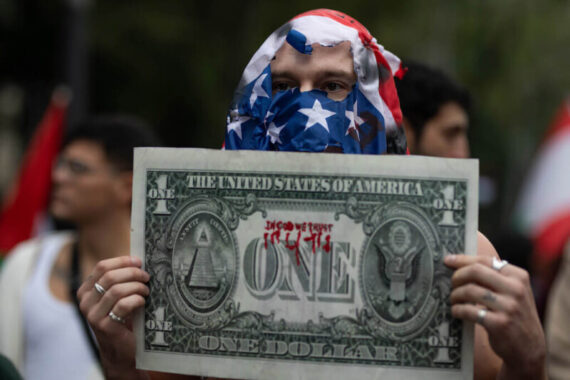
or nearly 150 years, the symbols on the U.S. dollar have been one of the most heated topics of debate. Since 1776, some have attributed mythological, philosophical, and secret society dimensions to these symbols. Others have argued from a historical perspective that the Founding Fathers designed the currency to convey important messages about establishing a state.
We will not venture into conspiracy theory narratives. It is important to note that the symbols on the U.S. dollar in circulation at that time recalled the founding vision of the United States: a “unfinished” yet forward-looking project. Considering that the founders and citizens of the United States were religious, they also wished to emphasize that God was with them in this process.
However, the rhetoric of the “high ideal” behind these symbols has lost credibility due to the U.S.’s increasingly aggressive, arrogant, and empathetic behavior over the past 15 years. This behavior has caused a sense of injustice and inequality in the global economic and political systems, as well as political and economic crises. While the symbols on the U.S. dollar claim “perfection,” today’s practical reality seriously questions this standard. This situation has triggered a process in which the U.S. dollar’s reputation is being called into question.
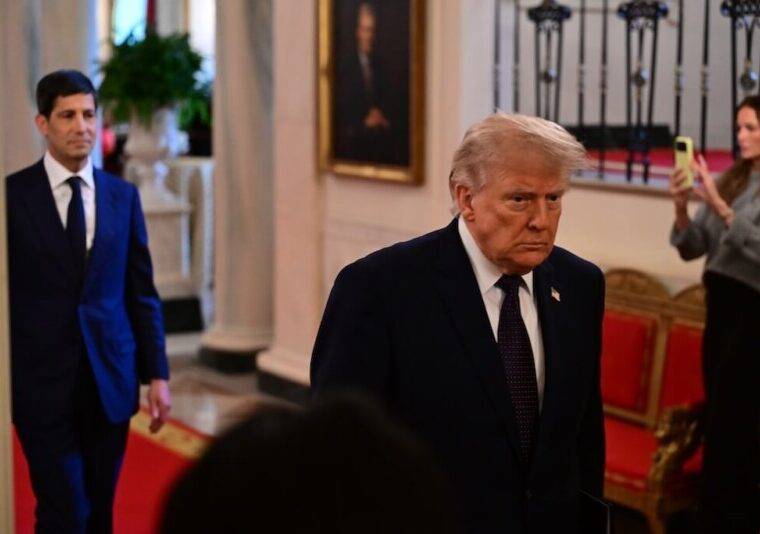
Even though the Republican Party holds a majority in Congress, the failure of some Republican members of the House of Representatives to be convinced by President Trump’s budget approach has blocked the approval process for the additional spending budget required by the federal government. Meanwhile, the Democrats are seizing this opportunity to pressure President Trump in exchange for steps they want to see taken in the areas of social security and healthcare. A shutdown of the U.S. federal government would be seen as a development that goes beyond internal political deadlock in Washington, affecting the global economy.
Because this shutdown is also a kind of admission that the record-high federal public debt, exceeding 38 trillion dollars, has now reached an unmanageable threshold. However, the real issue did not begin with today’s crisis; it stretches back to the signs of the dissolution of a nearly century-old ‘dollar empire’. It is also noteworthy that President Trump has experienced the longest shutdown among presidents since 1980, both during his first term and now. This whole picture has also undermined global confidence in U.S. federal bonds, causing the total reserves held in U.S. dollars and U.S. federal bonds by the world’s leading central banks to fall below gold reserves for the first time since 1996.
Washington is struggling to resolve the federal budget deficit issue. This situation raises the prospect of taking radical measures to reduce the budget and trade deficits or issuing federal bonds at higher, more attractive interest rates to make U.S. federal bonds appealing again in the coming period. The latter would further increase the burden of interest payments, which have already surpassed the total defense spending of $980 billion at $1.1 trillion. Therefore, the reputation of the U.S. dollar, confidence in the dollar, and the appeal of U.S. bonds are facing a severe test in the near future.
However, the rhetoric of the “high ideal” behind these symbols has lost credibility due to the U.S.’s increasingly aggressive, arrogant, and empathetic behavior over the past 15 years. This behavior has caused a sense of injustice and inequality in the global economic and political systems, as well as political and economic crises. While the symbols on the U.S. dollar claim “perfection,” today’s practical reality seriously questions this standard. This situation has triggered a process in which the U.S. dollar’s reputation is being called into question.
Immediately after World War II, the United States represented approximately half of the global economy. European cities were in ruins, Japan had been devastated by atomic bombs, and much of the world’s production capacity had relocated to North America. Washington made this economic supremacy permanent by designing a new international economic and monetary order and by implementing reconstruction plans. Established in 1944, the Bretton Woods System was a system in which the U.S. dollar was pegged to gold and all other currencies were pegged to the dollar. Thus, the dollar became the financial architect of the postwar reconstruction of the world, as well as its hegemonic symbol.
For the next 80 years, the world economy largely revolved around the dollar. Europe’s recovery, Japan’s economic boom, the acceleration of globalization, the pricing of energy trade in dollars, and the policy frameworks of the International Monetary Fund (IMF) and the World Bank were all pillars of this “dollar-centric world order.” The dollar was not just a currency but also a symbol of the ideological, financial, and strategic processes Washington defined as the “American Century.”
Today, 80 years later, we are witnessing these pillars crumble. The U.S. debt spiral, interest burden, and expansionary monetary policy are seriously eroding the dollar’s status as a “safe haven.” Furthermore, the rise of Global South countries and new cooperation platforms, such as BRICS, focusing on developing non-dollar international payment systems reinforce the idea that the dollar’s imperial days are behind it.
Washington has taken discussions about the dollar’s dominance being threatened and the BRICS countries’ attempts to establish a new international payment system outside the dollar so seriously that it perceives them as not only an economic challenge, but also a “casus belli,” or cause for war. This is because any erosion of the dollar’s global dominance would signify the dissolution not only of America’s financial power, but also of its geopolitical influence. Consequently, every tremor in the dollar’s dominance today signals a new era in which the 1945 global order is being reexamined.
The U.S.’s $38 trillion debt is more than just a figure; it is a rising alarm signal at the heart of the global economy. For the past few years, both the IMF and the World Bank have warned that the significantly increasing debt burden in both developed and developing economies poses a major risk to the world economy and the global financial system. By 2025, interest payments on the debt will surpass $1 trillion for the first time in history, exceeding the country’s $980 billion defense budget. In other words, the U.S. now spends more on interest on its debt than on its own military. This situation threatens the U.S.’s fiscal sovereignty and growth potential.
Debt ceiling debates have become an almost annual political tragedy. Disputes between political parties in Congress shake not only the federal budget, but also the global credibility of the dollar. Markets now respond to every shutdown announcement by adding a risk premium. Each time the U.S. Treasury approaches its borrowing limit, the global foundations of the dollar are shaken as well.
In its latest report, the IMF stated that the U.S.’s growing debt could pose a “systemic risk” to global financial stability. IMF experts say that the “high debt–slow growth combination” creates fragility within the U.S. and in dollar-based financial chains. The Peterson Foundation for Global Policy (PGPF) emphasizes that, if this trend continues, investment, employment, and wage growth in the U.S. economy will be severely constrained.
Donald Trump’s reaction is growing alongside this challenging financial situation. He targets Fed Chairman Jerome Powell as “the face of the interest rate lobby in Washington,” arguing that the high-interest-rate policy is “a mistake designed to destroy the U.S. economy.” Trump’s rhetoric is certainly not limited to economic policy. He also frames the debt crisis as a matter of national sovereignty. This transforms the U.S.’s fiscal discipline problem into a direct political identity crisis.
From the end of World War II to the end of the Cold War, the dollar was the backbone of the global economic system for 50 years, from 1945 to 1995. Eighty percent of world trade and 70 percent of foreign exchange reserves were denominated in dollars. The period between 1995 and 2005 was a transitional period. During this time, U.S. federal bonds denominated in dollars surpassed gold for the first time in the reserves of world central banks. In 1999, the euro was introduced as the common currency of the European Union. In 2001, China joined the World Trade Organization. During this time, the weight of the euro and other leading currencies in central bank reserves gradually increased.
After 2005, and especially following the 2008 global financial crisis, the U.S. dollar’s weight in the international system dramatically declined. The only reason the U.S. dollar maintained any weight in the global system was because the European Union mishandled the 2008 crisis, missing the opportunity for the euro to become a new “international reserve currency.” Over the last 10 years, in particular, the dollar’s share of global foreign exchange transactions has fallen from 60 percent to 40 percent. Meanwhile, the dollar’s share of central bank reserves has fallen to 58 percent, while gold’s share has surpassed that of the dollar for the first time since 1996.
In its July 2025 report, the U.S. Federal Reserve (FED) acknowledged that, despite the dollar remaining the largest reserve currency, a “wear and tear trend” had become apparent. Meanwhile, the IMF noted that increased geopolitical risks and sanctions had “undermined the dollar’s neutral reserve function.” Since the Obama presidency, Washington’s use of the U.S. dollar and the dollar-denominated international payment system as threats and sanctions has severely damaged the dollar’s neutrality. This has also revived the self-preservation instincts of Global South countries, effectively dismantling the “Washington Consensus.”
With the emergence of new blockchain-based payment systems being tested, the era in which the U.S. was alone in its ability to influence world trade has ended. “Multiple payment systems” have become the new norm. The most obvious reason for the dollar’s loss of international prestige is the U.S.’s transformation of its currency into a foreign policy weapon. This approach gained momentum in Washington after 2012 and has accelerated the perception of the dollar as an “unreliable” payment instrument, particularly in Russia, China, Iran, and, more recently, some Southeast Asian countries. This perception is due to dollar-based economic and trade sanctions, restrictions on SWIFT access, and practices that limit the targeted use of dollar-based financial chains.
Let us not forget that international investment funds are closely monitoring this economic and political rupture. According to JP Morgan’s 2025 Global Foreign Exchange Markets Report, the proportion of dollar assets in developing countries’ portfolios has fallen by 15 percent over the past five years. During that same period, the value of the Chinese yuan, the Indian rupee, and the local currency bonds of the Gulf countries have risen rapidly. These changes suggest that the dollar’s long-term reserve status is no longer guaranteed.
Therefore, Washington’s strongest argument for protecting the dollar’s nearly 80-year reign, the “no alternative card,” has weakened for the first time. The dollar certainly remains strong due to its liquidity in global markets, deep market, and institutional credibility. However, that old spell is fading. Washington has overlooked the fact that we are in a period where the dollar is experiencing an economic and moral loss of value.
The U.S. debt crisis has become a structural problem that undermines the dollar’s value. The global reputation of the dollar relies on U.S. bonds being considered a “risk-free asset.” However, with a debt exceeding $38 trillion, confidence in U.S. bonds has become questionable. The world’s leading central banks have accelerated the diversification of their reserve portfolios. Many central banks, including those in China, Russia, Türkiye, India, Kazakhstan, Poland, and Thailand, are reducing their holdings of U.S. bonds while increasing their holdings of gold, energy assets, and local currency bonds. In the wake of two black swans—the global virus pandemic and the effects of the Russia-Ukraine War—this process has essentially brought the concept of financial geopolitics to the fore.
The IMF emphasizes that high debt and permanent interest rates could create a “debt spiral–dollar shock” cycle. Rising debt increases interest rates, and rising interest rates increase borrowing costs. This situation limits the U.S.’s growth capacity by curtailing public investment. The American economy is stifling its own growth with its interest burden. This scenario has also called into question the dollar’s status as a “safe haven.” Moody’s and Fitch have downgraded the U.S. credit outlook to “negative”; Standard & Poor’s has issued another warning following its 2011 rating downgrade. Market experts emphasize that if foreign investors demand fewer U.S. bonds, the global demand curve for the dollar could shift downward. This would represent a historic turning point for the U.S.
The federal public debt burden has broken a new historical record by exceeding $38 trillion for the U.S. It is no longer just a budgetary concern, but also a source of geopolitical fragility. As confidence in the dollar erodes, so too does the U.S.’s financial supremacy. President Trump recognizes this risk and is working quickly to address it.
Recommended
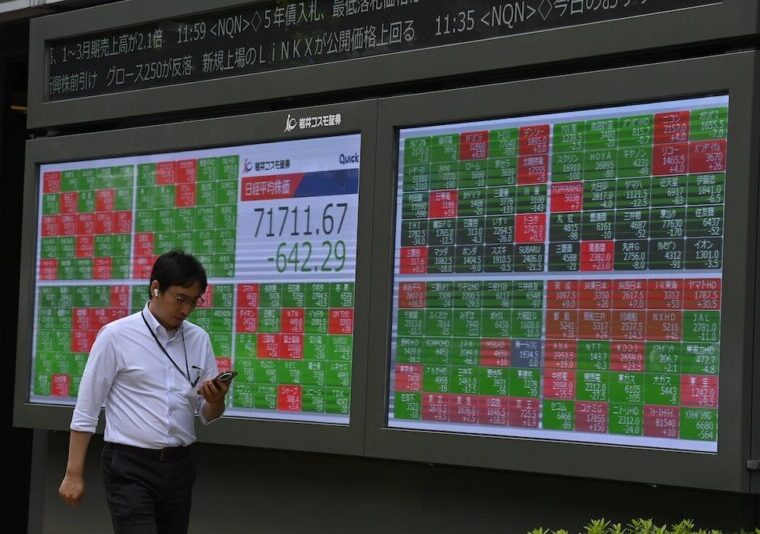
Countries in the Global South are determined to produce an alternative to the dollar’s hegemony. The BRICS platform is rapidly advancing the idea of a “common reserve currency.” Under the leadership of Russia and China, the BRICS Pay system is developing a non-dollar digital payment infrastructure.
Saudi Arabia, the United Arab Emirates, and Egypt’s alignment with the BRICS structure could challenge the dollar’s monopoly on energy pricing. Trading oil in a currency other than the U.S. dollar, such as the yuan, would mean the breakdown of the “petrodollar system” and the displacement of the cornerstone of the established order since Bretton Woods.
IMF experts note that diversifying reserves beyond the dollar into other major currencies could enhance long-term financial stability, though no single currency has yet emerged to replace the dollar. The European Central Bank (ECB) predicts that the euro and digital currency projects will become more prevalent in international transactions in the coming years. However, for the euro to rival the dollar, the EU will need to make a much greater effort. During the 2008 global financial crisis, the EU squandered a golden opportunity.
This transformation is revolutionary, affecting not only currencies, but also the global financial architecture. Central bank digital currencies (CBDCs), multilateral clearing lines, and regional payment systems are becoming widespread at a rapid pace. The world economy is rapidly moving towards an era in which it will be managed by a network rather than a central authority. The U.S. is closely monitoring this trend. However, Washington’s main concern is that this transformation will diminish the dollar’s role as the “global stabilizer.” Consequently, U.S. financial policies now extend beyond the economic sphere to include defense strategy.
The fundamental truth is that the global economic system is evolving from a single-currency-centered order to a multipolar financial structure. The U.S. debt spiral, government shutdown, interest burden, and political instability could be catalysts for this transformation. Although the dollar still reigns supreme today, the leading actors in the global system are aware that its dominance is waning. This tremor is not solely caused by the size of the U.S. public debt, but also by the erosion of the system’s moral and institutional credibility. The dollar’s transformation from an economic value to a threat and a tool of coercion and sanctions wielded by Washington is the main reason for its fragility. Each debt crisis, government shutdown, and instance of Washington printing money without backing further erodes the dollar’s global reputation.
Research organizations in the field of international economics have reached a clear joint conclusion: although the dollar’s dominance will continue, it will no longer be the only dominant currency. Reports from the IMF, BIS, and the World Economic Forum predict a multipolar financial order by 2030. This shift does not signal the beginning of a new currency war, but rather, the search for a new currency balance.
For Türkiye, this situation requires careful steps as well as strategic opportunities. In the new global context that we call Türkiye’s “Closed Bazaar Metaphor,” leading the way in trade with local currencies, digital payment systems, and regional financial cooperation projects is the strongest expression of economic independence. New maps are no longer drawn with imperialist ambitions, but with hope, justice, and solidarity. The dollar’s throne is shaking, and a new chapter in global economic history is opening.

Kerem Alkin is an ambassador, economist and a writer who holds a BA in Management as well as an MA and a PhD in Economics from Istanbul University.
You can see how this popup was set up in our step-by-step guide: https://wppopupmaker.com/guides/auto-opening-announcement-popups/

Stay informed by subscribing to
our weekly newsletter.
You can see how this popup was set up in our step-by-step guide: https://wppopupmaker.com/guides/auto-opening-announcement-popups/
You can see how this popup was set up in our step-by-step guide: https://wppopupmaker.com/guides/auto-opening-announcement-popups/
You can see how this popup was set up in our step-by-step guide: https://wppopupmaker.com/guides/auto-opening-announcement-popups/
You can see how this popup was set up in our step-by-step guide: https://wppopupmaker.com/guides/auto-opening-announcement-popups/