Risk of Nuclear Conflict ‘Highest Since Cold War,’ UN Disarmament Chief Warns

December 12, 2025

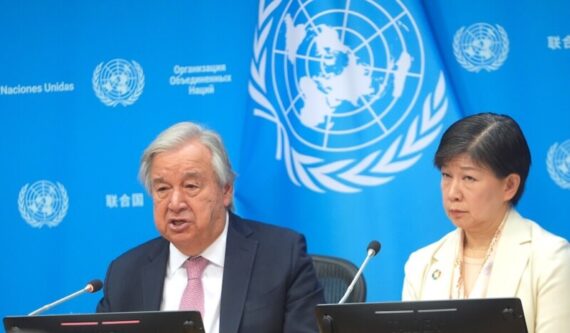
Izumi Nakamitsu, the UN under-secretary-general and high representative for disarmament affairs, said major military powers have already slipped into an accelerating arms race driven by geopolitical rivalry and large-scale modernization of nuclear arsenals.

T

he world is entering a new and dangerous phase of nuclear instability, with the risk of nuclear weapons being used now at its highest point since the depths of the Cold War, the UN’s top disarmament official warned on Thursday.

In an interview with Anadolu on the sidelines of the Doha Forum, Izumi Nakamitsu, the UN under-secretary-general and high representative for disarmament affairs, said major military powers have already slipped into an accelerating arms race driven by geopolitical rivalry and large-scale modernization of nuclear arsenals.

“I’m afraid we are actually starting to see arms race dynamics already,” Nakamitsu said. “All nuclear weapons states have been investing quite a lot of money in nuclear weapon systems… which is quite worrying.”

Arms race fueled by great-power competition

Nakamitsu stressed that global security had deteriorated long before the Russia-Ukraine war, but the conflict intensified already existing trends. Nuclear-armed states, she said, were expanding and modernizing their stockpiles years before the current crises.

“The dynamics of an arms race started before Ukraine,” she said. “There have already been several years of investment in nuclear weapons modernization programs.”

She warned that the combination of competition, mistrust and modernization has pushed the world closer to a potential nuclear miscalculation than at any point in decades.

‘Highest risk since Cold War’

According to Nakamitsu, today’s nuclear risks exceed those of the post–Cold War period, with weakened arms-control agreements, shrinking diplomatic dialogue and rising regional conflicts.

“I think the risk of nuclear weapons actually being used in conflict is at its highest since the depths of the Cold War,” she said.

She urged all nuclear-armed states to exercise restraint, maintain open communication channels, and adopt immediate risk-reduction measures to prevent an accidental escalation.

Although nuclear stockpile reductions appear unlikely in the near term, Nakamitsu insisted that disarmament remains broader than simply cutting warhead numbers. She outlined a phased approach centered on transparency, confidence-building and the restoration of trust.

“Disarmament doesn’t only mean reduction of arsenals,” she said. “There are other tools that can lead us back toward negotiations.”

These include mutual restraint, crisis-communication mechanisms, and structured dialogue between major powers.

Wars in Gaza and Ukraine undermine global trust

Nakamitsu said the conflicts in Gaza and Ukraine have had a “profound impact” on global disarmament diplomacy, eroding trust—particularly among countries of the Global South—and complicating consensus in multilateral forums.

“Conflict and violations of humanitarian principles in one region affect all other issues,” she said. “Trust required for multilateral negotiations is being eroded.”

This erosion, she warned, threatens core structures such as the Nuclear Non-Proliferation Treaty (NPT), viewed as the backbone of global nuclear governance.

With the next NPT Review Conference scheduled for 2026, Nakamitsu called on world leaders to treat the meeting as a diplomatic priority and to arrive prepared to compromise.

“Next year is really important,” she said. “Leaders must come to the NPT Review Conference with shared interest in producing an outcome document.”

She urged governments to reinvest in diplomacy and to recognize that preventing nuclear catastrophe is a shared global responsibility.

“Diplomacy, dialogue and a spirit of common interest — that is international security for all of us,” she said.

(Source: Anadolu Agency)

Politics Today is dedicated to publishing insightful analyses in order to understand the changing nature of contemporary politics. It aims to contribute to the sound and constructive discussion of international affairs.