Towards the Second Phase of the Ceasefire in Gaza: Expectations and Challenges

January 9, 2026

The only way to establish stability in Gaza and enable Hamas to lay down its arms as soon as possible is to establish a stability force composed primarily of soldiers from Muslim and Arab countries.
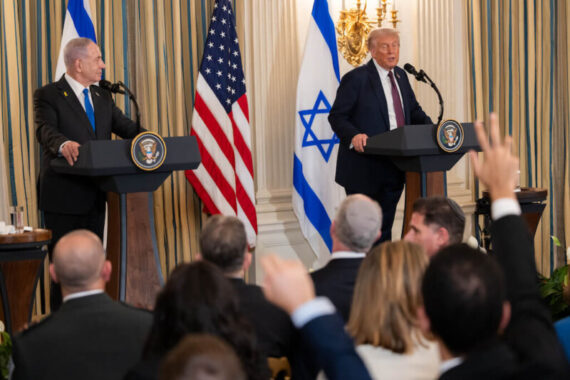
President Donald Trump shakes hands with Israeli Prime Minister Benjamin Netanyahu in the State Dining Room of the White House following a press conference in Washington, DC on September 29, 2025. Photo by Anadolu Images.

T

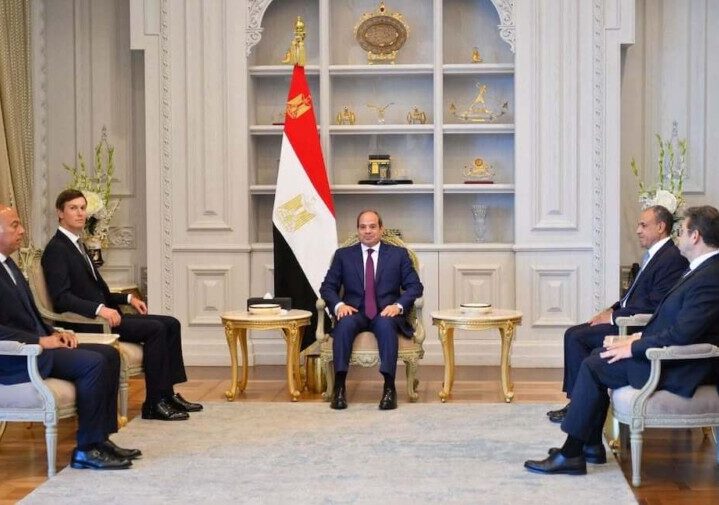
he first phase of the 20-point Gaza Ceasefire Plan began on October 10, 2025. The plan was made possible through the initiative of U.S. President Trump and the mediation of Turkey, Qatar, and Egypt. The ceasefire agreement was formalized with a letter of intent signed on October 13 in Sharm El-Sheikh, Egypt, in the presence of representatives from more than 35 countries and international organizations that accompanied the mediating and guarantor countries. The United Nations Security Council accepted the agreement on November 17, and it entered into force as Resolution 2803.

In exchange for Israel halting its attacks, withdrawing its troops behind a designated yellow line, and opening the border crossings to allow humanitarian aid into Gaza, the first phase of the agreement was established. This phase required that Hamas first release 20 live hostages and then hand over the bodies of 28 deceased hostages. Although Hamas fulfilled its obligations, Israel did not completely stop its attacks nor allow the free entry of humanitarian aid. Nevertheless, to prevent the resumption of attacks, Hamas tolerated Israel’s ceasefire violations, handed over all hostages in its possession, and worked to advance to the second phase of the agreement.

In fact, after two years, it is a great achievement that the parties have accepted the ceasefire. It is also important that the first phase of the agreement has been completed despite the problems. However, the second phase is of even greater importance. It includes the withdrawal of Israeli troops from Gaza, the establishment of a Gaza peace committee (Board of Peace), the formation of a temporary administration composed of Palestinian technocrats, the deployment of an international stabilization force, and the reconstruction of Gaza.

Conditions necessary for moving to the second phase

After Trump was re-elected president, he pressured Israel to accept a ceasefire even before taking office. This resulted in the implementation of a three-phase Gaza ceasefire plan on January 19, 2025. However, Israel waited for the completion of the first phase, which included the reciprocal release of hostages and prisoners. Israel then prevented the transition to the second and third phases, which included the withdrawal from and reconstruction of Gaza. After 60 days, on March 18, 2025, Israel claimed that Hamas had violated the ceasefire agreement by attacking Gaza, thereby rendering the ceasefire null and void.

Today, a similar process is unfolding. Israel is attempting to break the ceasefire again by blaming Hamas and refusing to allow any initiative that would permit the reconstruction of Gaza or pave the way for a two-state solution.

Despite many difficulties, the first phase of the ceasefire has been successfully completed, and it is now necessary to move on to the second phase. However, neither Trump’s 20-point plan nor UN Security Council Resolution 2803 set out a timetable for the phases of the ceasefire agreement. It is unclear when each phase will begin and end or when the next phase will start. In fact, conditions on the ground necessitate moving to the second phase of the ceasefire agreement as soon as possible. The international community has high expectations in this regard. Nevertheless, it’s clear that Israel wants to maintain the status quo, despite these expectations, and is trying to delay moving to the second phase by stalling for various reasons.

What is Israel objecting to?

Implementing the ceasefire reduced and, to a certain extent, halted international pressure on Israel, and Tel Aviv took full advantage of this. Its most significant gain has undoubtedly been the release of hostages that it had been unable to rescue. However, Israel has failed to fulfill its ceasefire responsibilities, either by neglecting them or deliberately ignoring them. Israel has attempted to sabotage the ceasefire process by fabricating excuses such as Hamas failing to deliver the bodies of deceased hostages on time, failing to lay down its arms, stealing humanitarian aid, and carrying out attacks on the yellow line. Israel has now raised its final objection to the transition to the second phase: Turkey’s participation in the stability force to be established.

Netanyahu stated that they would not allow Turkish soldiers in Gaza under any circumstances, saying that this was their red line. Nevertheless, both Trump and Emir Al-Thani of Qatar insisted that Turkey should be part of the stabilization force, which threw Israel’s calculations into disarray. They assessed that if they officially broke the ceasefire, they would incur Trump’s wrath. Therefore, despite all their objections, they were forced to maintain the ceasefire.

By undermining the close relationship between President Erdoğan and Trump, Israel is attempting to persuade Trump to oppose Turkey. To this end, Israel is trying to portray Turkey as the new Iran, threatening peace and stability in the Middle East. In this way, Israel is trying to advance its annexation agenda by preventing Turkey from entering Gaza and removing Turkey from Syria and destabilizing the country.

Expectations and challenges of the second phase

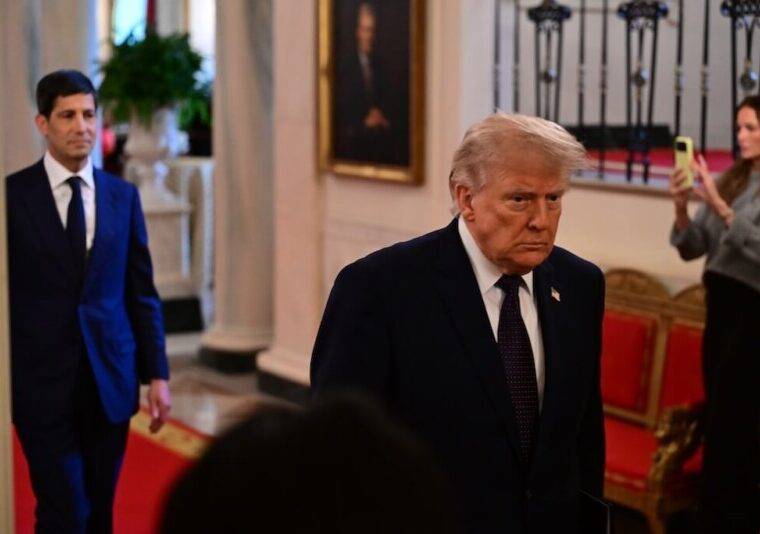
In order to advance to the second phase of the ceasefire, Trump must first reveal the composition of the “Peace Council” that he promised to establish. Additionally, the structure and role of the sub-administration consisting of Palestinian technocrats who will serve under this council and the international stabilization force must be disclosed. These councils will manage Gaza’s transition and reconstruction process.

However, the most important issue that has been overlooked is the necessity for Israel to cease its attacks completely, withdraw from Gaza, and lift restrictions on humanitarian aid entry. As long as Israel continues its attacks and occupation and prevents humanitarian aid from entering Gaza, Hamas will not lay down its arms or hand over power, as it has pledged to do. Therefore, while the U.S. administration is working to establish the Peace Council and the stabilization force, it must also ensure that Israel acts in accordance with its commitments.

However, it appears that the parties’ expectations for the second phase differ, and reaching an agreement between the two sides will be difficult. Israel demands that the Peace Committee and the stabilization force be composed of individuals and countries of its choosing, thereby seeking to maintain control.

Israel even wants the stabilization force to be involved in disarming Hamas and, if necessary, engage in conflict with Hamas. Hamas, on the other hand, wants the stabilization force positioned to protect Gazans from Israeli soldiers and structured to prevent Israeli attacks. For this reason, they want soldiers from Muslim countries, primarily Turkey, to be part of this force. As in previous agreements, they want to prevent the entire structure from being pro-Israel and prevent Israel from sabotaging the process.


However, the current situation and UN peacekeeping practices fall short of meeting either demand. In other words, the stability force that is to be established will not be able to disarm Hamas or protect Gazans from the Israeli army. To date, peacekeeping forces have generally been organized to create a buffer zone between conflicting parties, preventing direct contact and responding only to an attack directed at the force itself.

Therefore, the stabilization force to be deployed in Gaza must have a different structure than previous examples and be capable of protecting Gazans, who have been subjected to genocide for the past two years, from the Israeli army. It has not yet been clarified which countries will contribute to this force or to what extent. Israel’s reservations, particularly toward Turkey, are proving effective in this regard. Despite all the pressure and insistence from the U.S., Israel cannot be persuaded.

The reason is that, while the Sharm El-Sheikh agreement uses more inclusive language and imposes responsibilities on all guarantor countries, UN Security Council Resolution 2803 refers to determining the structure of the stabilization force after coordinating with Egypt and Israel. This discrepancy strengthens Israel’s hand, and it is using this to delay the process.

How will moving to the second phase affect Israel?

Trump visited Israel before the signing ceremony in Sharm El-Sheikh and gave a speech in the Knesset, attempting to market the ceasefire as a great victory for Israel. However, this was not well received in Israeli politics. The opposition had previously demanded an end to the war to secure the release of hostages. They perceived accepting a ceasefire under Trump’s pressure as a sign of weakness. They stated this decision exposed Netanyahu’s impotence. Within the coalition, while the ceasefire was generally supported, differing views emerged. The far-right partners, led by Ben Gvir and Smotrich, demanded a return to war after the all hostages were released, insisting that the war continue until Hamas was completely eliminated.

Ben Gvir and Smotrich have kept their demands at the level of rhetoric so far, and there has been no change in the government’s composition. However, if the second phase of the ceasefire is implemented, it is believed that these threats could be realized, causing the government to lose its majority in parliament. In this case, snap elections could be called, and the government could change.

It remains unclear how this situation will affect the second phase of the ceasefire. The position that the US administration takes on this matter will be decisive. How the Israeli public will receive Trump’s support for Netanyahu depends entirely on developments during the campaign period. Trump’s open support for Netanyahu at the end of his first term, as well as Netanyahu’s use of this support for his campaign, had negative consequences. Although Netanyahu’s party won the election, they were unable to form a government.

Therefore, for the ceasefire to move into its second phase, the US administration must consider possible scenarios for a change in Israeli government and support actors who will continue the process. Otherwise, a government opposed to the ceasefire and the reconstruction of Gaza will be formed, rendering the entire process in vain.

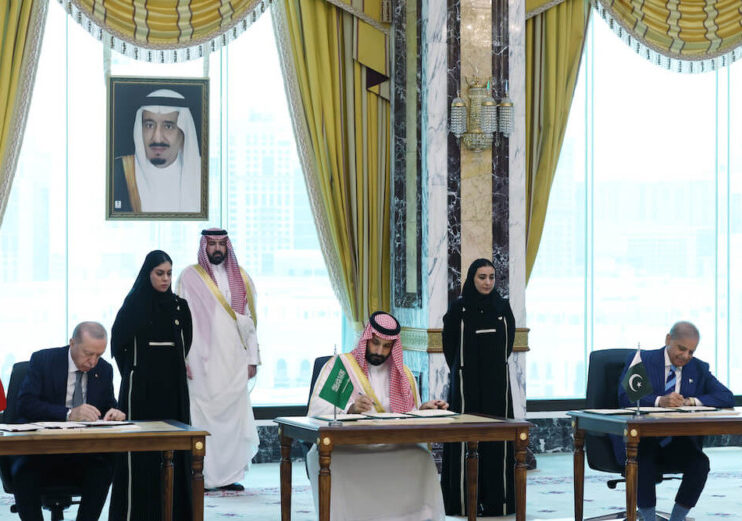
Consequently, the Gaza ceasefire, which was achieved with great difficulty and heavy sacrifice, must be upheld within Trump’s vision of bringing peace to the Middle East. The second phase of the plan must be implemented as soon as possible. In this context, all countries involved in mediation and guarantorship must continue to participate in the process. Turkey should not be excluded from the peace committee or stabilization force simply because Israel objects.

The peace committee should not include individuals with questionable pasts, such as Tony Blair, nor should it treat Gaza merely as a real estate project. Gaza must be governed by Palestinians, and the main goal should be to conclude the process with a two-state solution.

The only way to establish stability in Gaza and enable Hamas to lay down its arms as soon as possible is to establish a stability force composed primarily of soldiers from Muslim and Arab countries. This force must be structured and authorized to protect the people of Gaza, not to disarm Hamas. Only then can the genocide in Gaza be prevented.

Additionally, the ceasefire agreement must not cover up the war crimes and genocide committed by Israel or grant Israel immunity. If Israel is reintegrated into the international community as if it had done nothing wrong, without facing trial and receiving the appropriate punishment for these crimes, it will encourage future attempts at genocide. In this case, international law will cease to exist, and the price paid by the Palestinians will have been in vain.

(Originally published by Kriter in Turkish)

After serving 25 years in the Turkish Navy, he retired in 2014. Afterwards, he started his doctoral education on Middle East Studies at Sakarya University Middle East Institute and worked as a researcher at the Israel Studies desk of the institute. Between 2019-2021, he served as a Levant Specialist at Center for Middle Eastern Studies (ORSAM) and led the Palestine and Israel studies during this period. Currently, as an independent researcher, he conducts research on Palestine, Israel, the Middle East and Turkish Foreign Policy, writes analyses for various platforms and is a commentator on TV.