The Pakistan-Afghanistan ‘Open War’: A New Test for Türkiye’s Mediation
The Afghanistan-Pakistan frontier links two nuclear-armed states and sits close to a third, India, which has its own history of war with Pakistan.
March 24, 2026
W
hen Pakistan’s defense minister went on television at the end of February and spoke of an “open war” with the Taliban government in Kabul, he was not simply using a dramatic phrase for a familiar border clash. He was signaling that the Afghanistan-Pakistan theatre – long managed through deniable strikes, proxy groups and quiet understandings – had entered a new and more dangerous phase.
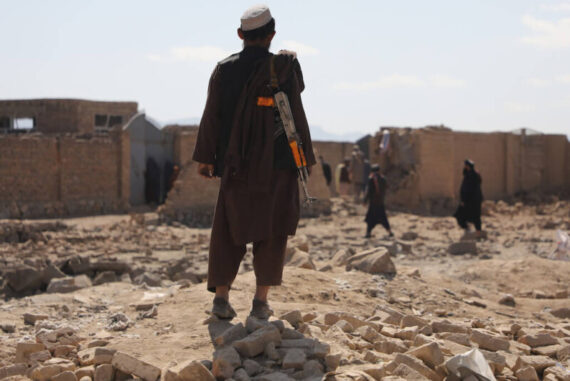
His announcement came as Pakistani warplanes hit Taliban-controlled areas near the capital and along the eastern frontier, targeting what Islamabad describes as TTP safe havens that fuel attacks inside Pakistan. For people on both sides of the border, this looked less like the start of a brand-new conflict and more like a sharp escalation in a security problem that never really went away.
Islamabad said the strikes targeted militants of Tehreek-e-Taliban Pakistan (TTP) responsible for repeated attacks across the border and inside Pakistan. Taliban authorities in Kabul countered that civilians, including women and children, were among the dead, and that Afghan sovereignty had been violated yet again by a neighbor that long used their soil as a strategic area. Both sides accused each other of sheltering militants and of turning a porous line on the map into a revolving door for armed groups.
The first theatre of the “war on terror” is now moving toward an undeclared confrontation between two governments that once cooperated closely. As this front heats up, the question becomes more concrete: in a crowded and contested international agenda, who has both the interest and the capacity to help limit the damage? Middle powers such as Türkiye are increasingly part of the answer, but their real room for maneuver is still being tested.
For years, Afghanistan-Pakistan borders sat in a grey zone. Pakistani jets and artillery occasionally hit suspected militant camps across the border. Taliban leaders quietly tolerated some of these strikes, publicly condemned others and tried to manage a relationship built on decades of covert cooperation, refugee flows and shared enemies. The line between a counterterrorism operation and a cross-border skirmish was kept deliberately vague.
Late February 2026 changed the atmosphere. Pakistani warplanes bombed Taliban-held areas near Kabul and in eastern provinces, while officials spoke openly about dismantling what they describe as TTP safe havens inside Afghanistan. Taliban spokesmen responded with their own casualty figures, allegations of civilian deaths and an ultimatum: respect Afghan territory or face consequences. When both sides use language such as “open war,” the space for quiet de-escalation narrows quickly.
This is not only a matter of public rhetoric. When armed groups move across borders, governments still have a certain flexibility in how they respond and how they explain their actions. Once capitals and regular forces are engaged in a declared confrontation, domestic audiences, rival factions and external partners all push for more rigid positions. Political costs rise for any actor who wants to step back.
The Afghanistan-Pakistan frontier links two nuclear-armed states and sits close to a third, India, which has its own history of war with Pakistan. It also lies on top of the supply routes, smuggling lines and ideological networks that have sustained jihadist movements since the 1980s. In a relatively small space, tribal structures, armed groups and long-standing border disputes overlap and feed into each other.
In such an environment, escalation can move faster than intentions. A few days of airstrikes and retaliatory raids might remain limited; several weeks of miscalculation could start to affect stability in Central Asia, the Gulf and even China’s Xinjiang region. Pakistani security planners are clearly aware of these linkages. Taliban commanders understand as well that allowing TTP fighters extensive freedom of action from Afghan territory increases the chance of additional punitive strikes.
The timing of this crisis matters. It comes as the U.N. Security Council is already dealing with a crowded agenda dominated by the fourth year of the Ukraine war and the unresolved consequences of the Gaza genocide. Diplomatic bandwidth in many capitals is limited. Intelligence services and foreign ministries are managing several urgent files at once. Adding Afghanistan-Pakistan to this list makes coordination harder at the very moment when it is most needed.
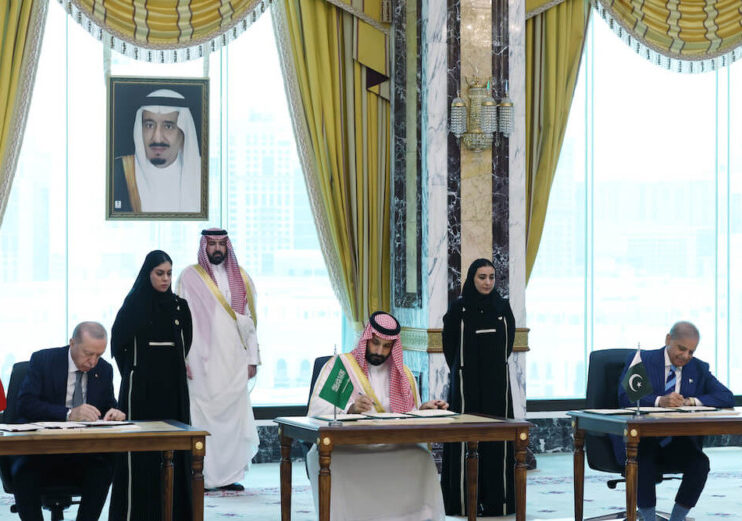
At this point, middle powers come into focus. States with regional reach, flexible diplomacy and no colonial baggage in Afghanistan-Pakistan have a specific advantage. Various reports and commentaries already point to regional mediators such as Qatar and Saudi Arabia, as well as Türkiye and possibly the UAE. All of them have channels to Islamabad, some degree of contact with the Taliban and a clear interest in avoiding a prolonged war on the edge of the Muslim world.
Türkiye enters this picture with a record that combines alliance ties and autonomous initiatives. As a NATO member that maintained dialogue with Moscow during the Ukraine war, Ankara helped build the Black Sea grain corridor when many saw little space for compromise. On Gaza, Turkish officials engaged in back-channel contacts involving Israel, Egypt, Qatar and the United States while keeping a critical public line. In Afghanistan, Türkiye sought a role at Kabul airport after the U.S. withdrawal, signaling that it did not intend to disappear from the file when Western militaries left.
This pattern has strengthened Ankara’s claim to a certain mediation capacity. Middle powers accumulate influence not only through defense sales or summit diplomacy, but also by repeatedly entering crisis management roles when larger powers are divided or simply tired. The Afghanistan-Pakistan confrontation is another test case. For Pakistan’s leaders, a Muslim-majority partner with established defense links and personal relationships is a good option. For Taliban figures who do not want to depend on a single patron, an interlocutor that talks about security, trade and political process at the same time has clear value.
This does not mean a middle power can impose a settlement between Pakistan’s security establishment and the Taliban leadership. It does mean expectations are shifting about which actors are asked to “do something” when escalation threatens to spin out of control.
Recommended
Over roughly a decade, Türkiye has built what might be called mediation capital. In the Black Sea, the Eastern Mediterranean, the Gulf, the Horn of Africa and now Afghanistan-Pakistan, Ankara presents itself as a state able to speak to actors who often refuse to speak to each other. The message is simple: Türkiye is large enough to matter, close enough to understand local dynamics and willing to take diplomatic risks.
There are constraints. Budgetary pressures limit how much time, money and political focus can be devoted to multiple crises at once. Domestic polarization consumes attention that might otherwise support lengthy negotiation processes. The more files Türkiye opens – Gaza, Ukraine, Libya, the Caucasus, the Red Sea, the Sahel – the more partners may question whether its capacity fits its ambitions. Mediation fatigue is not unique to Western capitals.
Afghanistan-Pakistan will show how sustainable this approach really is. To be taken seriously in Islamabad, Türkiye needs to reflect Pakistan’s security concerns about TTP attacks and cross-border terrorism. To maintain access in Kabul, it needs to acknowledge Afghan sovereignty and the political impact of repeated foreign strikes on public opinion. To avoid friction with Beijing, Ankara has to factor in CPEC and China’s security interests, without turning Afghanistan-Pakistan into another visible stage for major-power competition.
In practice, this means Turkish envoys moving discreetly between Islamabad, Kabul and Doha; regular coordination with Washington, Beijing and other regional players; and careful public messaging that recognizes losses on both sides of the border. It is labor-intensive diplomacy with no guarantee of quick or visible results.
For Türkiye, the current crisis is less about headlines and more about demonstrating that its mediation narrative can withstand a hard case in a difficult neighborhood. If Ankara manages to keep channels open, lower the temperature and work in parallel with other regional actors, it will strengthen its standing as a relevant middle power in security crises. If it falls short, Afghanistan-Pakistan will still send a clear signal: in a more fragmented order, claims to mediation leadership are measured not by rhetoric but by performance in places where the leeway for mistakes is very small.

Göktuğ ÇALIŞKAN is a PhD candidate at the International University of Rabat (UIR) in Morocco, conducting research as a scholar of the Turkish Ministry of National Education (YLSY program). Simultaneously, he serves as an International Relations Specialist at ANKASAM. He holds undergraduate degrees in Political Science and Public Administration (Ankara Yıldırım Beyazıt University) and Law (Erciyes University). He completed his master’s studies at Ankara Hacı Bayram Veli University and UIR (in French). His analyses on global politics and security have been featured in various international outlets, including Türkiye Today, Daily Sabah, TRT Afrika, and FokusPlus.
You can see how this popup was set up in our step-by-step guide: https://wppopupmaker.com/guides/auto-opening-announcement-popups/

Stay informed by subscribing to
our weekly newsletter.
You can see how this popup was set up in our step-by-step guide: https://wppopupmaker.com/guides/auto-opening-announcement-popups/
You can see how this popup was set up in our step-by-step guide: https://wppopupmaker.com/guides/auto-opening-announcement-popups/
You can see how this popup was set up in our step-by-step guide: https://wppopupmaker.com/guides/auto-opening-announcement-popups/
You can see how this popup was set up in our step-by-step guide: https://wppopupmaker.com/guides/auto-opening-announcement-popups/