China Expands Nuclear Infrastructure amid Global Arms Control Breakdown

April 6, 2026

A new investigation by CNN has found evidence that China is significantly expanding its nuclear weapons infrastructure, raising concerns among analysts about a potential new global arms race as major arms control agreements weaken.
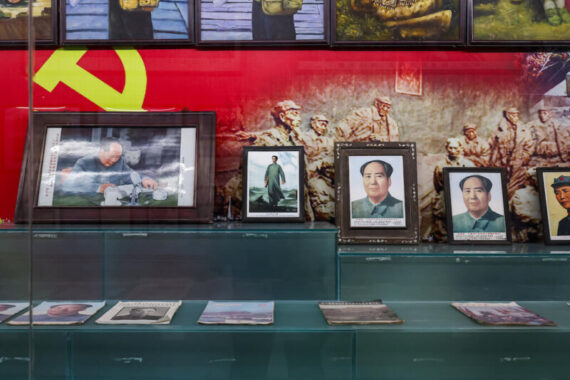
Portraits of late Chinese top leader Mao Zedong are seen inside the Three Island Hero Battlefield Park, which mainly displays tanks, planes, and warships of the Chinese military, on Dadeng Island in Xiamen, China, on March 10, 2026. Photo by Anadolu Images.

A

ccording to the report, satellite imagery and Chinese government documents indicate that entire villages in Sichuan province were demolished and residents evicted beginning in 2021–2022 to make way for expanded nuclear facilities.

Local residents reportedly received minimal explanation for the land seizures, with officials citing “state secrecy.”

The construction includes large reinforced industrial structures, upgraded transportation links, and expanded facilities believed to be connected to nuclear weapons production and research.

The investigation highlights extensive development at sites identified as Site 906 and Site 931, part of a broader network of facilities linked to China’s nuclear program.

Among the most notable additions is a large dome-like structure described by experts as potentially designed for handling highly radioactive materials such as uranium and plutonium.

Analysts cited in the report say the scale and design of the facilities suggest a major modernization effort that could significantly increase China’s nuclear production capacity.

China’s growing arsenal and strategic shift

China is currently estimated to possess over 600 nuclear warheads, placing it behind the United States and Russia, but ahead of other nuclear powers such as France.

Defense analysts say China is the fastest-growing nuclear power globally, even as it maintains its official policy of “no first use.”

Beijing has repeatedly stated that its nuclear strategy is defensive in nature, with its Ministry of Foreign Affairs rejecting claims of weapons escalation and insisting China does not engage in nuclear threats against non-nuclear states.

The report comes at a time of increasing global uncertainty over nuclear arms control. The expiration of the New START Treaty between the United States and Russia has further weakened the international framework limiting strategic weapons.

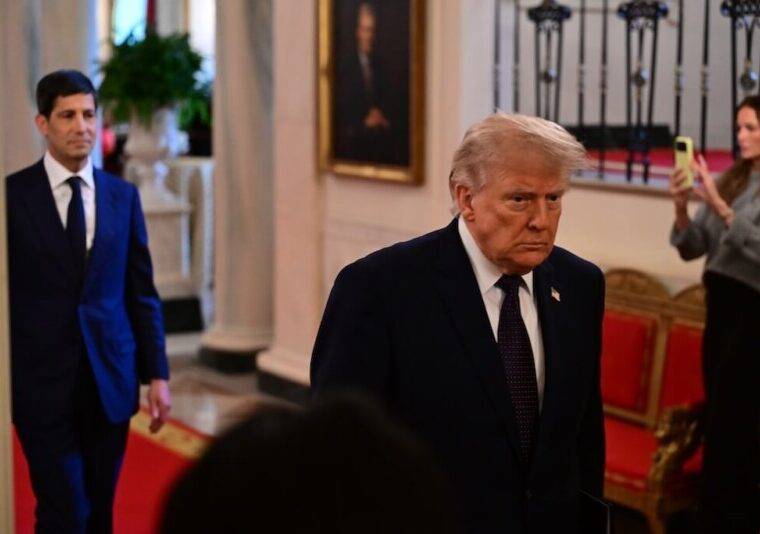
Former U.S. President Donald Trump has previously called for a new arms control agreement that would also include China, though Beijing has shown little indication it is willing to join such negotiations.

Some analysts believe China’s expansion is linked to broader geopolitical tensions and a desire to strengthen deterrence, particularly in relation to Taiwan and rising military competition with the United States.

Concerns over a new arms race

Experts warn that the simultaneous modernization of nuclear forces by multiple major powers could lead to a more complex and unstable arms race than during the Cold War era.

Analysts also suggest that perceptions of China’s capabilities—whether accurate or exaggerated—could influence U.S. defense planning and potentially accelerate global nuclear proliferation.

Meanwhile, tensions in other regions, including conflicts involving Iran, are also seen by some experts as factors contributing to rising global nuclear insecurity.

(Source: CNN)

Politics Today is dedicated to publishing insightful analyses in order to understand the changing nature of contemporary politics. It aims to contribute to the sound and constructive discussion of international affairs.