The Strait of Bab el-Mandeb in the Wake of the Strait of Hormuz Crisis
Yemen, a country situated in a strategic position overlooking the strait and serving as a stage for Iran’s sphere of influence, whilst also hosting the UAE's military presence.
May 8, 2026
F
ollowing Iran’s closure of the Strait of Hormuz on 28 February 2026, in response to attacks launched by Israel and the US against Iran, the impact of this conflict was clearly felt in the global economy. Even in its early stages, it was evident that the effects would extend beyond the regional level. The closure of this waterway, through which 20 per cent of the world’s oil is transported, caused the price of Brent crude, at around $72 on 27 February, to rise to $110 by the end of April.
Disruptions to the transit of not only oil and liquefied natural gas, but also numerous other commercial goods, have sparked widespread concern about the future. For example, news reports disseminated to the global public via mainstream media have highlighted the expectation that fertilisers unable to reach their destination ports in the aftermath of the outbreak of war will visibly impact the agricultural sector, and consequently food production.
Beyond the commercial goods transported through the Strait of Hormuz, war risk premiums, which previously stood at 0.25 per cent, have risen to 3 per cent, which is a significant additional cost for companies conducting maritime operations in the region. Consequently, the commercial environment in the region has a bleak outlook for everyone in the short term. While all these developments remain in the spotlight, potential scenarios involving Iran closing the Bab el-Mandeb Strait as a second geopolitical trump card after the Strait of Hormuz are also being discussed. Iran is said not to have fully deployed its proxy forces on the ground in the early days of the war.
Given the likelihood of such an event being reinforced by statements from Iranian officials such as Ali Hezriyan, a member of the National Security Commission of the Iranian Parliament, it is important to examine the potential influences on the situation, considering the strait’s current position in global trade and the valuable assets in its vicinity.
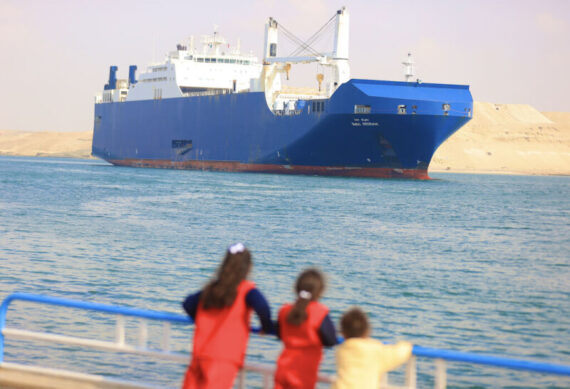
The Bab el-Mandeb Strait is a narrow waterway connecting the Gulf of Aden with the Red Sea. Alongside the Suez Canal, it has gained undeniable importance in global maritime trade. This strait is an essential route for travel from the Indian Ocean to the Mediterranean, and it currently hosts a significant proportion of maritime transport between Asia and Europe. Situated in the southern Red Sea, this 36-kilometer-wide passage is bordered on the eastern side by Yemen and on the western side by the coasts of Eritrea and Djibouti.
Iran’s strategic influence over the strait is exercised through its key proxy in Yemen, the Houthis. This week, Hezriyan stated that the Houthis had completed drills for closing the strait and that, should this occur, non-hostile vessels would have to choose between paying an additional 30 million dollars to circumnavigate the strait or paying 5 million dollars to the Houthis for safe passage.
Should it materialize, there is no doubt that the economic repercussions of such an initiative would engulf the entire world, much like the Hormuz crisis. For this reason, it is crucial to assess the actors involved in the Bab el-Mandeb Strait and analyze the balance of power there. The Houthis, Iran’s proxy in Yemen, are the most prominent factor in the current landscape, given the possibility of closing the strait to traffic. According to UN estimates, the number of Houthi fighters increased from 220,000 in 2022 to 350,000 by 2024.
The Houthis can be defined as part of the resistance axis, which Iran has devoted significant effort and resources to in order to counter the Israel–US partnership, or the Zionist alliance, which constitutes the primary threat to Iran in the Middle East. Through this connection, Iran gains the ability to control the Strait of Bab el-Mandeb, and consequently Red Sea traffic, despite having no land or maritime borders with the region.
Recommended
Alongside these familiar regional actors, another noteworthy factor is the Chinese military base in Djibouti. While the People’s Republic of China has no other overseas military bases, in 2017 it made a significant financial investment to establish its first overseas military base at the heart of the Strait of Bab el-Mandeb. It is understood that activities related to aviation and space operations are also conducted at this base.
Taking into account all these actors, as well as all international military activity in the region, including the Turkish military base in Mogadishu, despite its distance from the strait, it is possible to draw the following conclusion. The Bab el-Mandeb Strait has emerged as the next focus of the Hormuz crisis, part of the war that began between the US/Israel and Iran on 28 February 2026, and is of great significance not only to the course and outcome of this war, but also appears set to be one of the region’s most discussed topics in the coming years, even outside the context of the war.
Yemen, a country situated in a strategic position overlooking the strait and serving as a stage for Iran’s sphere of influence, whilst also hosting the UAE’s military presence (the UAE maintains close ties with Israel), has long been plagued by instability. The rare strategic presence of a distant country such as China in this region, alongside Ethiopia’s intense efforts to secure a direct link to the Red Sea amidst high tensions in its relations with neighbors and the concurrent trajectory of the rivalry between Eritrea and Djibouti with that of regional powers, all appear set to dominate the global agenda for some time, alongside the Middle East and East Africa.
(This article was originally published by the Middle East and Africa website in Turkish)

Enes Tahir Kekeç has graduated from the Emergency Medical Services (Associate’s Degree) program at Hatay Mustafa Kemal University in 2016 and completed my bachelor’s degree in Translation and Interpretation (English-French-Turkish) at Sivas Cumhuriyet University in 2021. I completed my master’s degree at the Institute of Social Sciences at Sakarya University in 2025. I am currently pursuing my doctoral studies in the Middle Eastern Studies program at the same university’s Institute of Middle Eastern Studies.
You can see how this popup was set up in our step-by-step guide: https://wppopupmaker.com/guides/auto-opening-announcement-popups/

Stay informed by subscribing to
our weekly newsletter.
You can see how this popup was set up in our step-by-step guide: https://wppopupmaker.com/guides/auto-opening-announcement-popups/
You can see how this popup was set up in our step-by-step guide: https://wppopupmaker.com/guides/auto-opening-announcement-popups/
You can see how this popup was set up in our step-by-step guide: https://wppopupmaker.com/guides/auto-opening-announcement-popups/
You can see how this popup was set up in our step-by-step guide: https://wppopupmaker.com/guides/auto-opening-announcement-popups/