The Strait of Hormuz and Bab el-Mandeb: Is the World Entering a New Era of Chokepoints?
The US/Israel-Iran War, in a sense, heralds a new geopolitical era that could be defined as the ‘Age of Chokepoints’, originating from the Strait of Hormuz.
April 29, 2026
T
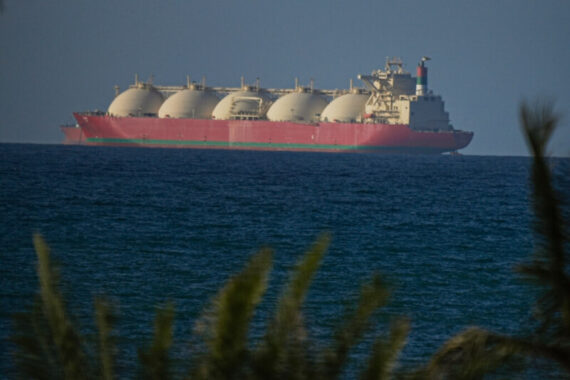
he US/Israel-Iran war has reached a scale far beyond that of a war explainable solely by the military capabilities of the parties involved. The course of the war is being shaped by the risks, disruptions and costs generated at an accelerating pace upon the circulatory arteries of the global economy. Consequently, just as much as the military situation on the ground, the question of which sea lanes, energy corridors and logistical hubs the war is putting under pressure has become a decisive factor.
The geopolitical significance of the current war must be discussed beyond the scope of traditional debates on the expansion of fronts. The real issue is that the critical chokepoints of the global system have begun to generate tension simultaneously. The growing uncertainty and risk premium in the Strait of Hormuz are creating a de facto blockage in energy flows. However, the Houthis’ more direct involvement in Yemen carries the risk of turning the Bab el-Mandeb–Red Sea corridor into a second flashpoint. This scenario signifies a threshold that extends the cost of the war beyond regional borders and deepens the fragility of the global economy.
In this context, the US/Israel-Iran War, in a sense, heralds a new geopolitical era that could be defined as the ‘Age of Chokepoints’, originating from the Strait of Hormuz. Indeed, it is no coincidence that geopolitical chokepoints such as the Panama Canal, the Suez Canal, the Strait of Malacca, the Bering Strait and Arctic passages in the context of Greenland have come to the fore in recent years. In the current climate, the global economy has become increasingly concentrated. Furthermore, energy, trade, food and data flows now pass through a limited number of chokepoints. Any disruption at these nodes transforms military crises into economic shocks, and economic shocks into political turbulence.
The debate surrounding the Strait of Hormuz is moving beyond the dichotomy of whether it is closed or open. The current situation is generating a risk premium, characterised by a significant slowdown in maritime traffic—even if partial transit continues—along with rising costs for ship insurance, freight rates and trade finance. This risk premium is causing delays and cost increases in global supply chains, going beyond the fluctuations reflected in energy prices.
In this context, the cost of the war is moving towards a scale that cannot be measured solely by the price per barrel. As the risk premium rises, panic over supply security—independent of the physical supply of oil—is spreading through the markets, undermining inflation expectations and weakening the global growth outlook. Furthermore, the persistence of the bottleneck in the Strait of Hormuz is increasing logistics costs for food and industrial inputs, creating new vulnerabilities, particularly in economies reliant on imports. Indeed, logistical issues affecting both petrochemical products and fertilizers carry the risk of directly and profoundly impacting numerous sectors.
A notable aspect of this situation is that a resolution to the Strait of Hormuz impasse will not be achieved by a political decision alone. Even if tensions ease temporarily, it will take significant time for the market to regain confidence. The fact that the insurance and freight markets will not immediately absorb the shock, that companies will not regain their appetite for risk overnight, and that supply chain delays will have cumulative effects, suggests that costs may persist even in the post-war period. Consequently, the strategic importance of the Strait of Hormuz stems not only from its role as a transit point but also from its function as a pivotal point capable of determining the pace of normalisation within the global system.
One of the key factors exacerbating the geopolitical risks of the current war is the Houthis’ more direct involvement. This situation carries the risk of turning the Bab el-Mandeb–Red Sea corridor—one of the most critical points for global maritime trade—into a natural corridor for the war’s expansion. Indeed, just as the Strait of Hormuz is the linchpin of energy flows centred on the Persian Gulf, the Bab el-Mandeb is one of the most critical chokepoints for Europe-Asia trade and access to the Suez Canal.
The increasing risk posed by the Bab el-Mandeb does not merely imply the possibility of attacks on commercial vessels. Tensions along this route carry the risk of increasing global trade costs by forcing route diversions and prolonging delivery times. Furthermore, the Red Sea basin is a region with a significant foreign military presence. Djibouti hosts military bases and forces from various countries, notably the US and China. Consequently, a more direct involvement by the Houthis carries the potential to transform the maritime security crisis into a multi-actor military standoff.
In this scenario, the critical risk is the so-called ‘double-strait crisis’. Whilst the risk premium in the Strait of Hormuz becomes entrenched, the simultaneous pressure on the Bab el-Mandeb Strait would severely constrict the global system’s circulation capacity. In such a scenario, the cost of war would by no means be confined to the Middle East; it would exacerbate inflation and energy supply concerns in Europe, food and logistics costs in Africa, and industrial and supply chain pressures in Asia. Consequently, an escalation along the Bab el-Mandeb corridor is the fastest route for the war to evolve from a regional issue into a global systemic crisis.
The rise of the ‘age of chokepoints’ is also producing strategic consequences for Turkiye. Although Turkiye is not a direct party to the current war, it lies at the heart of one of the critical nodes of global circulation. The Straits of Istanbul and Dardanelles hold high strategic value not only for commercial transit along the Black Sea–Mediterranean route but also in terms of energy transport, regional security and crisis management. In an era where global competition is played out through these chokepoints, the importance of the Straits is likely to increase more than ever in the near future.
Consequently, this situation yields a two-fold outcome for Turkiye. Whilst strategic weight and diplomatic manoevring space expand on the one hand, the responsibility for risk management increases on the other. As seen in the Strait of Hormuz, in the current era, geography emerges both as an advantage and as a focal point for crisis management. For this reason, Turkiye’s priority must be to keep diplomatic channels open without allowing tensions to cross the threshold of regional escalation, and to contribute to efforts that prevent further constriction of global maritime traffic.
In this context, three policy priorities stand out. Firstly, supporting diplomatic pressure to prevent the war from spilling over to the Bab el-Mandeb–Red Sea corridor and strengthening international coordination to prevent an increase in maritime security risks. An escalation along this corridor would affect regional security and the broader economic landscape—including Turkiye’s own interests—particularly given the context of Turkiye’s investments in the Horn of Africa.
Secondly, given that the blockage in the Strait of Hormuz generates a risk premium that could persist even with partial flow, preventive policies must be implemented to limit the repercussions of fluctuations in energy and logistics markets on the Turkish economy. The pace of post-war normalization must be taken into account as much as the course of the war itself.
Thirdly, the geopolitics of global bottlenecks must be monitored more systematically at the institutional level, and Turkiye’s strategic preparedness capacity must be enhanced in the context of the Straits, ports, maritime security and critical supply lines. This situation stands out as a matter of defense and security, as well as a matter of economic, energy, logistics and crisis management capacity.
Recommended
Although the US/Israel-Iran war began as a regional war, it is increasingly transforming into a geopolitical crisis expanding through the chokepoints of global circulation. The risk premium and de facto blockage in the Strait of Hormuz are putting pressure on global energy and inflation channels, whilst the possibility of the Houthis becoming directly involved could turn the Bab el-Mandeb–Red Sea corridor into a second flashpoint. In this scenario, the cost of the war—regardless of military balances—evolves into a bottleneck crisis that would paralyse the functioning of the global system.
The priority, therefore, is to establish exit routes that will prevent the war from spreading to new fronts. For Turkiye, the growing significance of the chokepoint process is simultaneously increasing both the diplomatic responsibilities arising from its strategic position and its capacity for risk management. In this context, preventing an escalation along the Bab el-Mandeb–Red Sea corridor is essential for regional stability and the sustainability of the global system. Turkiye’s key contribution lies in strengthening diplomatic channels to prevent the war from spreading further and enhancing strategic preparedness against the economic and security risks generated by the geopolitics of the chokepoint.
(Originally published in Turkish by Kriter)

Assistant Professor of International Relations at Mersin University and a researcher at the SETA Foundation. His research focus is the Horn of Africa.
You can see how this popup was set up in our step-by-step guide: https://wppopupmaker.com/guides/auto-opening-announcement-popups/

Stay informed by subscribing to
our weekly newsletter.
You can see how this popup was set up in our step-by-step guide: https://wppopupmaker.com/guides/auto-opening-announcement-popups/
You can see how this popup was set up in our step-by-step guide: https://wppopupmaker.com/guides/auto-opening-announcement-popups/
You can see how this popup was set up in our step-by-step guide: https://wppopupmaker.com/guides/auto-opening-announcement-popups/
You can see how this popup was set up in our step-by-step guide: https://wppopupmaker.com/guides/auto-opening-announcement-popups/