Straits and Armed Conflicts: What About the Strait of Hormuz?
The US blocking civilian vessels bound for or coming from Iran through the Strait of Hormuz would clearly violate international law.
May 20, 2026
S
ince almost the very beginning of the attacks carried out by the US and Israel against Iran, the Strait of Hormuz has been one of the most significant factors influencing the course of the war. The Strait of Hormuz also fundamentally affects whether the current peace talks stall or progress. The most significant reason for this is that economic and commercial considerations have come to the fore amongst the global repercussions of armed conflicts today.
Since passage through international straits, particularly the Strait of Hormuz, is critical, the regime governing passage has become a significant concern. In this context, questions have arisen about whether any state has the right to close an international strait and whether restricting, closing, or imposing a blockade on international straits during wartime is legally permissible.
Given the illegality of many actions in the US/Israel-Iran conflict, it would be beneficial to clarify the legal principles governing transit through the Strait of Hormuz, a vital international maritime transport route, during wartime.
Apart from the Strait of Hormuz, there are other straits and channels around the world that are of central importance to international maritime transport. The Strait of Gibraltar, the Turkish Straits, and the Straits of Singapore and Malacca are among the most important of these. The Strait of Gibraltar is the only maritime passageway connecting the Mediterranean Sea to the open ocean. The Straits of Singapore and Malacca are maritime passages between the Indian Ocean and the South China Sea in Southeast Asia. Stretching between Singapore and the Riau Islands of Indonesia, these straits are among the busiest waterways in global maritime trade. Approximately 40 percent of the world’s merchant vessels pass through them. They form the route for most oil and raw material shipments destined for Asia’s industrial giants, such as China, Japan, and South Korea.
The Turkish Straits system, comprising the Straits of Istanbul and Çanakkale and the Sea of Marmara, is the only waterway connecting the Black Sea to the Mediterranean Sea. The Turkish Straits are of vital importance to the economies and military security of countries bordering the Black Sea. Currently, over 50,000 ships, including more than 10,000 tankers, pass through the Turkish Straits each year, making them crucial for the transit of food, oil, natural gas, and commercial goods.
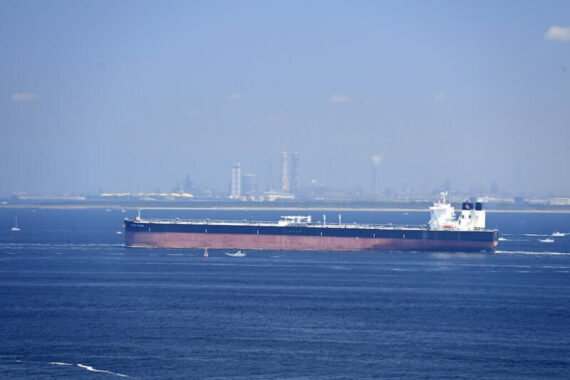
Meanwhile, the Strait of Hormuz is one of the world’s most important oil transit points. This strait is the sole route connecting Iraq, Kuwait, Qatar, and Bahrain to the rest of the world, and it is also the only functional maritime transport route for oil exports from Iran, Saudi Arabia, and the United Arab Emirates (UAE). In 2024 and 2025, more than a quarter of total global seaborne oil trade and approximately one-fifth of global oil and petroleum product consumption passed through the Strait of Hormuz. Furthermore, approximately one-fifth of the global liquefied natural gas (LNG) trade passed through the strait in 2024, primarily from Qatar. Consequently, even temporarily halting the passage of oil or LNG tankers through the strait is likely to increase global energy prices, shipping costs, and lead to significant supply delays.
Man-made waterways that connect seas are known as sea canals. The Panama and Suez Canals are the most prominent examples. The Panama Canal was constructed under the 1903 Washington Treaty between Panama and the United States and completed in 1914. Governed by the “Treaty on Permanent Neutrality and the Operation of the Panama Canal,” signed by the United States and Panama in 1977, the Panama Canal provides a direct passage between the Atlantic and Pacific Oceans. Meanwhile, the Suez Canal is an artificial waterway that is approximately 190 kilometers long and connects the Mediterranean Sea with the Red Sea. Transit through the canal is regulated by the Istanbul Convention, a multilateral treaty signed in 1888, which permits all ships, regardless of nationality or purpose, to pass through. The canal handles approximately 10–15 percent of global maritime trade. It serves as a critical transit point for the transport of oil, natural gas, and container freight in particular.
According to international law, the right to transit through international straits during peacetime is considered a “right of innocent passage.” However, this right is not absolute, meaning the coastal state may suspend transit if it becomes harmful. This suspension does not essentially amount to a total ban on passage; rather, it is an exceptional power that the coastal state may exercise when the passage of a specific vessel or vessels becomes “detrimental” to the coastal state’s peace, security, or order. In situations where transit has become entirely harmful, exceptional circumstances may arise in which transit may be suspended entirely, provided that the suspension is not indefinite and is for reasons such as health inspections.
Unlike the right of innocent passage, the “right of transit passage” through international straits is an inalienable right recognized by the 1982 United Nations Convention on the Law of the Sea, to which 172 states are currently parties. According to Article 38 of the Convention, all ships and aircraft have the right of transit passage, which shall not be impeded.
However, it can be said that the rules governing the right of passage through international straits change significantly during wartime. In the event of war, two situations may arise. The first situation occurs when one or more states bordering the strait is involved in the war. These straits may be characterized as “international straits involved in the war.” The second scenario is when none of the states bordering the strait are involved in the war. These straits are referred to as “neutral,” or non-belligerent, straits.
International straits involved in a war that do not consist entirely of a single state’s territorial waters, where a route passes through the high seas or exclusive economic zone, cannot be exercised by the coastal states beyond their own territorial waters.
If an international strait involved in a war consists entirely of territorial waters, then those waters also form part of the general theater of hostilities. This means that the entire strait becomes a theater of war. Subject to the relevant provisions of the laws of war, enemy ships and aircraft in these straits may be attacked, and enemy and neutral merchant ships may be stopped and seized. The coastal state has the right to deny passage to all enemy ships and aircraft.
However, these straits cannot be closed to ships belonging to states that are not parties to the conflict, i.e., neutral ships. There is a prevailing view that peaceful shipping traffic should be allowed to pass through the straits with minimal disruption. While states bordering an international strait may be inclined to close it, even to peaceful shipping, if they are parties to an international armed conflict, completely closing international straits, particularly by using sea mines, would not be lawful. This was stated in the International Court of Justice’s judgment on April 9, 1949, in the Corfu Channel case. Neutral warships and merchant vessels must not be deprived of their right of passage, or their inalienable right of innocent passage, through international straits belonging to parties to an international armed conflict.
As for neutral international straits not involved in the war, transit generally takes place under peacetime conditions. According to Article 38(2) of the United Nations Convention on the Law of the Sea, a “right of transit passage” exists through neutral straits, which must not be impeded. Transit must be continuous and expeditious for the purpose of passing through the strait. As in peacetime, warships of belligerent states in transit must proceed without delay in accordance with designated sea lanes and traffic separation schemes. Belligerent warships and military aircraft transiting a neutral international strait may take all necessary measures to defend themselves.
In neutral international straits, the right of transit passage does not apply if the straits do not coincide entirely with the coastal state’s territorial waters. In these cases, vessels and aircraft of all nations enjoy freedom of navigation and overflight in the remaining corridor, even if an exclusive economic zone has been declared. In parts of the strait that are part of a coastal state’s territorial waters, ships and aircraft only have a suspensible right of innocent passage.
The waters of the Strait of Hormuz consist of Iranian, Omani, and UAE territorial waters. The only specific international regulation concerning the strait is a “ship navigation regulation” adopted by the International Maritime Organization (IMO) in 1973 to govern the passage of ships through it. Consequently, there is no international treaty specifically governing the passage rights of civilian or military vessels through the strait.
Currently, the Strait of Hormuz is an international strait embroiled in war because Iran is at war. Since not all of the strait’s shores belong to Iran, the country may halt the passage of civilian vessels within its territorial waters during wartime on the grounds that such passage is “detrimental” to its peace and order. This decision must be made on a case-by-case basis, depending on whether the passage of each individual vessel is deemed harmless or harmful.
As mentioned earlier, the limits and conditions of the principle of “free passage through international straits” are evaluated separately during wartime. Generally, the free passage of civilian merchant vessels through international straits must be maintained, even during wartime. The coastal state at war has the right to refuse passage to cargo vessels it deems harmful. In this situation, Iran may exercise its authority to block such vessels only within the portion of the Strait of Hormuz that constitutes its territorial waters. As previously mentioned, transit through the Strait of Hormuz must be maintained as free for international navigation under the law of the sea, provided that the passage is harmless.
While the targeting of military vessels during war or armed conflict generally does not result in liability, the targeting of merchant vessels by armed attack, even during wartime, does result in legal liability for damages and may lead to criminal charges. This is because attacks on civilians, civilian settlements, or civilian objects during wartime constitute war crimes.
However, Iran’s announcement that it will attack any vessel passing through the Strait of Hormuz effectively and completely closes the Strait, rendering it unsafe. Yet, as previously mentioned, Iran and any other country along the Strait of Hormuz’s shores do not have the right to attack civilian vessels transiting the Strait on any grounds.
Even if the Strait were closed due to such threats or attacks, any armed intervention without a UN Security Council resolution authorizing military action would be unlawful. Should an armed attack occur against merchant vessels, the flag state or states of the attacked vessels have the right to a proportionate armed defense based on the right to self-defense.
Between 2019 and 2021, certain incidents occurred in the Strait of Hormuz. In 2019, there were mine attacks on a Panama-flagged oil tanker owned by a Japanese firm and a Marshall Islands-flagged oil tanker owned by a Norwegian company. These incidents led to heightened tensions between Iran and other states, particularly the United States. The United States alleged that the Iranian armed forces carried out the attacks on the oil tankers, and it did not rule out the option of using force against Iran. The United States also made efforts to bring together Germany, France, the United Kingdom, Australia, Japan, Norway, Belgium, South Korea, and other countries within a coalition.
Recommended
Although Iran signed the United Nations Convention on the Law of the Sea, it has not yet ratified it. Consequently, the convention and its relevant provisions are not legally binding for Iran. Iran has repeatedly stated that the right of transit passage does not apply to the Strait of Hormuz. In this context, Iran can suspend transit under certain conditions, such as a threat to peace and order, “only in the part constituting its own territorial waters” in the event of war.
Recently, the US announced that it began imposing a blockade on Iranian ports and the Strait of Hormuz. The 1982 United Nations Convention on the Law of the Sea contains no explicit provisions regarding blockades imposed during wartime. Furthermore, neither the US nor Iran is a party to the convention.
According to general principles, the US blocking civilian vessels bound for or coming from Iran through the Strait of Hormuz would clearly violate international law. The only legitimate action the U.S. could take would be to implement measures to prevent potential attacks on its own merchant vessels in the Strait of Hormuz. The freedom of international maritime navigation is a centuries-old principle. Using it as a tool for political or military pressure is contrary to the law.
Seas and straits have played a dominant role in the development of international trade for centuries and have an even more important function today in terms of continuing and developing international trade. Armed conflicts and the lawlessness they bring about have more severe consequences for all of humanity than in the past. The consequences of closing straits and turning maritime transport into a weapon of war in violation of international law have become even more severe.
(Originally published in Turkish by Kriter)

Yücel Acer is currently working as Professor of International Law at Ankara Yıldırım Beyazıt University, Turkey. Acer is the author of numerous books such as "The Aegean Maritime Disputes and International Law", "The Crime of Aggression in International Law", and "Asylum Strategy of Turkey from the Global and Regional Perspectives"
You can see how this popup was set up in our step-by-step guide: https://wppopupmaker.com/guides/auto-opening-announcement-popups/

Stay informed by subscribing to
our weekly newsletter.
You can see how this popup was set up in our step-by-step guide: https://wppopupmaker.com/guides/auto-opening-announcement-popups/
You can see how this popup was set up in our step-by-step guide: https://wppopupmaker.com/guides/auto-opening-announcement-popups/
You can see how this popup was set up in our step-by-step guide: https://wppopupmaker.com/guides/auto-opening-announcement-popups/
You can see how this popup was set up in our step-by-step guide: https://wppopupmaker.com/guides/auto-opening-announcement-popups/