US-Iran War Escalates as Tehran Targets Gulf States Following New American Strikes

July 13, 2026

Iran's IRGC said it targeted military infrastructure in Juffair, Bahrain, as well as long-range aerial surveillance and vessel-detection radar systems in Oman, claiming the radar facilities were destroyed.
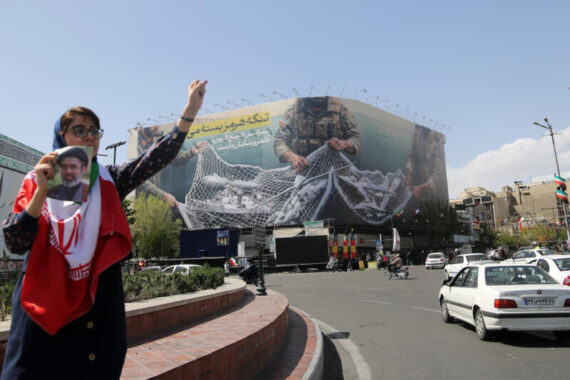
A general view of the giant banner hung Enghelab Square that reads, 'The Strait of Hormuz will remain closed; the entire Persian Gulf is our hunting ground.' as daily life continues in Tehran, Iran on April 05, 2026. Photo by Anadolu Images.

I

ran launched a new wave of missile and drone attacks against U.S.-linked military installations across the Gulf on Sunday, targeting sites in Bahrain, Kuwait, Jordan and Oman after the United States carried out another round of strikes on Iranian military infrastructure.

The latest exchange marks a significant escalation in the conflict, with both sides intensifying military operations despite previous diplomatic efforts to contain hostilities.

Iran’s Islamic Revolutionary Guard Corps (IRGC) said it had entered the fifth phase of its retaliatory campaign, claiming missile and drone strikes against U.S. military facilities in Bahrain and radar installations in Oman.

The IRGC said it targeted military infrastructure in Juffair, Bahrain, as well as long-range aerial surveillance and vessel-detection radar systems in Oman, claiming the radar facilities were destroyed.

It warned that continued U.S. military operations in the Strait of Hormuz would further disrupt global energy markets.

“The only way to open the Strait of Hormuz to vessel traffic is to end the interventions of the aggressive U.S. military in this strait and respect the sovereignty of countries over their own coastal waters,” the IRGC said.

Earlier, Iranian forces claimed they struck a U.S. missile base in Kuwait, saying two HIMARS launchers and missile storage facilities were destroyed.

Iran also said it targeted military sites in Jordan, including Prince Hassan Air Base, although Jordan said its air defenses intercepted four missiles that entered its airspace.


US expands strikes across southern Iran

The latest Iranian attacks followed a new wave of U.S. air and naval strikes against dozens of military targets across southern Iran.

According to the U.S. military, the operation targeted air defense systems, coastal radar installations, missile and drone facilities, naval assets and other military infrastructure.

Iranian media reported explosions in Bandar Abbas, Qeshm Island, Sirik and Jask along the strategically vital Strait of Hormuz, as well as several locations in Khuzestan province.

Authorities also reported that at least one civilian was killed and four others injured after a U.S. strike hit an agricultural water pumping station near Mahshahr.

Following Iran’s retaliation, several Gulf countries activated emergency measures.

Bahrain’s Interior Ministry urged residents to seek shelter and avoid open areas as air defense systems responded to incoming threats.

Kuwait’s military announced that its air defenses had engaged “hostile aerial targets,” while authorities advised residents not to panic if they heard explosions resulting from interception operations.

Jordan confirmed intercepting four missiles launched from Iranian territory before they reached their intended targets.

Strait of Hormuz tensions fuel oil market concerns

The renewed fighting has heightened fears over the security of the Strait of Hormuz, a maritime corridor through which roughly one-fifth of global oil shipments normally pass.

Brent crude prices climbed above $79 per barrel as traders reacted to the increased risk of prolonged disruption to global energy supplies.

Analysts warned that depleted global oil inventories leave markets more vulnerable to sustained conflict than during previous crises.

While both Washington and Tehran continue to exchange military strikes, experts suggest neither side is likely to seek a prolonged war due to the potentially severe economic consequences, particularly for global energy markets and regional stability.

(Source: Aljazeera English)

Politics Today is dedicated to publishing insightful analyses in order to understand the changing nature of contemporary politics. It aims to contribute to the sound and constructive discussion of international affairs.