Geopolitical constraints for China
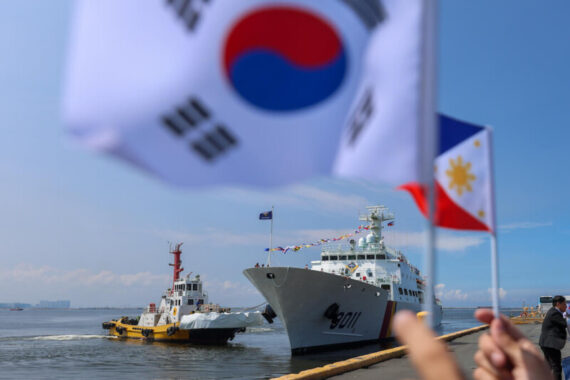
Despite its continental-scale land area and status as the world’s second-largest economy, China faces significant challenges in overcoming the geographical constraints imposed upon it. China’s eastern borders are encircled by a chain of islands, referred to in geopolitical literature as the “First Island Chain”, largely controlled by U.S. allies such as Japan, Taiwan, and the Philippines. This geographical barrier prevents the People’s Liberation Army Navy (PLAN) from freely accessing the open oceans. Taiwan, situated at the center of this island chain, acts as a fortress blocking China’s access to the depths of the Pacific. Although the Chinese navy is striving to become a modern naval power with three aircraft carriers, its warships must pass through narrow straits such as Miyako, Luzon, or Tsushima during both peacetime and times of crisis. These straits can easily be blocked by enemy submarines and coastal defense systems.
The most concrete and dangerous manifestation of this geographical constraint is the “Malacca Dilemma,” which directly threatens China’s energy security. China imports approximately 70 percent of the crude oil it consumes, and more than 80 percent of these imports reach the country directly through the Strait of Malacca. Located between Sumatra and the Malay Peninsula, the Strait of Malacca is one of the most critical chokepoints in global trade due to its shallow waters (average depth of 25–27 meters, dropping to as low as 23 meters in some areas) and its narrowest point, where the strait narrows to 2.7 kilometers in the Phillip Channel region. In the event of a conflict, a blockade of this strait by the U.S. Navy would effectively sever the lifelines of the Chinese economy. To overcome this vulnerability, the Beijing administration has embarked on infrastructure projects worth billions of dollars, despite their limited efficiency and impact. Some of these projects include:
- China-Pakistan Economic Corridor: The road and rail lines aimed at connecting the Port of Gwadar to Xinjiang must pass through the Baluchistan area with high security risks, and cross the Karakoram Mountains, one of the world’s most rugged mountain ranges. This situation keeps the project’s transport capacity at a level that is incomparably lower than that of maritime routes.
- Myanmar Pipelines: While the oil and natural gas pipelines extending from the port of Kyaukpyu to Yunnan Province are operational, the oil pipeline’s capacity of 440,000 barrels per day can meet only a very small fraction of China’s massive daily energy needs.
- Alternative Maritime Routes: Although deeper passages such as the Lombok and Sunda Straits could be used, these routes significantly increase shipping costs by extending the voyage distance. The “Northern Sea Route” in the Arctic, meanwhile, is covered in ice for most of the year and is under Russian control. The fact that it is under Russian control creates yet another form of dependency or constraint.
However, rather than accepting these geographical constraints as inevitable, the Beijing administration is pursuing a multi-layered and innovative strategy to overcome them. The most critical pillar of this strategy is based on the logic of transforming geographical dependency itself into a source of strength. The massive Belt and Road Initiative should be viewed not merely as an infrastructure push, but as a strategy to ensure energy and trade security by making countries along land and sea routes economically dependent on China. In parallel, China has risen to become the world’s largest producer of electric vehicles, batteries, and renewable energy technologies to mitigate the strategic vulnerability created by its dependence on fossil fuels. Perhaps most importantly, another way to overcome geographic limitations is to shift competition beyond existing geographical boundaries. With this vision, China is making major investments in new arenas of competition, such as cyberspace and outer space; by developing the capacity to compete with the U.S. in these domains, it aims to render the constraints of traditional geopolitics obsolete.
Tim Marshall argues that leaders come and go, but geography is permanent. Unlike the U.S., which is surrounded by weak neighbors, China shares land borders with 14 countries. No comparable rival to the U.S. possesses such geographical proximity to it. In East Asia, three nuclear powers (China, Russia, North Korea) and two technological powers (Japan, South Korea) live within each other’s artillery range. This proximity creates a security dilemma in which the strengthening of one state’s power, such as China building up its navy, directly threatens the survival of its neighbors (Japan, South Korea) and triggers counterbalancing alliances (AUKUS, the Quadrilateral Security Dialogue, and the U.S.-South Korea-Japan trilateral cooperation).
China’s land borders also present another geopolitical dilemma. Maintaining control over border regions historically inhabited by non-Han ethnic groups, such as Xinjiang and Tibet, is a vital national security priority for China. However, maintaining control over these regions forces China to spend more annually on internal security mechanisms and social control technologies than its official defense budget (which was $215 billion in 2016). The border with India is bisected by the Himalayas, the world’s highest mountain range. While this prevents the two nuclear powers from projecting large military forces against one another, it keeps the possibility of a potential security dilemma alive.
In terms of internal vulnerabilities, food and water insecurity represent China’s greatest Achilles’ heel. Although China must feed approximately 20 percent of the world’s population, it possesses less than 10 percent of the world’s arable farmland and only 6 percent of its freshwater resources. The famine that occurred between 1958 and 1961, which claimed the lives of 30 to 40 million people, has made food security a red line in the minds of China’s leadership. As a result of urbanization and industrialization, China lost more than 12 million hectares of prime agricultural land between 2009 and 2021. To boost production, the government has relied heavily on pesticides and chemical fertilizers (accounting for 30 percent of the world’s fertilizer supply), which has led to soil degradation and the contamination of irrigation water with heavy metals such as cadmium.
The geographic distribution of water resources is also severely unbalanced. The northern regions, which account for 56 percent of grain production, have access to only 16.5 percent of the nation’s water resources. This situation has led to desertification, land subsidence, and a decline in agricultural productivity in the North China Plain due to excessive groundwater extraction. To meet its growing protein needs, China has become dependent on imports of feed grains and edible oils; indeed, in 2021, the country’s reliance on imports for liquid oils reached 70 percent.