F
or many years, Lebanon did not occupy a central position in Türkiye’s regional policy. The fragility of the country’s political, social, and economic structure, its relative weakness compared to other actors in the Middle East, and its subjection to the influence of various powers were the primary obstacles preventing Ankara from developing a comprehensive strategy for Lebanon.
It would not have been a meaningful or reasonable choice for Türkiye to become involved before conditions conducive to the intense competition among various actors on Lebanese soil had emerged. Consequently, a situation prevailed in which a more basic-level approach, such as stable diplomatic relations between Ankara and Beirut, along with humanitarian aid, cultural events, and limited economic ties, was accepted as a given by both sides. However, the new status quo that emerged in the Middle East following Al-Aqsa Flood Operation, which began on October 7, 2023, paved the way for reshaping established relationship patterns and adopting a new understanding among regional countries.
The genocide in Gaza, the attacks carried out by the occupying state in line with its aggressive expansionist strategy, the state-building process led by Ahmed al-Sharaa that began with the end of the Bashar al-Assad era in Syria, the triggering of regional fault lines, and the emergence of a new reality due to the U.S./Israel-Iran War, all of these have paved the way for the restructuring of bilateral relations between Türkiye and Lebanon in a new tone. Before October 7, spheres of influence in Lebanon were largely defined.
The Assad regime’s influence, which, though weakened after 2006, persisted, and Iran’s decisive role in the country’s politics through Hezbollah, Saudi Arabia’s balancing role on the ground through Sunni political and economic elites, France’s efforts to preserve its traditional presence under the pretext of being the protector of the Maronite population, and the Zionist administration’s ambition, particularly to seize southern Lebanon, prevented the formulation of long-term strategies for the country. In Lebanon, a country with extreme fragility and an equally weak capacity to generate solutions, it was not easy for a new actor to enter the scene as a game-changer. The fundamental shift in the regional political equation and the transformation of the security landscape resulting from the events mentioned above presented an opportunity for a new beginning in Turkish-Lebanese relations.

The new reality in Lebanon after October 7
The shifting geopolitical environment around Lebanon after Al-Aqsa Flood not only disrupted the country’s traditional balances but also heightened society’s need for a new, trustworthy actor. In addition to the traumas of the 1975–90 civil war, the spillover of the Iran-Israel conflict into Lebanese territory had pushed societal fatigue to its peak. One main reason was weak state authority in Lebanon and Hezbollah’s transformation into a key determining actor because of the power it wielded. Furthermore, the profound disruption of Lebanon’s economic and social fabric following the civil war in Syria, along with the fact that pro-Assad and anti-Assad groups were waging a struggle through Lebanese territory, were among the factors preventing the Lebanese government from functioning effectively. However, the escalation of clashes between Hezbollah and the Zionist regime, followed by the occupying army’s series of operations that killed the majority of Hezbollah’s leading figures, signaled the emergence of a new reality on the ground.
The fact that the occupying army, which had withdrawn from Lebanese territory in 2000, began to regain control of certain areas within the country and asserted sovereignty over the region extending as far as the Litani River meant that Beirut would face numerous challenges in the new era. Perhaps the most significant development offering hope for Lebanese politics and the people during this period was the change taking place in Damascus. While the end of the Assad regime and Shara’s assumption of control with a new vision posed new security risks for Tel Aviv, for Beirut it highlighted the potential for a new strategic alliance to emerge in the region.
The spread of the aggressive strategy, carried out by the Zionist regime for political motives, into Syrian territory, and the occupying army’s intensification of its attacks and invasive actions aimed at disrupting Damascus’s stability, undermining its self-confidence, and increasing its vulnerability, were developments that also posed a threat to Türkiye’s national security. It was unthinkable for Ankara, which had paid a heavy price throughout the Syrian civil war, to accept that the Syrian people would be thrown into turmoil by the actions of the occupying state just as they were about to catch their breath. The strategic alliance between Türkiye and Syria also gave the Lebanese people hope.
Walid Canbolat’s visit to Türkiye in December 2024, as a prominent political figure and leader of the Druze community, was a significant indicator of Lebanese expectations. This visit, which took place immediately following the revolution in Syria, was nothing less than a message to Ankara to develop a new strategy regarding Lebanon. In a context where Hezbollah had lost a significant portion of its leadership, the Gulf states and the Western world were unable to assert themselves against Zionist aggression. Tel Aviv’s claim to sovereignty over Lebanon was expanding day by day; mentioning Türkiye in the context of its historical legacy aligned with the prevailing mood in the country. Following October 7, the overwhelming majority of every group in the country had come to expect Ankara to take a more visible role in Lebanon.
Recommended
A Strategic relationship as a necessity
The profound changes in Syria and Türkiye’s ever-increasing influence in the Middle East are forcing the occupying state to intensify its pressure on Lebanon and to make the government dependent on it by compelling it to enter into various agreements. Caught between Hezbollah and Israel, Lebanese leaders are seeking a way out while simultaneously pursuing a balanced policy toward Tel Aviv in line with U.S. recommendations. Because the country’s political system has created deep ideological divisions among the ruling elites, conflicting political statements and strategies are a constant feature of Lebanese politics. In such an environment, the Zionist administration seeks to consolidate its influence in the region by developing a new relationship with Beirut through the Eastern Mediterranean, while also trying to minimize the likelihood of Beirut joining the Ankara-Damascus alliance in the new post-revolutionary situation in Syria. For this reason, Türkiye’s policy toward Lebanon must be conducted under the new conditions, with a strategic vision far more distinct and profound than in the past.
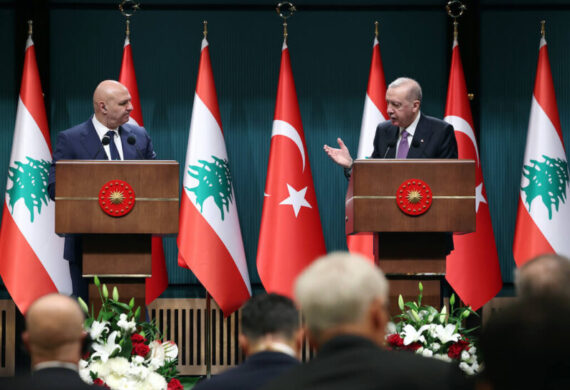
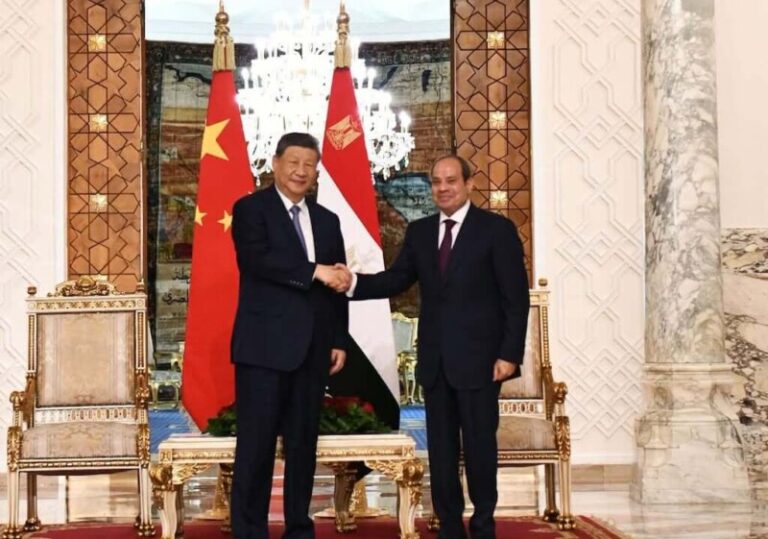
The separate visits to Türkiye in July by Lebanese Prime Minister Nawaf Salam and President Joseph Aoun not only have the potential to open a new chapter in bilateral relations but also reveal the unique balances of Lebanese politics. During Salam’s meeting with President Recep Tayyip Erdoğan, statements regarding Türkiye’s role in developing Lebanon’s infrastructure and the need to strengthen strategic relations in light of the new regional situation were particularly prominent. President Aoun, for his part, emphasized during his visit that the cooperation and coordination to be established with Türkiye constitute a strategic necessity rather than a temporary preference. In particular, conveying Ankara’s clear stance in the face of Israel’s dangerous initiatives in the Eastern Mediterranean and its efforts to involve Lebanon in this process via Southern Cyprus was highly significant for the course of the process.
Both visits and the topics discussed are highly significant in that they demonstrate the need to develop relations between the two sides after many years. Given the current fragilities, Türkiye is the only actor with which Lebanon can establish a strategic partnership in the region, and whose role Lebanese society can clearly accept. From Ankara’s perspective, shifting balances in the Palestinian arena, the transformation in Damascus, and the need to curb Tel Aviv’s aggression and expansionism require moving relations with Lebanon into a new phase. Although Ankara adopted a more limited policy toward Beirut to avoid becoming entangled in Lebanon’s power struggle in the past, the dynamics following October 7 have made it imperative to shift this approach and significantly strengthen ties with Lebanon within a strategic framework. In particular, sustaining the momentum gained after the revolution in Syria on December 8, 2024, and building relationships at various levels on the ground are crucial to a more stable region.
(Originally published in Turkish by Kriter)