Why is the ‘Failed State’ the Most Appropriate Model for Lebanon?
The failure to support the Lebanese army suggests that the country's collapse is being deliberately maintained.
December 19, 2025
A
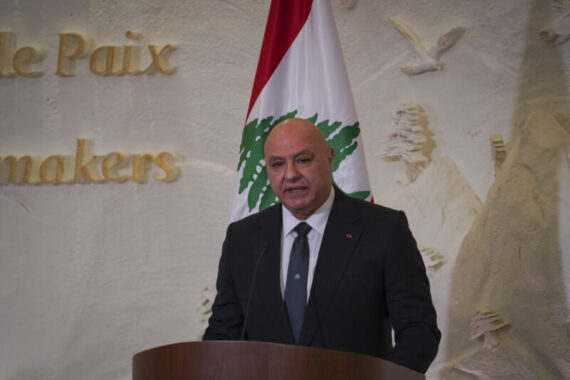
t the Manama Dialogue Forum held in Bahrain in November, Turkey’s Ambassador in Ankara and Special Envoy for Syria, Tom Barrack, reintroduced the concept of the “failed state”—a term historically associated with Lebanon yet largely absent from recent discourse. Since the outset of his tenure, Barrack has adopted a markedly dismissive rhetoric regarding Lebanon; in this context, he has at times labelled Lebanese political actors as “dinosaurs” and directed various accusations toward the Lebanese public, thereby further escalating diplomatic tensions.
Most recently, while underscoring Hezbollah’s military capabilities, social influence, and the Lebanese government’s inability to implement an effective disarmament strategy, Barrack offered severe criticism of Lebanon’s political landscape. In essence, however, his remarks reflect little beyond the prevailing frustrations of the United States and Israel.
Accordingly, it is essential to reconsider the application of the term “failed state”—originally employed in the post–Cold War era to describe states heavily dependent on external intervention and unable to maintain autonomous sovereignty—in relation to the Lebanese context. Thus, Lebanon’s protracted crisis must be examined not only through the lens of domestic sectarian political dynamics but also within the broader framework of regional and global policies directed toward the country.
Indeed, when viewed from the perspectives of the US–Israeli and Iranian axes, the reality becomes clearer: the sectarian and political equilibrium Lebanon has sought to construct—following a relatively stable period from its independence in 1943 until 1958, the post–1990 reconstruction driven by Rafik Hariri’s policies, and the strengthening that accompanied Israel’s withdrawal in 2000—has been destabilized as much by external forces as by internal ones.
Following the assassination of Hassan Nasrallah by Israel on September 27, 2024, Lebanon took sharp steps to eliminate Hezbollah. Additionally, the decision to place all weapons held by militia forces under state monopoly brought the concept of sovereignty back into circulation in the country. In this context, operations were launched to collect weapons in Palestinian refugee camps. Druze leader Walid Jumblatt expressed satisfaction that his followers would surrender their light weapons. Most importantly, the process of handing over Hezbollah’s weapons to the Lebanese army points to the extraordinary efforts made over the past year to ensure the state’s supremacy over society.
However, the US and Israel continue to threaten Lebanon with Hezbollah, arguing that it has not taken sufficient action. At the Manama forum, Tom Barrack compared Hezbollah to the Lebanese army, questioning which is the army and which is the militia based on Hezbollah’s superiority in terms of soldiers and missiles. This highlights the inadequacy — and, in a sense, the dysfunctionality — of the Lebanese government. These threats reveal that Barrack, who is of Lebanese origin, ignores the internal problems that have existed in the country since its independence and acts in a self-serving manner. Barrack also ignores the possibility of internal conflict in Lebanon and seems to want only one thing: a definitive solution to the Hezbollah issue as soon as possible, regardless of how the process unfolds.
Faced with pressure from Tom Barrack, Lebanon is trying to manage its internal dynamics in a more balanced way by placing society at the center of its understanding of sovereignty. This is an attempt to address its own internal problems, not only in the context of Hezbollah, but also in the context of economic and political crises. Although Lebanon is a nation state, its fragile structure, institutionalized through a “sectarian quota” system, has prevented society from recognizing the state as the sole authority.
More importantly, it has prevented society from integrating into the conventional understanding of the state. Consequently, in terms of social life, education, employment opportunities, and most importantly, political representation, communities have established their identity and sense of belonging according to their sect rather than the state. This system legitimizes the marginalization of one sectarian group by another through political authority and domination, which led to a major civil war in Lebanon. Subsequently, it played a role in increasing social and sectarian tensions that continue to this day.
Against this backdrop, Hezbollah, seen as Lebanon’s most fundamental problem today, is essentially a consequence, not a cause, of all this internal political instability. The Shia community, Hezbollah’s biggest defender, claims to have the largest population density in the country. However, it believes that its political representation and authority are insufficient due to the lack of a census since 1932.
For this reason, Shiites view Hezbollah not only as a military force, but also as a political and social resistance movement. They declare that they will not bow to pressure. The army and government are well aware of the Shiites’ reactivity and avoid confronting Hezbollah to prevent social conflict. This prevents Shiite soldiers and officers from fighting Hezbollah soldiers in the army.
In this context, the Maronites, an influential sectarian group, seek to control other sectarian groups by claiming to be the rightful owners of Lebanon, despite the likelihood that they will never regain their pre-civil war influence. Holding key positions such as the presidency, army commandership, and central bank presidency, the Maronites want to play a leading role in the restructuring process. They intend to use the influence of the church to ensure that the political weight of these positions is more strongly felt in society. The recent harsh statements by Samir Geagea, leader of the Lebanese Forces Party, regarding Hezbollah’s weapons, for example, are indicative of his attempts to speak on behalf of the state.
The Sunnis, another leading sectarian group in the country, are seeking their place in a leaderless political process. The Druze enjoy relative stability but are affected by regional crises due to Lebanon’s economic impasse and the socio-political and sectarian situations of the Druze in Syria and Israel. The dissolution of the sovereignty paradigm that Lebanon is attempting to devise to escape state failure is inevitable in such a political impasse.
Recommended
Shortly after the Israeli occupation of Lebanon in 1983, then-Israeli President Shimon Peres coined the term “Lebanonization,” which preceded the term “failed state” in international relations literature. The social divisions experienced during the civil war, Syrian intervention in 1976, Israeli occupation in 1982, rise of Hezbollah, and Taif Agreement—which, contrary to expectations, further solidified sectarianism—transformed Lebanon from a state into a self-destructive popular formation. The struggle for survival within this state of collapse resulted in an impasse due to external intervention.
Syria’s withdrawal of its military forces from Lebanon in 2005 was a positive development in terms of strengthening the state’s authority. However, the army’s failure to become powerful enough — or more accurately, its failure to be strengthened — and the continued concentration of economic power in the hands of a select few paved the way for political decision-makers to rely even more heavily on external support. The global system continued to pursue policies that would reinforce the country’s instability, giving Lebanon space as a regional actor only to the extent it deemed appropriate.
In this context, Tom Barrack’s July statement that “strong nation states are a threat” was viewed as criticism directed at Israel. However, it is worth noting that these words have significant resonance in Lebanon. Arab states, in particular, are seen as a threat to Israel” was viewed as criticism directed at Israel. However, it is worth noting that these words have significant resonance in Lebanon. From Tel Aviv’s security-based perspective, a legitimate government with dominant political authority and a strengthened army in Lebanon—in other words, a Lebanese state capable of stopping the occupation policy and enjoying international support in this regard—is not considered acceptable. Therefore, Israel is not content merely to resolve Hezbollah’s presence in Lebanon; it rejects any military force in southern Lebanon, including the army and UNIFIL.
During the Lebanese civil war, Israel attempted to establish an allied group compatible with its own interests through the Maronites, but this effort was unsuccessful. However, over the last two years in particular, Tel Aviv has achieved military success in Lebanon and profited from the war of attrition. It has turned the country’s political fragmentation to its advantage without needing any internal allies. Currently, with US support, Israel continues to signal that it will expand its occupation with or without Hezbollah.
Iran is another regional actor playing a role in Lebanon’s deterioration, and its historical policy is also noteworthy. The 1979 Iranian Islamic Revolution was a victory for Lebanese Shiites. The establishment and strengthening of Hezbollah during the Khomeini era, along with rising cultural and sectarian interactions under Ali Khamenei, demonstrate Iran’s significant benefit from Lebanon’s sectarian system and statelessness. Although Iran’s role in exacerbating Lebanon’s instability has become less clear in the last two years, Tehran occasionally increases tensions with Lebanon through Hezbollah to maintain its position as the savior of the Lebanese Shiite community.
Of all the criticisms of Lebanon, Tom Barrack’s comments on the country’s collapsing financial system have been the most accurate. The October 2019 protests caused the Lebanese pound to rapidly depreciate against the dollar. The Central Bank’s failure to manage the crisis led to the seizure of depositors’ investments in banks and left the people facing a major economic collapse. The aid expected from the IMF to solve economic problems was tied to reform conditions, so the promised billions in aid did not materialize. Currently, Lebanon is facing obstacles in obtaining the financial support it needs due to Hezbollah. However, Israeli attacks on the south, east, and capital city of Beirut are hindering Lebanon’s reconstruction efforts. Furthermore, the failure to support the Lebanese army suggests that the country’s collapse is being deliberately maintained.
Historically characterized by sectarian diversity, Lebanon has managed to preserve this mosaic to a certain extent. However, in the modern era, it has been cited as the most vivid example of the failed state model in literature. Aside from neglecting the country’s geopolitical importance, neighboring countries have deemed strategic moves that deepen social divisions and fuel internal crises more “convenient” for their security policies. Given this situation, it seems unlikely that Lebanon’s efforts to establish state authority will succeed in the long term.
(Originally published in Turkish by Kriter.)

Tuba Yıldız is Assistant Professor at the Faculty of Theology, Istanbul University. Her studies concentrate on sectarian policies in the Arab regions of the Ottoman Empire and the relationship between religion and politics. Her areas of research also cover contemporary politics in Lebanon, more specifically sectarianism in Lebanon's recent political history.
You can see how this popup was set up in our step-by-step guide: https://wppopupmaker.com/guides/auto-opening-announcement-popups/

Stay informed by subscribing to
our weekly newsletter.
You can see how this popup was set up in our step-by-step guide: https://wppopupmaker.com/guides/auto-opening-announcement-popups/
You can see how this popup was set up in our step-by-step guide: https://wppopupmaker.com/guides/auto-opening-announcement-popups/
You can see how this popup was set up in our step-by-step guide: https://wppopupmaker.com/guides/auto-opening-announcement-popups/
You can see how this popup was set up in our step-by-step guide: https://wppopupmaker.com/guides/auto-opening-announcement-popups/