Europe’s Far Right Challenges Rising Defense Spending and Support for Ukraine
European countries and Canada are expected to spend about $634 billion on core defense requirements this year, an increase of 11% from 2025.
October 8, 2026
T
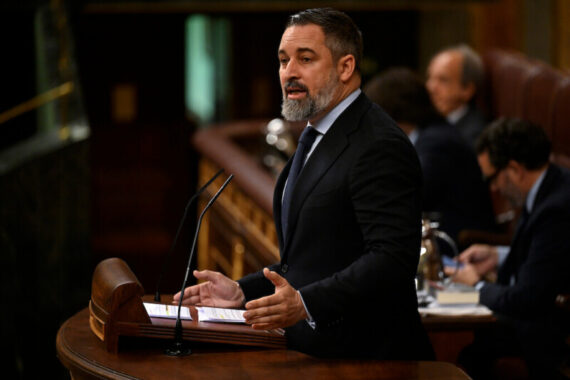
he growing strength of far-right parties across Europe is raising concerns within NATO that political opposition to military spending and aid for Ukraine could slow the continent’s efforts to strengthen its defenses amid rising tensions with Russia.
Far-right parties in countries including France, Italy, Belgium, Germany, Poland and Romania are increasingly using voters’ concerns over the cost of living to challenge higher defense budgets, military support for Ukraine and a greater role for the European Union in defense policy.
The positions of the parties differ significantly, but their growing influence is creating a challenge for mainstream governments seeking to maintain public support for increased military spending.
In France, National Rally leader Marine Le Pen has called for limits on aid to Ukraine, arguing that the country can no longer afford the financial burden. In Italy, Roberto Vannacci, a former general and European Parliament member who leads the National Future party, has questioned increased defense spending while commodity prices remain high.
“The challenge for Europe’s mainstream parties is how to sustain support for higher defense budgets even if that means competing with welfare and other priorities,” the article said.
Janne Kuusela, permanent secretary at Finland’s defense ministry, said rising living costs were creating space for populist arguments over military spending and financial support for Ukraine.
The issue is particularly significant as several major NATO countries, including France, Italy and Poland, prepare for elections in 2027. Far-right parties in those countries could have greater influence over national budgets and defense policies.
NATO is seeking to persuade its members to meet an ambitious target of spending 5% of gross domestic product on defense and security by 2035. Four NATO diplomats told POLITICO that the possibility of a slowdown in spending was becoming a growing concern, although some said the consequences might not become clear until countries begin their next budget cycles.
A NATO military official warned that European countries were already trying to close the gap with Russia in military capabilities.
“So far, we’re on a positive trajectory — if someone closes the faucet, there’s a risk of losing capabilities,” the official said.
European countries and Canada are expected to spend about $634 billion on core defense requirements this year, an increase of 11% from 2025. But public support for further increases is limited.
An August poll assessed by the European Council on Foreign Relations and shared with POLITICO found that an average of 46.2% of respondents in eight European countries would oppose higher defense spending if it required higher taxes. About 35.5% supported such an increase.
Opposition to tax increases for military spending was particularly strong in Germany, France, Italy, Spain and Poland. Respondents in the Netherlands, Sweden and Britain were more likely to support higher taxes for defense.
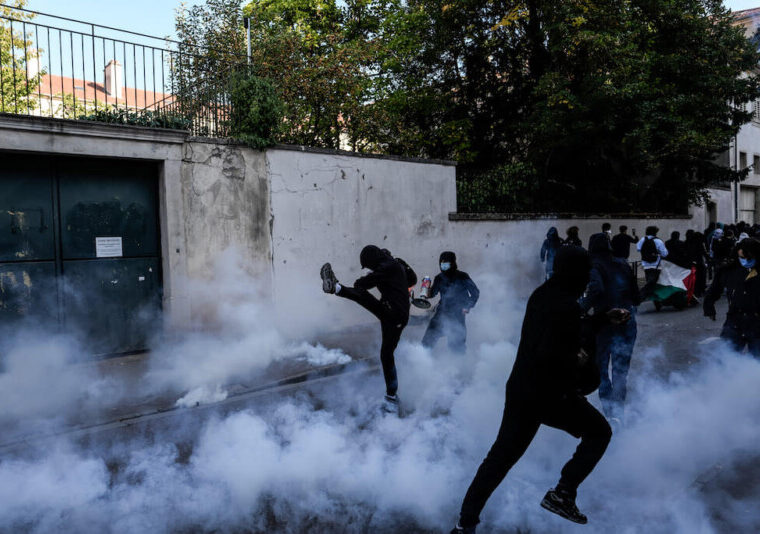
Protests against increased military spending have also taken place in Rome, Brussels and Madrid, with demonstrators arguing that additional defense funds could come at the expense of hospitals, universities and social services.
Support for Ukraine has also declined. NATO’s internal polling showed support falling from 59% in 2025 to 55% this year, with lethal military aid identified as the least popular form of assistance.
The political challenge varies across Europe. Far-right parties have taken different positions, ranging from opposition to military assistance for Ukraine to resistance to EU-level defense initiatives and broader criticism of increased defense budgets.
France’s National Rally and Romania’s Alliance for the Union of Romanians oppose aid to Kyiv, while Poland’s Law and Justice and the Netherlands’ Party for Freedom have resisted EU-level defense projects. Germany’s Alternative for Germany and Italy’s National Future have criticized increased defense spending more broadly.
Political opponents of these parties have accused them of weakening Europe’s response to Russia. German Defense Minister Boris Pistorius said pressure against European defense policies was largely coming from Moscow, while parties including National Rally and AfD have faced scrutiny over their historical ties to Russia.
Recommended
The political debate is becoming more complicated as governments attempt to reconcile security priorities with domestic economic pressures.
In France, Le Pen’s National Rally has indicated that it would maintain the country’s existing trajectory of higher military spending. In Italy, however, Prime Minister Giorgia Meloni proposed reducing defense spending by €8 billion from the government’s initial proposal amid pressure from her coalition partner, the League.
League senator Claudio Borghi argued that public money should prioritize pensions, tax relief and household utility bills over weapons.
In Poland, President Karol Nawrocki, backed by the right-wing Law and Justice party, attempted unsuccessfully to block access to nearly €44 billion in EU SAFE defense loans. He argued that the scheme could make Poland dependent on Brussels and impose additional debt on future generations.
NATO officials are concerned that a slowdown by major European powers could affect the alliance’s ability to develop the military capabilities it considers necessary to deter Russia.
The consequences could extend beyond national defense budgets. France and Italy are among the countries responsible for significant portions of European defense investment and aid to Ukraine, meaning any reduction in their spending could have broader implications for NATO.
“If bigger countries stop making progress, then NATO will stop making progress,” one NATO diplomat said, warning that weaker European defense capabilities could leave Ukraine more vulnerable.
The debate could also affect negotiations over the European Union’s next long-term budget if discussions continue into next year.
As European governments prepare budgets and elections approach, mainstream parties face pressure to justify increased defense spending while addressing concerns over living costs and public services. For NATO, the challenge is maintaining momentum on rearmament while political support for higher military expenditure becomes increasingly contested across Europe.
(Source: Politico)

Politics Today is dedicated to publishing insightful analyses in order to understand the changing nature of contemporary politics. It aims to contribute to the sound and constructive discussion of international affairs.
You can see how this popup was set up in our step-by-step guide: https://wppopupmaker.com/guides/auto-opening-announcement-popups/

Stay informed by subscribing to
our weekly newsletter.
You can see how this popup was set up in our step-by-step guide: https://wppopupmaker.com/guides/auto-opening-announcement-popups/
You can see how this popup was set up in our step-by-step guide: https://wppopupmaker.com/guides/auto-opening-announcement-popups/
You can see how this popup was set up in our step-by-step guide: https://wppopupmaker.com/guides/auto-opening-announcement-popups/
You can see how this popup was set up in our step-by-step guide: https://wppopupmaker.com/guides/auto-opening-announcement-popups/