Africa’s Quiet Power Shift: From Russian Gold Deals to China’s Training Push
While Russia leans on guns and gold, China has spent years building a quieter, slower kind of influence in Africa.
January 23, 2026
On a hot morning in Bamako, Mali’s junta lined up before cameras to bless a new Russian‑backed gold refinery, promising “greater control” over national resources. Yet the project is more than a ribbon‑cutting. It sits inside a wider package: Talks on civil nuclear cooperation, exploration of uranium and lithium, a long‑term play on critical minerals in a sanctioned, fragile state. The deal only moved after Mali rewrote its mining code to give the state a larger share and the power to reopen old contracts, unsettling Western firms that had grown used to easier terms.
At first glance, this looks like yet another scene in a familiar drama: Big powers chasing African resources, ports and UN votes while local governments scramble for attention. Look a little closer and the script changes. From the Sahel to Southern Africa, governments are using Russian security and mining offers, Chinese training schemes and Western climate and energy money to renegotiate conditions, delay deals that no longer suit them and quietly diversify their options.
Russia’s new African story is usually told in uniforms and hardware. Arms deliveries, military advisers and the rebranding of Wagner into the “Africa Corps” turned Mali and its neighbors into symbols of Moscow’s return to the Sahel. But the security tale now blends into a deeper one: A “security‑for‑resources” model that trades battlefield support and diplomatic protection for access to gold, uranium and other strategic minerals.
Mali is the central case. Since 2023, Bamako and Moscow have moved from ad‑hoc cooperation to more formal road maps: The refinery, geological surveys, nuclear collaboration, a growing presence around gold and promising lithium deposits. Security trainers and mining geologists travel separate circuits, yet they reinforce the same bargain: Russian backing in exchange for a real say over who profits from Mali’s subsoil. In Niger, audits and the suspension of new mining licenses send a similar message: Contracts around uranium and other minerals will be written on new terms, whoever the partner may be.
This is not a neat pro‑Russian bloc. Far from it. Sahel capitals still talk to Gulf funds, keep lines open to European lenders, leave space for Chinese investors. What has changed is the negotiating table. The option of handing a concession to a Russian company – or swapping Western trainers for Africa Corps units – gives local authorities harder leverage when they sit down with Western or Chinese teams. Even when Moscow does not win a project, its shadow helps African leaders push for higher state participation, tougher local content rules, and offers them political cover when they break with old security patrons.
While Russia leans on guns and gold, China has spent years building a quieter, slower kind of influence. Beyond ports and railways, Beijing has turned scholarships and training into one of the central tools of its Africa policy. Chinese Government Scholarship schemes for African students now offer fully funded master’s and PhD positions, often in coordination with the African Union and national ministries. Parallel mid‑career courses for civil servants and local officials, including “Youth of Excellence” programs, package public administration, infrastructure management and governance skills into short, intensive modules.
This people‑to‑people offensive is less dramatic than a port or a dam, but it may prove more durable. Thousands of African students and officials pass through Chinese universities, provincial academies and party schools, exposed to how Beijing manages industrial zones, digital infrastructure and local finance. Over time, that creates something softer than dependency and harder to undo than a single loan: Shared jargon, institutional templates, a comfort with Chinese systems. It also produces quiet networks: Alumni chats, WhatsApp groups, personal contacts that can bypass embassies when a problem or opportunity appears.
African actors treat these offers with a cool eye. Students in Lagos or Addis Ababa apply for Chinese scholarships while still chasing European or Gulf‑funded programs. Officials might spend two weeks in Beijing, then appear a month later at an EU‑funded seminar on climate data or migration management. Not everyone in these capitals is betting on Moscow or Beijing. They are shopping around, collecting tools and contacts, deciding what fits domestic politics and discarding what does not. In an environment where Western technical help often comes wrapped in sharper political conditions, simply having several training and scholarship channels gives bureaucracies breathing space.
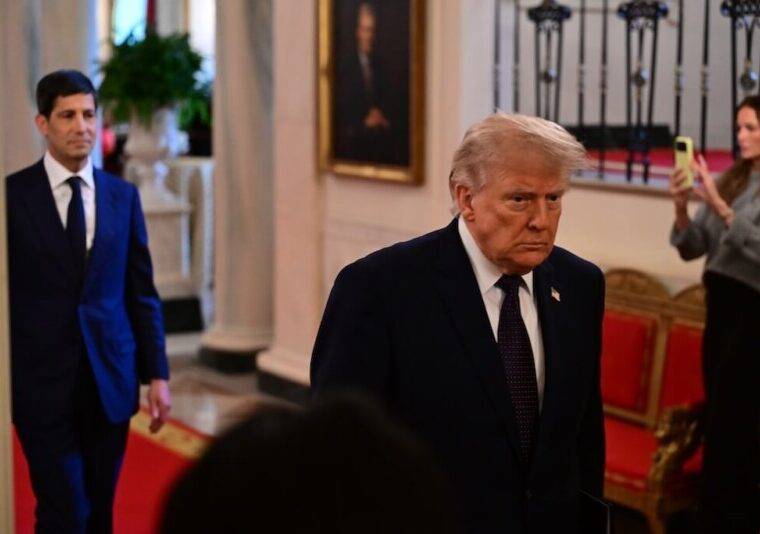
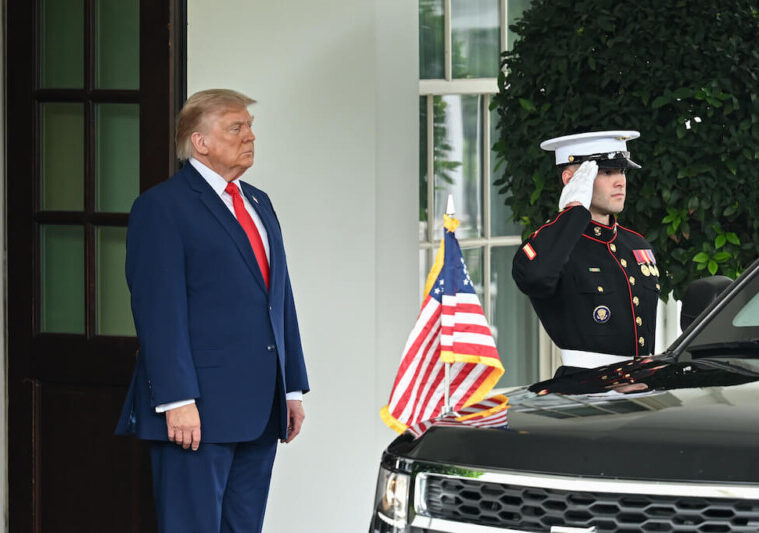
Donald Trump’s return to the White House has not rewritten Washington’s Africa playbook so much as stripped it down. The mood is more openly transactional: Security cooperation and financing tied to clear quid pro quos on critical minerals, migration control and voting behavior in international forums. Aid lines and development programs feel less secure, subject to sudden reviews or cuts if they collide with domestic messaging or budget battles in Washington. African governments have already seen how quickly a “priority” can disappear.
Europe, on paper, looks like the steadier partner. Brussels continues to talk up a multi‑billion Global Gateway investment package for digital, energy and transport links with Africa, branding the relationship as “equal” and “green”. Yet behind the sums sit dense conditions on governance, refugee returns and climate performance, written into development and energy deals. At the same time, the EU’s decision to phase out Russian gas and speed up its energy transition is pulling African producers deeper into its plans, from LNG and pipeline gas to green hydrogen.
For African capitals, the past decade has offered enough reminders. Western priorities swing from counterterrorism to pandemics, from Ukraine to critical minerals; the money follows those swings. This does not mean U.S. security guarantees or European technology have lost their appeal. It does mean fewer governments are willing to pin their budgets or their armies on a single Western pillar, and more are ready to fold U.S. and E.U. offers into a wider mix of Russian, Chinese and Gulf options.
Recommended
Put these strands together and a pattern emerges: Strategic silence. Few leaders stand up to proclaim new doctrines, even if words like “non‑alignment” and “strategic autonomy” now echo more often in summit halls. The real shift shows up in more mundane places – in how mining codes are rewritten, in clauses buried in tenders, in the way security and energy contracts are bundled, in the quiet spreading of scholarship slots so that no outside partner owns the next generation of elites.
Local content rules are one of the clearest tools. Countries from Tanzania to Ghana have tightened requirements on joint ventures, procurement and technology transfer in the extractive sector, forcing companies that want access to cobalt, gold or gas to accept more local processing, more training, more domestic ownership. For governments under pressure to deliver jobs and visible projects, this is law as leverage: Converting geopolitical competition into factories, workshops and tax receipts.
Security and resources are increasingly negotiated together. In the Sahel, the same juntas that sign new frameworks with Moscow also use their control over uranium, gold and potential gas exports to test what Europe or Gulf partners will pay – in cash, equipment or diplomatic cover – to keep a foothold. Elsewhere, the tools are slower and drier: Audits, moratoriums, and quiet delays. Niger’s decision to pause licenses and review mining deals sent a blunt message that the old terms, especially those seen as favoring French interests, were over. No big manifesto, or grand doctrine. Just a sequence of administrative moves that shifts the balance.
Education and training are being diversified in the same way. Ministers spread scholarship agreements across China, Europe, the Gulf and new South–South partners; security chiefs diversify arms suppliers; energy planners weigh European green finance against Chinese grid money and Gulf hydrocarbons investments. The public line remains familiar – Africa will talk to all, align with none – but the difference now is that this rhetoric rests on real policy choices, visible in budgets and contracts as much as in speeches.
So, the central question is no longer whether Russia’s Africa Corps, China’s training offensive, Trump’s transactional Washington or Europe’s climate money “wins” the continent. The question is how African governments use this crowded field to harden law, widen room for manoeuvre and quietly rewrite old hierarchies. Africa is learning to say yes, no, or not yet – and to make every major power wait.

Göktuğ ÇALIŞKAN is a PhD candidate at the International University of Rabat (UIR) in Morocco, conducting research as a scholar of the Turkish Ministry of National Education (YLSY program). Simultaneously, he serves as an International Relations Specialist at ANKASAM. He holds undergraduate degrees in Political Science and Public Administration (Ankara Yıldırım Beyazıt University) and Law (Erciyes University). He completed his master’s studies at Ankara Hacı Bayram Veli University and UIR (in French). His analyses on global politics and security have been featured in various international outlets, including Türkiye Today, Daily Sabah, TRT Afrika, and FokusPlus.
You can see how this popup was set up in our step-by-step guide: https://wppopupmaker.com/guides/auto-opening-announcement-popups/

Stay informed by subscribing to
our weekly newsletter.
You can see how this popup was set up in our step-by-step guide: https://wppopupmaker.com/guides/auto-opening-announcement-popups/
You can see how this popup was set up in our step-by-step guide: https://wppopupmaker.com/guides/auto-opening-announcement-popups/
You can see how this popup was set up in our step-by-step guide: https://wppopupmaker.com/guides/auto-opening-announcement-popups/
You can see how this popup was set up in our step-by-step guide: https://wppopupmaker.com/guides/auto-opening-announcement-popups/