

Anglosphere Techno-Political Alliance?
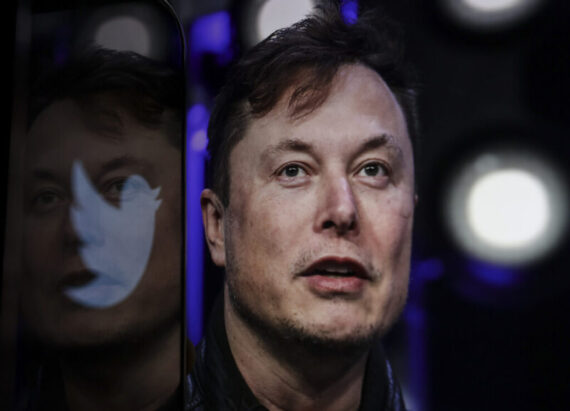
Elon Musk is no longer just the CEO of Tesla and SpaceX; he is also involved in public discourse through the X platform, in defense and communications through Starlink, and in the AI sector through AI.
October 27, 2025
T
he week of September 13, 2025, marked a historic turning point in shaping the Anglosphere’s direction in the digital age, alongside developments centred in London. Two prominent events of the week laid bare the political and ideological foundations of this transformation: The first was the £350 billion ‘Technological Prosperity Agreement’ signed by U.S. President Donald Trump and British Prime Minister Keir Starmer during Trump’s second state visit.
The agreement covered investments in artificial intelligence, quantum computing and nuclear energy, as well as redefining Anglo-American data sovereignty and corporate architecture. The second was technology mogul Elon Musk’s warning that ‘violence is coming,’ delivered via video link at the far-right ‘Unite the Kingdom’ rally held in London.
At first glance, these seemingly unrelated developments should actually be seen as different reflections of a new techno-political alliance architecture within the Anglosphere and perhaps a kind of digital bargaining.
This mega package, backed by Microsoft’s $30 billion, Nvidia’s $15 billion, and Google’s $6 billion investments, aims to accelerate the U.K.’s economic growth and innovation targets. The U.K.’s largest artificial intelligence supercomputer, to be built in Loughton, the Stargate data centre at Cobalt Park, and the planned Artificial Intelligence (AI) Growth Region in the north-east are projects that are gradually shaping the infrastructure. However, these projects are more than just technical; they are entirely political in nature.
This is because the critical components of this new digital infrastructure are left under the control of U.S. technology companies, both in terms of financing and operation. Consequently, the U.K. is being drawn into a relationship of dependency that limits its strategic decision-making ability, even through a supercomputer rising on its own soil. With strategic autonomy compromised from the outset, the question of whether these investments are designed in the name of ‘national interests’ or in the name of the Anglo-sphere’s centre is becoming increasingly pressing.
Behind the investment figures lies a quieter but equally significant development: data sovereignty. Oracle’s ‘U.K. Sovereign Cloud’ system partnering with NATO and British public institutions, Palantir securing a new £940 million contract from the British Ministry of Defense, and OpenAI being integrated into British public services demonstrate that digital infrastructure is linked to U.S.-based actors not only commercially but also in terms of security.
This sets the UK apart from Europe’s regulatory approach. While the European Union takes a more interventionist stance with digital taxes, content regulations and competition rules, the Starmer administration, aligning itself with Trump and American tech giants, embraces a ‘less interventionist’ approach to regulation. Some experts view this preference as a natural consequence of the U.K.’s need for alternative economic directions after Brexit. However, it is also clear that this direction could lead to areas of political dependence in the future.
In the shadow of this very agreement, Elon Musk’s participation via video link in the far-right rally ‘Unite the Kingdom’ organized by right-wing populist activist Tommy Robinson in the U.K., and his warning that ‘violence is coming,’ made the silent backdrop of the agreement all too visible. Musk did not merely engage in ideological rhetoric here. He has positioned himself as a techno-political, even techno-populist actor. He is no longer just the CEO of Tesla and SpaceX; he is also involved in public discourse through the X platform, in defense and communications through Starlink, and in the AI sector through AI.
It appears that Elon Musk’s techno-political transformation has paved the way for a cultural and ethical debate that goes beyond economic or strategic considerations. The Royal Society, the U.K.’s most prestigious scientific institution, has reconsidered Musk’s membership following his remarks at the ‘Unite the Kingdom’ rally, where he said, ‘Violence is coming, you will either fight or die,’ in the context of anti-immigration sentiment. The Society’s president, Sir Adrian Smith, emphasized that scientific values are based on ‘tolerance, respect and freedom of expression,’ stressing that resorting to ‘the language of violence’ threatens these values.
We can clearly see that Musk has become an ideological and rhetorical actor in addition to his identity as a technology entrepreneur. The timing and content of the rally are also noteworthy, coming just days before the Starmer-Trump meeting. Musk’s words, with their tone of direct intervention in the political balance and immigration debates in the U.K., now place him in the position of a ‘techno-populist hegemon’ oscillating between international diplomacy and domestic politics. Even scientific institutions are being forced to redefine their own ethical boundaries in the face of the insecurity created by this discourse.
At the aforementioned rally, Musk also stated that the U.K. Parliament should be dissolved and the government replaced. The language Musk used against the Starmer government and his timing reveal that tech giants can be decisive not only in the business world but also in social and political arenas. This raises the question of whether the actions of techno-populist figures like Musk will become a sword of Damocles as the details of the Anglosphere techno-political alliance are determined.
Donald Trump’s technology policy in his second term, contrary to classic protectionism, is moving forward with a more aggressive, anti-regulation and investment-incentive approach in the areas of data and AI. With new directives issued to the U.S. National Institute of Standards and Technology, there is a push to remove issues such as diversity, climate change, and disinformation from the AI risk framework. This creates a framework that frames AI policies solely in terms of economic growth, viewing social responsibility and democratic oversight as secondary.
This vision is both accelerating AI investments in the U.K. and leading to the restructuring of nuclear infrastructure to meet the energy needs of data centres. Starmer’s plan for 12 new nuclear reactors is becoming not only an energy issue but also a matter of digital sovereignty.
Trump’s approach to AI is transforming classic ‘protectionist trade’ policies into a ‘libertarian freedom’ in the technology sector. Just like the AI action plan in the U.S. that eliminates tax, environmental and diversity regulations, a company-focused order is being established under the guise of a free market.
In this atmosphere, while AI investments appear to be driving significant economic growth, other industries (energy, manufacturing, green technology) are experiencing decline. Numerous corporate reports also highlight this horizontal shift.
The Trump administration is reacting against the U.K.’s Digital Services Tax and Online Safety Bill. Trump interprets such regulations as hostility towards American tech giants and threatens retaliatory trade tariffs. Although these issues are not formally part of the agreement, it is clear that pressure on the U.K. is being felt in the negotiations.
Backing down on issues such as digital taxation and content regulation, which concern national sovereignty, has the potential to narrow the U.K.’s room for manoeuvre both in domestic politics and in terms of global norm-setting.
All these developments give new meaning to the question posed in an earlier article regarding the famous intelligence alliance debates: ‘Is the Five Eyes becoming a five-eyed monster?’ This technological architecture points to a bluff and dominance contest between Washington and London over who will define digital strategy, rather than multilateralism within the Anglosphere.
It is also clear that the agreement serves as a technological barrier against China. The blocking of the sale of graphene producer Versarien to a Chinese-linked partnership in August 2025 on national security grounds constitutes a silent but effective dimension of this strategy. Graphene stands out as a material that can play a revolutionary role in new-generation chip technologies seeking to surpass the limits of silicon, thanks to its single-atom thickness, which allows it to conduct electricity better than copper.
It has the potential to provide superiority in many strategic areas, from AI hardware to supercomputers, quantum processors to batteries. Therefore, who controls the production chain has become not just an economic question, but a direct geopolitical one. Such decisions also demonstrate that the Anglosphere is drawing not only technological but also ideological boundaries.
In this respect, the technology agreement is more than just an economic or investment document; it is a ‘silent declaration’ defining who is inside and who is outside the digital power architecture of the international system.
Recommended
This new techno-political pact, built on the Starmer-Trump axis, is actually recoding the Anglosphere’s digital alliance system. The developments point to a techno-political integration that goes beyond a free market narrative, reshaping the data infrastructure, nuclear energy, AI security, and discourse around Silicon Valley capital.
However, a crucial question remains: In the AI era, is the guarantee of freedom and sovereignty the investments made by states, or the right of individuals to determine their own digital destiny without needing rules?
The new digital architecture born out of the Starmer-Trump agreement may present a ‘win-win’ rhetoric on the surface, but behind the scenes it is developing new dependency relationships in fundamental areas of sovereignty such as digital infrastructure ownership, data management, content control and technology regulation.
Through the rhetoric of actors such as Elon Musk, this structure establishes not only an intergovernmental sphere of influence but also an inter-societal one. Going beyond technological development, it becomes an instrument of identity, control, and discourse wars.
The Anglosphere’s response is taking shape. But what about others?
(Originally published by in Turkish by Kriter)

Alp Cenk Arslan, Ph.D. is an assistant professor specializing in security and intelligence studies at the Turkish National Police Academy. His research revolves around the intersection of techno-politics, intelligence studies, and communication studies.
You can see how this popup was set up in our step-by-step guide: https://wppopupmaker.com/guides/auto-opening-announcement-popups/

Stay informed by subscribing to
our weekly newsletter.
You can see how this popup was set up in our step-by-step guide: https://wppopupmaker.com/guides/auto-opening-announcement-popups/
You can see how this popup was set up in our step-by-step guide: https://wppopupmaker.com/guides/auto-opening-announcement-popups/
You can see how this popup was set up in our step-by-step guide: https://wppopupmaker.com/guides/auto-opening-announcement-popups/
You can see how this popup was set up in our step-by-step guide: https://wppopupmaker.com/guides/auto-opening-announcement-popups/

