Asia Moves to Strengthen Oil and Gas Reserves After Strait of Hormuz Crisis

September 3, 2026

Although Japan remains heavily dependent on Middle Eastern oil and gas, it has been better positioned to withstand the crisis because of its large strategic petroleum reserves.
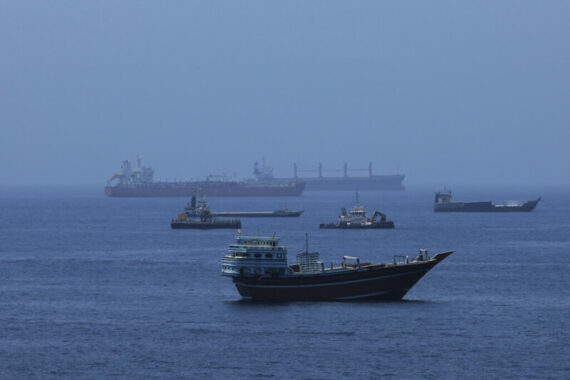
A view of commercial cargo vessels and crude oil tankers are anchored in the Gulf of Oman, off the coast of Muscat, Oman, on June 21, 2026, as they prepare to transit through the critical Strait of Hormuz. Photo by Anadolu Images.

A

sian economies are accelerating efforts to strengthen domestic oil and gas storage after the crisis in the Strait of Hormuz exposed the region’s vulnerability to disruptions in Middle Eastern energy supplies.

The region suffered major economic consequences after the United States and Israel went to war with Iran six months ago. Shipping through the Strait of Hormuz, a crucial route for Gulf oil and gas exports, has been reduced to a trickle by Iranian attacks and a US naval blockade.

The disruption pushed Asian governments to introduce emergency fuel-saving measures as energy prices surged. Measures included price controls, alternate driving days and work-from-home requirements for some civil servants. But governments are now looking beyond short-term responses, seeking to build larger strategic reserves and reduce dependence on vulnerable supply routes.

“The crisis is producing two very different kinds of investment: infrastructure that bypasses geopolitical risk, and infrastructure that eliminates exposure to imported fuel altogether,” said Parul Bakshi, a visiting research fellow at the Oxford Institute for Energy Studies.

Japan calls for energy security

Japan has emerged as one of the strongest advocates of expanding regional energy security. Although the country remains heavily dependent on Middle Eastern oil and gas, it has been better positioned to withstand the crisis because of its large strategic petroleum reserves.

In April, Japanese Prime Minister Sanae Takaichi announced the $10 billion POWERR Asia initiative. The programme is designed to help Southeast Asian countries secure oil and petroleum products and eventually develop larger strategic stockpiles.

The urgency is particularly evident in Southeast Asia. When the war began in late February, Vietnam had national oil reserves sufficient for only five to seven days, according to state media. Commercial inventories and other sources, however, could extend supplies for as long as another 65 days.

Thailand had about 61 days of reserves across public and private sectors in early March, compared with a legally mandated minimum of 25 days. The Philippines was estimated to have between 50 and 60 days of supplies in private commercial inventories.

Despite these levels, the three countries remained below the International Energy Agency’s 90-day benchmark for emergency oil stocks.

The crisis has revived efforts in Bangkok and Manila to establish more comprehensive government-controlled reserves. Last month, a parliamentary panel in the Philippines approved legislation proposing a government-held oil reserve equivalent to 60 days of consumption.

Plans for new infrastructure

Thailand is also moving ahead with plans for new infrastructure, including cross-peninsula crude pipelines and tank farms. Ben Kiatkwankul of Bangkok-based Maverick Consulting Group said the projects could position Thailand as a competitor to Singapore for the storage of Gulf crude.

India has similarly been reassessing its strategic reserves. The country held about 74 days’ worth of oil stocks as of May, with more than 90 percent controlled by state-owned enterprises, according to S&P Global.

In July, India’s state-owned Oil and Natural Gas Corporation announced plans to build a reserve of 1.75 million metric tonnes, equivalent to about 13 million barrels, in southern India. The company also plans to expand existing stockpiles by 6.5 million metric tonnes.

Meanwhile, major Asian economies are exploring closer storage arrangements with Gulf producers. Japan, South Korea and Singapore already have longstanding partnerships with Middle Eastern countries that allow energy supplies to be stored closer to Asian markets.

Clara Gillispie, a senior fellow for climate and energy at the Council on Foreign Relations, said the three countries had shown interest in expanding existing storage capacity and potentially establishing new agreements. Similar discussions have also involved India.

Storing oil away from Hormuz

The United Arab Emirates and its state-owned Abu Dhabi National Oil Company already store oil in Singapore, India, South Korea and Japan. Kuwait and Saudi Arabia also maintain stockpiles in South Korea and Japan.

ADNOC is seeking to increase its crude storage capacity in India to 30 million barrels. India is also considering storing some strategic reserves at the UAE port of Fujairah on the Gulf of Oman, outside the Strait of Hormuz.

South Korea is considering expanding its oil reserves, which stand at about 146 million barrels. Reports suggest Seoul could add another 30 million to 40 million barrels, exceeding earlier plans for an additional 20 million barrels.

China, the world’s second-largest oil consumer after the United States, is also reassessing its energy security. The Hormuz disruption has reinforced Beijing’s focus on reducing its exposure to imported fuel and vulnerable supply routes.

China’s 2026–2030 five-year plan includes provisions for additional oil and gas pipelines and expanded liquefied natural gas storage, alongside increased deep-water drilling. State-owned pipeline operator PipeChina said in May that it was accelerating construction of nearly 40 oil and gas projects, including about 9,000 kilometres of domestic pipelines.

Energy policy expert David Fishman said the Iran conflict had strengthened the rationale for investments already included in China’s plans.

Across Asia, the crisis has therefore shifted the focus from simply securing additional supplies to ensuring that energy can reach consumers even when major shipping routes are disrupted.

Bakshi said the common objective was to reduce dependence on a “single fuel, supplier or chokepoint”.

The crisis has forced governments to ask not only where their next supply of oil will come from, but also how it will reach them, how long they can survive without it and whether they can reduce their dependence on imported fuel altogether.

(Source: Aljazeera English)

Politics Today is dedicated to publishing insightful analyses in order to understand the changing nature of contemporary politics. It aims to contribute to the sound and constructive discussion of international affairs.