Attacks on Merchant Ships in the Black Sea: What Law Says
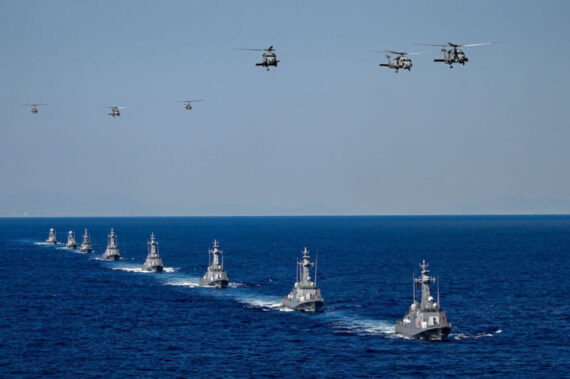
Since November 2025, the Russia-Ukraine conflict has begun targeting commercial vessels in the Black Sea.
January 12, 2026
R
ussia and Ukraine have been at war since 2022, and the conflict continues not only on land, but at sea as well. In the early years of the war, Russia aimed to halt all of Ukraine’s Black Sea exports by attacking commercial vessels, including those carrying food, with little distinction. During that time, Russia’s commercial shipping through the Black Sea nearly ceased, largely due to Western sanctions, which ultimately made safe maritime transport in the Black Sea impossible.
However, during this time, Turkey’s initiatives and the support of the UN Secretary-General led to an international agreement between Ukraine and Russia regarding the safe passage of ships carrying food. Implementation of the agreement, referred to as the “Grain Corridor Agreement,” was monitored by a commission established in Istanbul comprising representatives of all parties. Extended at certain intervals, the agreement ultimately ended when Russia withdrew from it completely about a year later.
Since then, commercial shipping has largely taken place in a risky environment. Some merchant ships have resorted to following the territorial waters of Western Black Sea countries, undertaking a long and uneconomical route.
Although attacks using unmanned maritime vehicles (UMVs) have occurred periodically in the Black Sea, there had not been a series of large-scale attacks until recently. However, this situation changed significantly in the last month. Since November 2025, the Russia-Ukraine conflict has begun targeting commercial vessels in the Black Sea. Ukraine has begun attacking Russia’s “shadow fleet,” which is used to circumvent sanctions. This fleet consists of commercial vessels (including tankers) traveling to Russia, which Ukraine has targeted using UMVs.
In early November, Ukraine increased its attacks on oil export infrastructure in Tuapse and Novorossiysk. Toward the end of November and beginning of December, Ukrainian UAVs hit the Gambian-flagged tankers Kairos and Virat in the Black Sea. The Kairos was attacked in the southwest part of the Black Sea, and the Virat was attacked further east in the central part. These attacks occurred at a time when Ukraine aimed to reduce Russian oil sales and prevent Moscow from financing the war.
Russian Foreign Ministry spokesperson Maria Zakharova stated that the attack on the Kairos and Virat ships, which were sailing in international waters in the Black Sea, was an “act of terrorism” that Russia condemns. She noted that the ships were sailing under the Gambian flag toward the port of Novorossiysk when they were attacked by unmanned naval vehicles on November 28-29. On December 2, 2025, the Russian tanker Midvolga-2, traveling from Russia to Georgia, was attacked off the coast of Sinop.
In retaliation, Russian forces have increased missile and drone attacks on Ukraine’s Odessa port. These ports are vital to Ukraine’s export-based economy, and have been crucial to the country’s economic survival throughout the nearly four-year war in Ukraine since Russia’s invasion in February 2022.
These attacks have also damaged some Turkish-owned merchant ships in Ukrainian ports. On December 13, 2025, the Turkish-owned, Panama-flagged ro-ro ship Cenk T., which was anchored in the port of Odessa, was hit by a Russian unmanned aerial vehicle (UAV) and caught fire. The ferry was reportedly on a voyage from Karasu to Odessa and was carrying fresh fruit, vegetables, and other foodstuffs. Then, on December 26, three more ships flying the flags of Slovakia, Palau, and Liberia were reportedly damaged by Russian UAV attacks in the ports of Odessa and Mykolaiv.
Turkey has condemned the attacks on civilian vessels in the Black Sea and stated that such actions must cease. President Erdoğan emphasized that civilian vessels and critical trade routes, such as the grain corridor in the Black Sea, should not be targeted. He called on all parties to protect civilian infrastructure.
While in Turkmenistan for the International Peace and Security Forum on December 12, he met with Russian President Vladimir Putin and expressed concern about attacks on ports and energy facilities in the Black Sea. He called for a “limited ceasefire” in these areas. He stated that “we cannot in any way condone these attacks, which threaten navigation, life, and environmental safety, especially in our own exclusive zone” and said that the attacks also concern Turkey’s rights and authorities in its maritime jurisdiction.
At the Ambassadors’ Conference in Ankara on December 16, the president stated that they were “conveying their warnings” to Ukraine and Russia. He added, “The recent mutual attacks seriously threaten navigation safety in the Black Sea. Targeting merchant ships and civilian vessels benefits no one. We are clearly conveying our warnings to both sides on this matter.”
The attacks carried out by Ukraine and Russia in the Black Sea that target civilian merchant ships should undergo legal assessment. First, targeting civilian ships constitutes a violation of the fundamental rules of the law of armed conflict, even under conditions of war and even if a blockade is in place.
According to international maritime law, the movement of ships on the high seas and the authorities that may be exercised over them are regulated by the relevant provisions of the 1982 United Nations (UN) Convention on the Law of the Sea.
The maritime areas beyond the territorial waters of Black Sea-bordering states constitute the relevant states’ exclusive economic zones. As a rule, exclusive economic zones have the status of the high seas for the purpose of navigation. The fundamental principle governing the legal status of the high seas is the principle of “freedom of the high seas.” According to this principle, the high seas are maritime areas not under the sovereignty of any state and can be used freely by all states, regardless of whether they have a coastline. The 1982 UN Convention on the Law of the Sea also constitutes rules of customary international law, creating rights and responsibilities for all countries, even those that are not parties to the convention, such as Turkey.
Generally, all ships on the high seas (whether civilian or military, privately or state-owned) are subject to the legislative, executive, and judicial authority of the state under whose flag they are registered. In other words, no other state may exercise such authority over these ships.
Recommended
However, in a limited number of specified circumstances, a state’s warships or security vessels have the right to intervene with another state’s civilian merchant ships. The 1982 United Nations Convention on the Law of the Sea lists these circumstances as follows:
– When a ship is being used for piracy or the slave trade
– When a ship is being used for unauthorized radio broadcasting
– When a ship is stateless, i.e., not registered to any state and therefore without a flag
– When a ship is flying a foreign flag
– When a ship is failing to display its flag despite being of the same nationality as the warship required to intervene based on “reasonable grounds for suspecting” this
Intervention in these situations is called the “right of visit” and involves stopping the ship and boarding it with sufficient military personnel to inspect it. Therefore, there can be no legal justification for attacks on ships. Moreover, armed attacks on such vessels for reasons other than legitimate self-defense are unlawful. Attacks on these vessels cannot be justified on the grounds of legitimate self-defense.
As can be seen, intervention against flagless vessels can only constitute a visitation right and cannot be considered an armed attack. In any case, armed intervention against vessels flying a flag, no flag, or a false flag in the Black Sea is contrary to fundamental principles of international law, especially the prohibition of the use of armed force.
Additionally, the view that conducting armed military actions in a state’s exclusive economic zone violates the legal order established by the coastal state in that zone has gained widespread acceptance. The coastal state has the authority to apply its own legislation in its exclusive economic zone, particularly with regard to environmental protection. Military activities in a coastal state’s exclusive economic zone, especially those constituting armed attacks, violate the state’s sovereign rights.
(Originally published in Turkish by Kriter)

Yücel Acer is currently working as Professor of International Law at Ankara Yıldırım Beyazıt University, Turkey. Acer is the author of numerous books such as "The Aegean Maritime Disputes and International Law", "The Crime of Aggression in International Law", and "Asylum Strategy of Turkey from the Global and Regional Perspectives"
You can see how this popup was set up in our step-by-step guide: https://wppopupmaker.com/guides/auto-opening-announcement-popups/

Stay informed by subscribing to
our weekly newsletter.
You can see how this popup was set up in our step-by-step guide: https://wppopupmaker.com/guides/auto-opening-announcement-popups/
You can see how this popup was set up in our step-by-step guide: https://wppopupmaker.com/guides/auto-opening-announcement-popups/
You can see how this popup was set up in our step-by-step guide: https://wppopupmaker.com/guides/auto-opening-announcement-popups/
You can see how this popup was set up in our step-by-step guide: https://wppopupmaker.com/guides/auto-opening-announcement-popups/