BAMEX Brought Foreign Arms Firms to Mali. What About Local Producers?
Mali has bought its military equipment abroad for years, and the government now says it wants part of that equipment made at home.
November 19, 2026
B
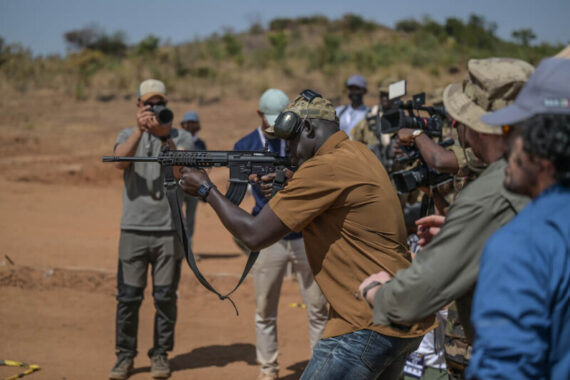
AMEX opened at Bamako’s exhibition park on November 9, with Chinese and German companies announced for the first time alongside the Turkish ones. The exhibition ran for three days, followed by field demonstrations near Koulikoro. Aliou Sylla, operations director at Cartouche du Mali, known as Carma-Sarl, came with a factory to talk about. The company has made hunting cartridges for 26 years, by its own account, and sells them elsewhere in the region. Sylla wanted to meet Turkish manufacturers and hoped for help from the Malian administration. No partnership has been announced.
Mali has bought its military equipment abroad for years, and the government now says it wants part of that equipment made at home. In January 2025, President Assimi Goïta declared plans to assemble small arms and light tactical vehicles and to manufacture ammunition and explosives for civilian use. The announcement carried no budget or production figures, and no Malian contractor was named.
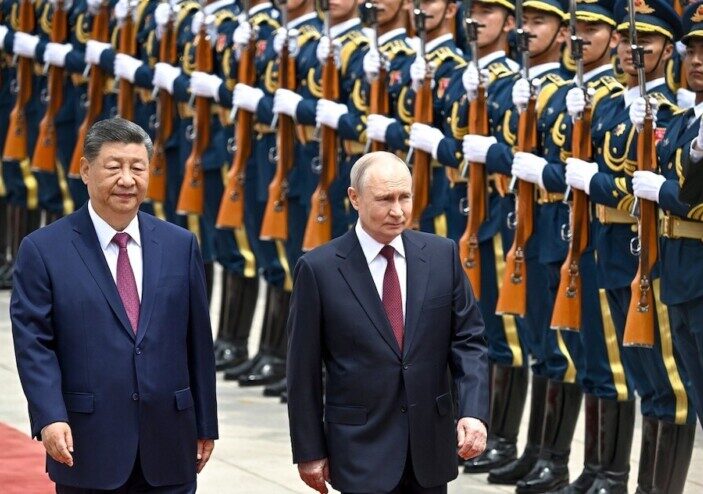
Norinco, whose armored vehicles and SR-5 rocket launchers took part in the independence parade in Bamako in September 2025, had signed an agreement with Mali a year earlier that included technology transfer in areas not made public. The closest thing to a concrete project with a foreign partner is civilian: in January the cabinet approved a 51% stake in an explosives company with Auxin, a Norinco subsidiary that will provide financing and technical expertise for a plant serving gold and lithium mines.
Carma, at least, exists and already sells. Its cartridges are made for hunters, though, and a military order would come with specifications, testing and permissions of its own. The company would have to meet them alone or with a foreign partner, which may be why Sylla’s request for help from the administration says as much as his interest in Turkish firms.
At Markala, the Central Military Workshops repair and maintain equipment for the armed forces and do metalworking too. In March, their director, Colonel Djibril Kané, presented results for 2025: 71.59% of planned production activities had been completed, and work on structural projects under an agreement with the Office du Niger had reached 49%.
Both figures measure the workshops against their own plans. How many vehicles or parts that means, nobody outside can tell. The workshops’ own list of what held them back says more: power cuts, fuel shortages, late financing, worn-out machinery and too few qualified workers.
The wider economy has the same problem. An IMF assessment last year estimated that outages lasting 10 to 16 hours a day, as recorded in 2024, could shave 0.5 to 0.8 percentage points off annual growth. Conditions improved somewhat in 2025, yet Markala’s own report shows energy and fuel still disrupting its program.
An assembly line would meet the same constraints. Machines are the easy part to buy. Keeping them running takes reliable electricity, trained technicians and funding that arrives on time.
Niger came to BAMEX with a different account of what local industry might look like. Its technology officer, Moumouni Sounna Hassane, described military engineers who had designed secure video-conferencing software, tools for protecting documents, a telephone system, armored vehicles and drones. The list came without figures, so nobody can say how many systems are in service or how much of the equipment is made in Niger.
Writing secure software, modifying an armored vehicle and assembling a drone call for different skills. Treating them as equivalent achievements would tell us little about industrial capacity. Mali’s own N’Gelèni, a drone from Diakité Aerial Engineering with petrol and electric versions, is described locally as designed and built in the country; its maker says military options are still in development, and production figures are not public.
In September, President Ibrahim Traoré announced that Faso Armor had produced nearly 300 armoured vehicles since November 2025. One report, based on an unnamed military source, describes parts salvaged from older vehicles being fitted to armoured pick-ups. That account has not been independently verified.
The published figures leave new builds and conversions mixed together. Armouring pick-ups for the roads of the north and east may be exactly what the army needs, but it is different from manufacturing a complete vehicle.
For all three governments, the quicker returns probably lie in repair, software maintenance and spare parts rather than in complete weapons systems. That work is easier to price and to test, and it lets a domestic firm build a record before bidding for anything technically demanding.
Recommended
Regular orders are what let a manufacturer pay for new equipment and train workers. Carma has the experience and an export market. Its dealings with the Malian army, if any, are not public.
The government has been reviewing its purchasing rules. On July 24, the cabinet approved a draft decree revising which defence and security purchases fall outside ordinary tender procedures. Ministers approved another draft on 12 August, this time on payment and delivery conditions for sensitive contracts involving foreign governments and companies. Both were announced as proposed regulations. Neither explains how Malian manufacturers could qualify for defence contracts.
Some secrecy around security purchases is normal. The government could still publish the number and combined value of contracts awarded to Malian suppliers without disclosing any equipment. The 2025 Government Defence Integrity Index gave Mali 20 out of 100 for procurement safeguards, which indicates very high institutional corruption risk. It is not a finding of wrongdoing by Carma or by any company at the exhibition.
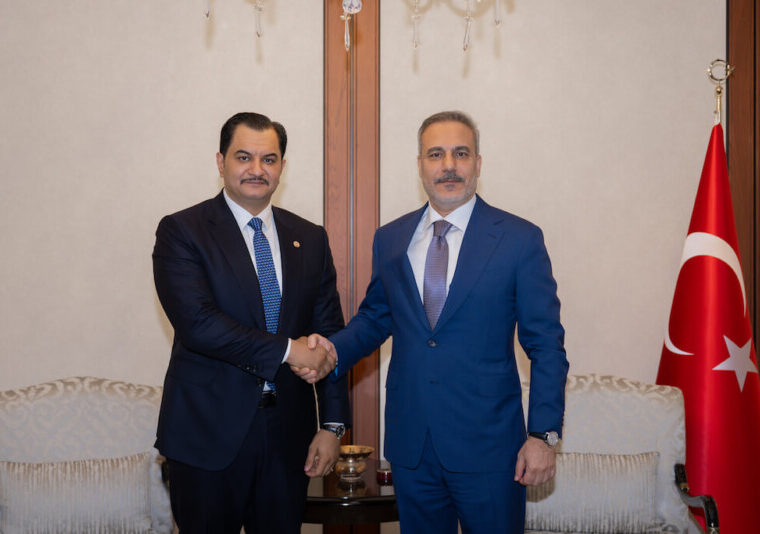
Foreign minister Abdoulaye Diop called for technology transfer during BAMEX, and on November 11 Goïta received a Turkish delegation to discuss military and technical cooperation. A manufacturer experienced in meeting military specifications could help a firm like Carma qualify. The order itself would still be Bamako’s decision.
A foreign partner may turn out to be the easier part for Carma. The harder one is a buyer at home.

Göktuğ ÇALIŞKAN is a PhD candidate at the International University of Rabat (UIR) in Morocco, conducting research as a scholar of the Turkish Ministry of National Education (YLSY program). Simultaneously, he serves as an International Relations Specialist at ANKASAM. He holds undergraduate degrees in Political Science and Public Administration (Ankara Yıldırım Beyazıt University) and Law (Erciyes University). He completed his master’s studies at Ankara Hacı Bayram Veli University and UIR (in French). His analyses on global politics and security have been featured in various international outlets, including Türkiye Today, Daily Sabah, TRT Afrika, and FokusPlus.
You can see how this popup was set up in our step-by-step guide: https://wppopupmaker.com/guides/auto-opening-announcement-popups/

Stay informed by subscribing to
our weekly newsletter.
You can see how this popup was set up in our step-by-step guide: https://wppopupmaker.com/guides/auto-opening-announcement-popups/
You can see how this popup was set up in our step-by-step guide: https://wppopupmaker.com/guides/auto-opening-announcement-popups/
You can see how this popup was set up in our step-by-step guide: https://wppopupmaker.com/guides/auto-opening-announcement-popups/
You can see how this popup was set up in our step-by-step guide: https://wppopupmaker.com/guides/auto-opening-announcement-popups/