O
ne of the greatest aspirations of a journalist with an interest in international relations is to cover events held in various parts of the world where global issues are debated (such as the NATO Summit, the UN General Assembly, the G20, etc.). In a professional climate where conventional media is losing its importance on the international stage day by day, and whilst the financial clout of the media is eroding and investment in certain sectors is being cut back, the likelihood of a journalist attending such summits is also declining day by day.
In the current climate, the hosting of an organization such as NATO in Turkey presented a significant opportunity for our colleagues in Turkey. Although journalists and television professionals, myself included, had only limited opportunities to engage with leaders due to the nature of the event, we did manage to soak up the atmosphere of the summit.
Turkey is the only NATO member state with a Muslim majority. The 2026 summit was set to have a distinct character for this reason alone. However, factors such as the ongoing tension between Iran and the US (which had been reignited just hours before US President Trump landed in Ankara when he ordered a new strike), the continuing disagreement between the US and its European allies, and the deadlock in the Russia-Ukraine war all served to make the summit even more significant.
Details of the Trump–Erdoğan meeting
The meeting that fuelled the intrigue at the NATO Summit was the encounter between President Erdoğan and US President Trump. Once the rumours circulating days beforehand – that ‘Trump would not attend the summit due to his anger towards NATO members’ – were dispelled, our focus shifted to the nature of the bilateral meeting. The last time a US President had made an official visit to Turkey was in 2009.
Following the visit by then US President Dwight D. Eisenhower (1953–1961) in 1959, the chain of visits continued with George H. W. Bush (1991), Bill Clinton (1999), George W. Bush (2004) and Obama (2009), had been interrupted during Trump’s first term and had not even been on the agenda during Joe Biden’s term (2020–2024). Whilst Trump’s visit marked a turning point in this sense, current issues (the F-35 procurement process, CAATSA, etc.) were also raising the stakes.
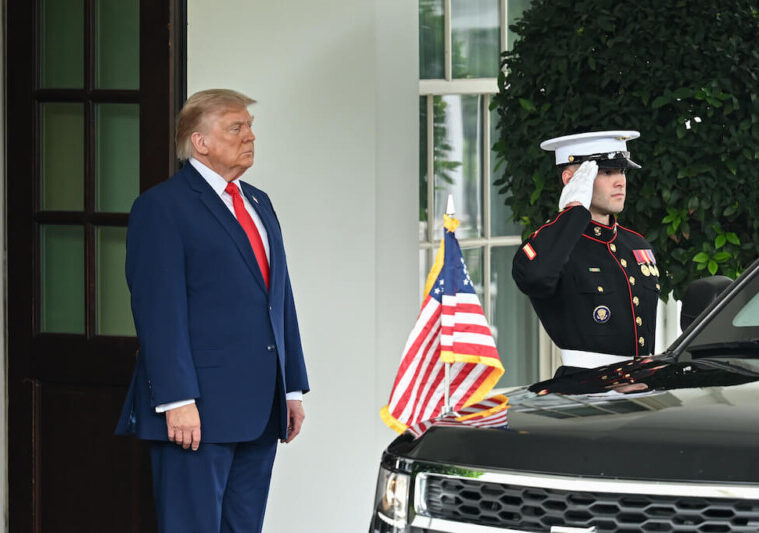
Despite the scrutiny that began days in advance, logistical and protocol details were kept strictly confidential right up to the last moment. Contrary to expectations, Trump’s aircraft landed at the newly opened Ankara Airport (and the fact that he returned from Esenboğa on an older model aircraft also raised questions. However, technical reasons related to security were cited as the justification). President Erdoğan welcomed Trump at the airport with a gesture reserved for a select few guests.
Upon arriving at the welcoming ceremony at the Presidential Complex, we noticed a different arrangement in the preparations. The ranks of the mehteran band, which usually performs at routine receptions, had been reinforced, and additional units of Janissary soldiers had been deployed. The two leaders’ delegations were also positioned on a platform that differed from the norm. The leaders’ senior advisers (foreign ministers, defense ministers, ambassadors) held their initial discussions on this platform. The flypast by the Turkish Stars, comprising six F-5s, which was part of the welcoming ceremony, was precise and went off without a hitch.
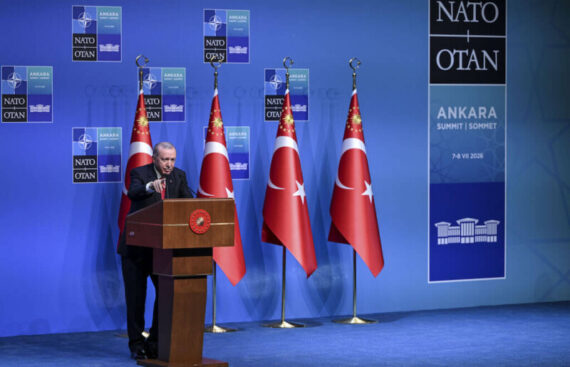
The most exciting moment of the entire process was the joint press conference. The format we are accustomed to in a standard leaders’ meeting is press conferences held in the main hall following discussions between the leaders and their delegations. On this occasion, however, it was announced that only a limited number of journalists would be allowed into President Erdoğan’s office. We were therefore swiftly directed towards the room.
The organizers informed us that journalists wishing to ask questions would need to be ‘quick off the mark’, as the format of the press conference would be modelled on the ‘Oval Office Rules’. I recalled the format we’d seen on TV screens. In those press conferences, held in a small room with Trump and the visiting leader flanked by their aides, it was the loudest who won and secured the floor. Once the floor was opened for questions, although American journalists took the lead with the first questions, my Turkish colleagues and I also managed to ask our questions by adopting a forceful and boisterous approach to secure the floor.
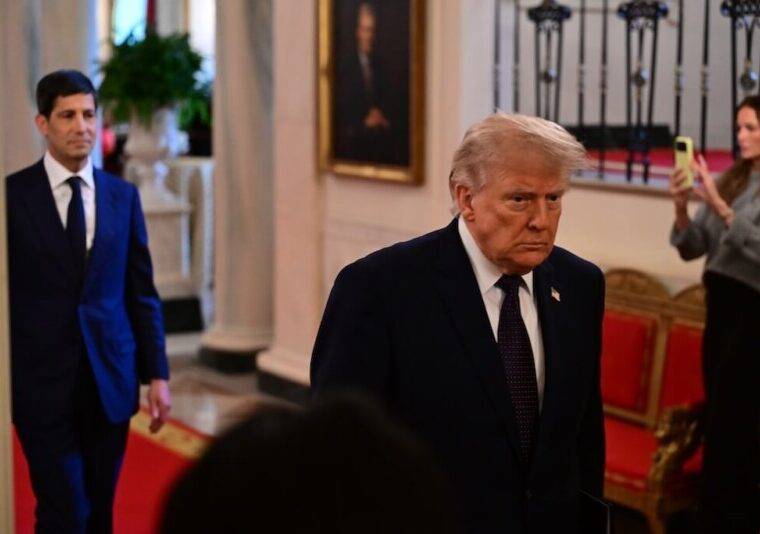
US President Trump gave the floor to ask my question, which touched on the Iran-US tensions. Throughout the meeting, Trump delivered positive messages, particularly regarding CAATSA restrictions and the F-35s. It is also worth noting that, unlike the bilateral meetings held in the Oval Office – which were characterised by Trump’s impulsive responses – there were no remarks from the Trump-Erdoğan talks in Washington or Ankara that would cause any friction.
The factors driving the relationship between the two leaders beyond the usual bounds to a positive momentum are seen as their ability to strike the right balance in their dialogue, the fact that their communication predates the presidency, and the continued flow of contact following Erdoğan’s message to Trump even after he lost the 2020 election. Another important factor is that Trump has framed the Erdoğan–Biden tension as a positive reference point. The animosity towards Biden, which he mentions in almost every speech, also lends extra credibility to those who have had difficulties with him. Ironically, in Trump’s political analysis, the Evangelical vote—which solidified following the release of Pastor Brunson—has also made a positive contribution to the new course of Turkey–US relations.

What happened at the summit?
Opportunities to engage with leaders at the NATO Summit are very limited. One such opportunity is the ‘doorstep’ – the area where leaders give impromptu interviews on the morning of the summit. Not every leader makes an appearance here. It generally provides an opportunity for leaders of small and medium-sized countries, who are often out of the spotlight, to make their voices heard. Danish Leader Frederiksen, commenting on Trump’s continued interest in Greenland, emphasized their stance by stating, “We will defend every inch of our land; this is why we are in NATO.” UK Prime Minister Starmer, who is due to step down upon his return, was cautious; he did not answer any questions and was not particularly talkative. Although French President Macron’s name was on the list, he was busy completing his now-traditional run at the time.
Even the order of arrival at the venue for the leaders’ summit has become a form of image management. Leaders from countries such as the US and France arrive last. Following the smooth participation of all 32 leaders in the much-anticipated session of the summit, attention turned to what was being discussed inside. The information received pointed to a positive atmosphere. It was noted that US President Trump listened to all the leaders who spoke. It was reported that Trump, who remained until the end of the session, did not address any contentious issues (such as the tensions with Spain, the Greenland issue, or tensions with European countries).
It was stated that Spanish Prime Minister Sánchez, in a constructive speech, emphasized that his country’s contribution to NATO should be measured not by mathematical figures but by the rate of achievement of strategic objectives. The extent to which Sánchez’s speech, which emphasized resolve, managed to cool Trump’s fixation on figures will become clear through future rhetoric and policies. It was noted that the US delegation heard the approach they had sought from all their allies during the leaders’ session.
Following the session, the summit effectively concluded with the leaders’ bilateral meetings and the press conferences they held. The most eagerly anticipated of these meetings was undoubtedly Trump’s. Before the US leader took to the podium following NATO Secretary-General Rutte—who had used the hall before him—there was not a single empty seat in the hall, nor even a suitable place to stand. The hall was completely cleared before the US President took to the stage; journalists were only allowed back in after security checks. Among the dozens of journalists vying for the chance to ask a question, the lucky ones were generally our American colleagues sitting in the front row, who had opted for colorful attire.
Trump’s summit marathon, during which he answered questions in a positive and conciliatory manner, concluded on a positive note despite the harsh messages that occasionally resurfaced in some of his press statements. President Erdoğan also held his final press conference as the host. Having followed all these proceedings, having observed that, unlike their foreign counterparts, Turkish journalists tend to include lengthy comments in their questions and drag out the subject before getting to the point, I feel it is worth emphasizing that there is a clear structural problem in this regard. As Turkish journalists, we do not know how to ask questions properly.
Recommended
A farewell without the usual ‘See you next year’
The NATO Summit concluded without any major hitches. The international media community was highly satisfied with the facilities provided. The complimentary buffet service exceeded expectations, and the goody bags and kits presented to journalists were shared in vlogs. However, the development that particularly surprised the foreign leaders occurred right at the end. The gift of a revolver (firearm) engraved with their names, presented to them by Turkey, took the majority of the foreign leaders by surprise. Some were unable to take the gift home with them due to legal restrictions in their own countries, whilst others announced they would donate it to a museum.
Nevertheless, the message behind the gift hit home. The fact that the gift at a summit where tough issues were discussed was in keeping with realistic geopolitical conditions served as a powerful metaphor and message. It is also worth noting that the specially produced pen, manufactured using domestic resources, was well received.
As summits of this kind draw to a close, attention turns to the next one, and the scheduled date is marked. This time, however, there is a degree of uncertainty, as the likelihood that the summit will not be held next year has increased. In fact, there is no explicit rule stipulating that the summit must be held annually; a proposal that has recently come to the fore suggests extending the summit cycle to every two years.
It is expected that this process will be clarified by the end of this year; what is certain is that the next stop will be Albania. Although it seems impossible to predict the course regional developments will take by that date, it appears unlikely that the opportunities and agenda offered by Turkey will be presented within the framework of that summit.
(Originally published in Turkish by Kriter)