Energy Security Concerns Drive Renewables Push Ahead of COP31 in Türkiye
Türkiye prepares to host and preside over COP31 in the Mediterranean city of Antalya this November.
June 5, 2026
R
ising geopolitical tensions and disruptions to global energy supplies have strengthened international momentum behind renewable energy and climate action ahead of the COP31 United Nations climate conference, according to the UN’s top official in Türkiye.
Babatunde Ahonsi told Anadolu that recent instability, including tensions surrounding the Strait of Hormuz, has exposed the vulnerability of an energy system heavily dependent on imported fossil fuels and reinforced the need to accelerate the transition to renewable energy sources.
“An energy system that is dependent on fossil fuel, and especially imported fossil fuel, has really sharpened minds and redoubled the commitment to accelerate movement towards renewable energies,” Ahonsi said.
His comments come as Türkiye prepares to host and preside over COP31 in the Mediterranean city of Antalya this November.
Ahonsi said the conference could mark an important shift in global climate diplomacy, moving discussions beyond negotiations and toward measuring countries’ progress on their climate commitments.
According to the UN official, previous climate summits achieved major milestones, including the Paris Agreement and subsequent commitments to limit global warming to 1.5 degrees Celsius above pre-industrial levels.
He noted that COP28 helped establish a broader international consensus on energy transition, while COP29 focused heavily on climate finance.
Now, Ahonsi believes COP31 should emphasize accountability.
“This is the COP at which we will have to transition from negotiations to verification,” he said, arguing that countries’ climate pledges should be increasingly measured, tracked, and independently assessed.
He added that global climate action has moved beyond scientific debate and now requires rapid implementation of proven solutions.
“We are no longer talking about the science. Now is the time to accelerate implementation,” he said.
Ahonsi said Türkiye’s geographic and diplomatic position could help facilitate consensus among countries with differing priorities.
He described the country as a bridge between East and West, North and South, connecting Europe, the Middle East, and Africa. He also pointed to Türkiye’s recent role in mediating international disputes as an asset in climate negotiations.
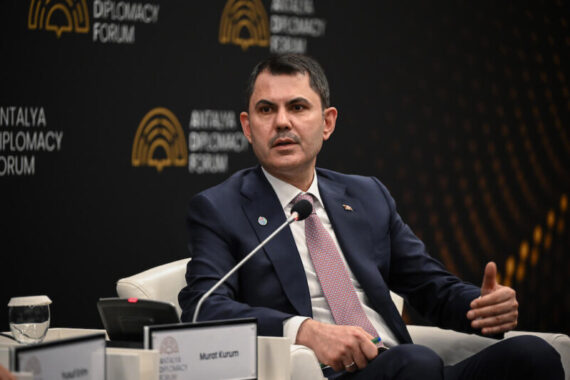
The UN official praised the leadership of Murat Kurum, who will serve as president of COP31, and said building trust among nations would be essential to achieving meaningful outcomes.
“Without trust, you cannot really have progress in terms of multilateral climate action,” Ahonsi said.
He also highlighted the significance of hosting the conference in the Mediterranean region, which scientists consider one of the world’s climate hotspots. The region is warming faster than the global average and faces increasing risks from heatwaves, droughts, wildfires, and water shortages.
Recommended
Ahonsi emphasized that Africa will remain a major focus of climate discussions, noting that the continent contributes relatively little to global greenhouse gas emissions while experiencing some of the most severe climate impacts.
He called for greater climate finance and technology transfers to developing countries, arguing that previous international commitments must now be translated into concrete action.
At the same time, Ahonsi stressed that Africa should not be viewed merely as a vulnerable region requiring assistance.
Instead, he described the continent as a vital partner in addressing climate change, citing its young population and growing capacity for innovation and adaptation.
“Africa should not be viewed as some vulnerable region that requires handouts,” he said. “It has to be about partnership.”
As governments prepare for COP31, energy security concerns, climate finance, renewable energy investment, and implementation of existing climate pledges are expected to dominate discussions, with the conference seen as a critical opportunity to accelerate global efforts to reduce dependence on fossil fuels and address the growing impacts of climate change.
(Source: Anadolu Agency)

Politics Today is dedicated to publishing insightful analyses in order to understand the changing nature of contemporary politics. It aims to contribute to the sound and constructive discussion of international affairs.
You can see how this popup was set up in our step-by-step guide: https://wppopupmaker.com/guides/auto-opening-announcement-popups/

Stay informed by subscribing to
our weekly newsletter.
You can see how this popup was set up in our step-by-step guide: https://wppopupmaker.com/guides/auto-opening-announcement-popups/
You can see how this popup was set up in our step-by-step guide: https://wppopupmaker.com/guides/auto-opening-announcement-popups/
You can see how this popup was set up in our step-by-step guide: https://wppopupmaker.com/guides/auto-opening-announcement-popups/
You can see how this popup was set up in our step-by-step guide: https://wppopupmaker.com/guides/auto-opening-announcement-popups/