T
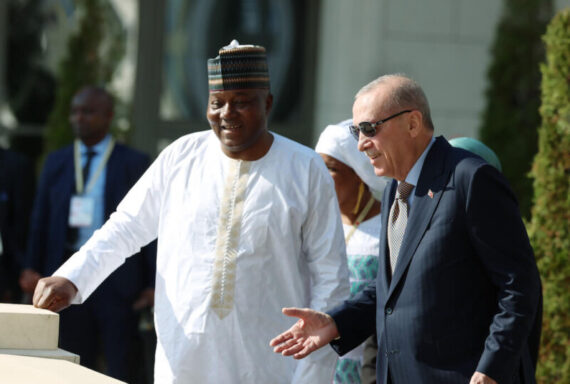
he official visit to Türkiye by Niger’s President Abdourahamane Tchiani, at the invitation of President Recep Tayyip Erdoğan, marks a new strategic milestone in relations between Ankara and Niamey. The fact that Tchiani was accompanied during his visit by a large delegation, including the ministers of defense, foreign affairs, energy, mining, the economy, agriculture and trade, demonstrates that relations between the two countries are progressing on the basis of multi-dimensional cooperation spanning from security to energy, and from trade to institutional capacity-building. For this reason, the visit should be assessed not merely as a routine diplomatic engagement between the two countries, but within the context of shifting power balances in the Sahel and Niger’s quest to diversify its external partnerships.
According to a statement from the Communications Directorate of Türkiye, following the meetings between President Erdoğan and Tchiani at the Presidential Complex in Ankara, three agreements and a joint declaration were signed between Türkiye and Niger in the fields of education, health, trade and diplomacy. Within this framework, a protocol regarding the implementation of the Memorandum of Understanding (MoU) on cooperation in higher education for the period 2026–2030, a joint declaration on the establishment of the Economic and Trade Partnership Commission (JETCO), a protocol on the joint operation and handover of the Niger-Türkiye Friendship Hospital, and a memorandum of understanding between the Diplomacy Academy of the Ministry of Foreign Affairs of the Republic of Türkiye and the National Institute for Diplomatic and Strategic Studies of the Republic of Niger.
To interpret the cooperation that has developed between Türkiye and Niger in recent years solely as a result of current security and economic needs would be an oversimplification. Relations between the two countries are based on a multidimensional cooperation where historical heritage, the pursuit of mutual trust and a shared strategic vision for the future intersect. The ties between the two countries stretch back to the cultural, political and strategic influence of the Ottoman Empire in Sub-Saharan Africa, particularly in Niger, during the 16th century. The relationships based on mutual trust that the Ottoman Empire established with local communities in the region, such as the Tebu and Tuareg peoples, who came under its administration, have left a historical legacy that continues to foster a positive perception of Türkiye in Niger.
Türkiye’s Africa policy
This historical legacy of the Ottomans gained further significance following Ankara’s institutionalization of its Africa policy through the ‘Action Plan for Opening Up to Africa’, launched by Türkiye in 1998. This process of opening up paved the way for diplomatic contacts with Niger to gain momentum from the 2000s onwards. The mutual opening of embassies by Türkiye and Niger in 2012, and the official visit to Niger by President Recep Tayyip Erdoğan in his capacity as Prime Minister in 2013, marked the beginning of a new era in bilateral relations.
Since then, Türkiye’s relations with Niger, which it regards as a strategic partner in Africa, have moved beyond diplomatic contacts to take on a more concrete character in areas such as energy, defense, trade, education and cultural cooperation. Ankara is strengthening the historical and cultural ties between the two countries through the Programme Coordination Office (PKO) of the Turkish Cooperation and Coordination Agency (TIKA) and the schools run by the Türkiye Maarif Foundation. In the health sector, one of the most significant steps, the Niger-Türkiye Friendship Hospital, was opened in October 2019. Through these measures, Türkiye aims to establish a long-term, multi-dimensional partnership with Niger, rather than pursuing a policy focused solely on economic interests.
Following the coup in Niger in 2023, Türkiye did not sever its diplomatic ties and continued its strategic investments whilst maintaining its interest in Niger. On 17 July 2024, a high-level delegation, including Foreign Minister Hakan Fidan, Minister of National Defence Yaşar Güler and Minister of Energy Alparslan Bayraktar, visited Niamey. During the visit, significant agreements were signed in the fields of security, energy and trade, whilst decisions on cooperation in the fields of education and health were also taken. Furthermore, the signing of a declaration of intent for cooperation in the oil and natural gas sector during these talks, and the signing of a Memorandum of Understanding (MoU) on cooperation in the mining sector in October 2024, demonstrate that relations between the two countries have now extended to the energy and mining sectors as well.
Recommended
The fight against terrorism
Other key issue that came to the fore between the two countries in recent years is cooperation in the fight against terrorism and in the field of security. Niger is one of the countries most affected by the rise in terrorist incidents in the Sahel in recent years. The country is exposed to terrorist activities by the Al-Qaeda-linked JNIM and the ISIS-linked ISSP, particularly in its western border regions via the Liptako-Gourma security zone, and by ISWAP and Boko Haram elements in the south-east via the Lake Chad Basin. In this context, where Niger has terminated its military cooperation with Western partners, notably France and the US, Türkiye is emerging as a reliable strategic partner thanks to its growing defense industry capacity, experience in counter-terrorism, security cooperation and active diplomatic initiatives.
These factors are strengthening the strategic dimension of relations between the two countries and ensuring that Türkiye is viewed as an important partner by Niger. In this context, Niger, which cooperates with Türkiye in the fields of defense and security, is importing various defence industry products from Türkiye to enhance its capacity in the fight against terrorism. Furthermore, the On-Site Training Support Protocol signed in April 2026 demonstrates that security cooperation between the two countries is not limited to the supply of defence industry products, but also encompasses military training support and intelligence. It is evident that, through these collaborations, Niger aims to achieve its objective of conducting more effective and successful counter-terrorism operations.
One of the key pillars of the developing relations between the two countries is the strengthening of economic ties and trade. Following the military intervention in Niger in 2023, the country has gone through a difficult period due to sanctions imposed by the Economic Community of West African States (ECOWAS) and the suspension of financial support and security cooperation by Western partners. During this difficult period, Niger’s Prime Minister and Minister of Economy and Finance, Ali Mahamane Lamine Zeine, visited Türkiye to strengthen economic and political ties. Within this framework, Türkiye has continued to develop its economic relations with Niger.
Investments in the energy, mining, construction and trade sectors have not only enhanced Türkiye’s economic presence in Niger but have also contributed to Niger’s efforts to diversify its development and external partnerships. Indeed, the fact that the volume of trade between Türkiye and Niger is projected to rise from approximately 38.9 million dollars in 2012 to 273 million dollars by 2025 is one of the concrete indicators of this economic rapprochement. In the same year, Türkiye’s exports to Niger amounted to 214 million dollars, whilst imports from Niger stood at 59 million dollars. Furthermore, the signing of the joint declaration on the establishment of JETCO during Tchiani’s visit to Ankara can be regarded as a significant step towards conducting economic cooperation on a more structured and institutionalized basis.
In conclusion, these developments demonstrate that the multi-dimensional cooperation between Türkiye and Niger, which has gained momentum since 2020, has moved beyond diplomatic rhetoric and has begun to produce tangible results through trade, institutional agreements and sectoral partnerships.
(Originally published in Turkish by the Middle East Africa website)