Houthis Advance Along Yemeni Coast, Threatening Saudi Oil Exports in Red Sea
The Houthis' advance has raised concerns about the security of shipping through the Bab el-Mandeb, a narrow passage connecting the Red Sea with the Gulf of Aden
September 11, 2026
I
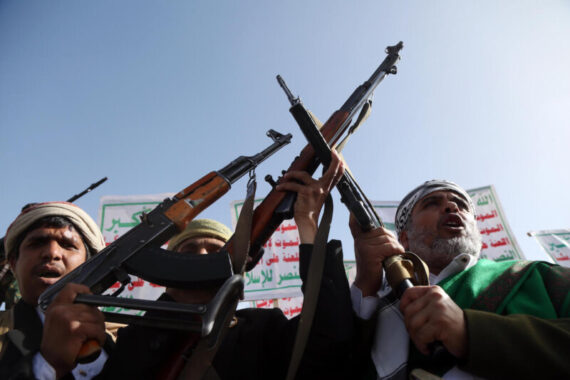
ran-aligned Houthi forces seized control of Yemen’s Red Sea port city of Mocha on Thursday and advanced toward strategic islands near the Bab el-Mandeb Strait, escalating a conflict that threatens one of the world’s most important maritime routes and Saudi Arabia’s ability to export oil.
Yemeni government military sources said the Houthis had moved toward the Hanish Islands after taking Mocha, giving the group greater leverage over the southern entrance to the Red Sea. The developments came as fighting between the Houthis and Saudi-backed Yemeni government forces intensified along the coast.
The advance has raised concerns about the security of shipping through the Bab el-Mandeb, a narrow passage connecting the Red Sea with the Gulf of Aden. Control of the waterway could provide Iran, which supports the Houthis, with an important strategic advantage amid its wider confrontation with the United States.
The Houthis’ humanitarian operations coordination centre said Red Sea navigation remained safe for shipping companies except for Saudi vessels, effectively highlighting the growing threat to Saudi maritime interests.
Saudi Arabia, the world’s largest oil exporter, has increasingly relied on the Red Sea route after the war in the region effectively disrupted traffic through the Strait of Hormuz. Before the conflict, Hormuz carried roughly a fifth of global oil supplies.
Yemeni government forces and their allies were relocating south along the Red Sea coast toward Dhubab, near the Bab el-Mandeb and opposite Perim Island. Military sources said control of Dhubab and Perim would be strategically important for controlling access to the strait.
The latest Houthi gains prompted warnings from the United Nations about the wider consequences of the escalation.
UN Special Envoy for Yemen Hans Grundberg told the UN Security Council that the international community must respond to what he described as a “new and more dangerous phase” in Yemen’s conflict. He said the Houthi capture of Mocha had given the group a direct presence near one of the world’s most vital maritime passages and raised serious concerns about freedom of navigation.
The United States accused the Houthis of acting as agents of Iran. Jenifer Neidhart de Ortiz, the US representative at the Security Council meeting, described the escalation as unacceptable and said those supporting the group would bear responsibility for its consequences.
Iran, meanwhile, called for dialogue and said the Yemen conflict could not be resolved through military action or a blockade. Tehran did not address allegations that it had helped direct the latest Houthi offensive.
Yemeni, Iranian and regional sources told Reuters that members of Iran’s Revolutionary Guard Corps had provided direct guidance to the Houthis during their advance along the coast.
Houthi spokesperson Mohammed Abdulsalam said the group’s operations were defensive and would end if attacks on Yemen stopped. The Houthis entered the wider regional conflict in March with an attack on Israel and declared a naval blockade against Saudi Arabia in July, followed by an escalation in attacks this month.
The fighting has also intensified in other parts of Yemen as Saudi-backed forces attempt to halt the Houthi advance. Saudi civil defence authorities issued emergency alerts in the southwestern city of Khamis Mushait for the fourth time within 24 hours as Houthi attacks continued.
Pakistan has also attempted to prevent the conflict from spreading further. Islamabad delivered a warning to Iran urging Tehran to rein in the Houthis and prevent Riyadh from launching a broader response. According to Saudi, Pakistani and Iranian sources, a senior Iranian official responded that Iran did not control the Houthis.
The escalation is occurring alongside the largest declared wave of US-Iranian attacks on Gulf shipping since the war began in late February.
Recommended
Financial markets reacted quickly to the latest developments. Brent crude prices rose as much as 4% on Thursday, climbing above $105 a barrel as investors became increasingly concerned about disruptions to oil supply routes.
In the United States, the average diesel price surpassed $6 a gallon for the first time, according to GasBuddy. Rising fuel costs are adding to economic pressure at a time when the administration of President Donald Trump is facing growing political concerns over the impact of the war.
Trump said Thursday that he continued to expect the Iran war to end immediately after the November midterm elections. He rejected suggestions that he regretted the conflict despite its economic and political consequences, saying he would make the same decisions again.
The war has contributed to a sharp increase in fuel prices and weakened Trump’s political standing, according to polls. Republicans face the prospect of voters judging the administration over the cost of living and energy prices as they seek to retain control of Congress.
The conflict has also complicated efforts to restore traffic through the Strait of Hormuz. Washington had recently pointed to increasing success in guiding tankers through the waterway, but renewed fighting has undermined that progress.
Only seven vessels passed through Hormuz on Wednesday, according to preliminary ship-tracking data, roughly half the 10-day average.
Iranian state media reported that the Revolutionary Guards Navy had struck a US unmanned vessel at the entrance to the strait on Thursday, adding to concerns over the safety of commercial shipping.
The simultaneous pressure around Hormuz and the Bab el-Mandeb has created a potentially significant threat to global energy markets. Further Houthi gains along Yemen’s Red Sea coast could increase risks for Saudi oil exports while restricting another major route for international trade.
With the Yemen conflict becoming increasingly connected to the wider US-Iran confrontation, the latest developments have raised fears that disruption in the region could persist even as Washington seeks a path toward ending the broader war.
(Source: Reuters)

Politics Today is dedicated to publishing insightful analyses in order to understand the changing nature of contemporary politics. It aims to contribute to the sound and constructive discussion of international affairs.
You can see how this popup was set up in our step-by-step guide: https://wppopupmaker.com/guides/auto-opening-announcement-popups/

Stay informed by subscribing to
our weekly newsletter.
You can see how this popup was set up in our step-by-step guide: https://wppopupmaker.com/guides/auto-opening-announcement-popups/
You can see how this popup was set up in our step-by-step guide: https://wppopupmaker.com/guides/auto-opening-announcement-popups/
You can see how this popup was set up in our step-by-step guide: https://wppopupmaker.com/guides/auto-opening-announcement-popups/
You can see how this popup was set up in our step-by-step guide: https://wppopupmaker.com/guides/auto-opening-announcement-popups/