Will the “Institutionalization” of Türkiye-Iraq Relations Take Root?
From Türkiye’s perspective, Iraq is a strategic region that could become one of the hubs of regional trade, energy corridors, and logistics networks
September 14, 2026
I
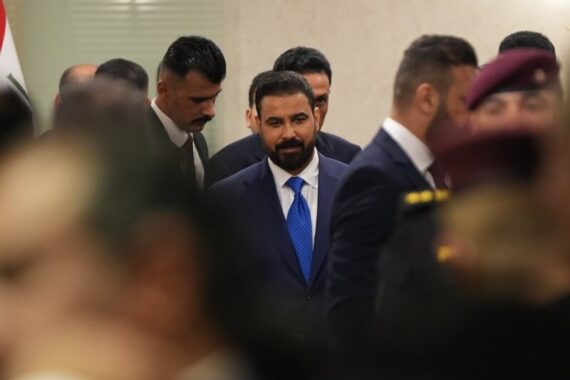
n a geopolitical landscape where the region is in a state of upheaval, Ankara and Baghdad are seeking to institutionalize their bilateral relations, which have evolved over many years. Iraqi Prime Minister Ali Al-Zaidi, following his first foreign visit to the U.S. on July 14, visited Iran on July 23 and Türkiye on July 28. Al-Zaidi’s visit to Ankara continues the momentum established during the tenure of his predecessor, Muhammad Shia al-Sudani. Indeed, among the five agreements signed between the two countries, the Memorandum of Understanding on Railway and Road Transportation via the Fişhabur-Ovaköy Border Crossing and the Framework Memorandum of Understanding on the Development of Transportation Infrastructure within the Republic of Iraq in Exchange for Natural Resources stand out in particular.
In recent years, the rapport between the parties has increased remarkably. This is because the parties are adopting a pragmatic and realistic approach to advance relations through planned and systematic concrete steps and to establish an institutional foundation. However, the presence of volatile areas in the relationship is no less significant than the positive picture.
At a time when U.S. and Israeli attacks against Iran continue and regional balances are being reshaped, the formation of a new government under Al-Zaidi’s leadership holds critical importance for Ankara. Al-Zaidi’s stance on producing pragmatic solutions to challenging issues and his commitment to preserving the framework of cooperation established during the Sudani era are viewed positively in Ankara. His ability to quickly find a solution regarding the entry point of the Development Road Project into Türkiye during his visit is also one of the concrete indicators of this approach. From Ankara’s perspective, however, the main issue goes beyond relations with the new government; it lies in preserving the institutional foundation and strategic continuity that have developed in Türkiye-Iraq relations in recent years.
Turkish Foreign Minister Hakan Fidan’s statement—made during the debates over Nuri al-Maliki’s premiership—that “we will work with whoever comes to power” also reflects Ankara’s effort to ground its Iraq policy on a more principled and institutional foundation rather than tying it to specific actors. Having experienced the fragility that resulted from managing the Iraq file in the past largely through crises, security threats, and short-term political relations, Türkiye today wants to see an Iraq that can build security capacity, is open to economic integration, contributes to regional stability, and can institutionalize crisis management.
Ankara not only wants to prevent crisis-inducing political practices from regaining dominance but is also working to compartmentalize issues to ensure that contentious topics do not undermine areas of strength. The issue that stands out in this new approach is the economy.
Bilateral trade continues to hover around the $20 billion mark. Indeed, economic issues were the main focus during Al-Zaidi’s visit. Turkish President Recep Tayyip Erdoğan’s announcement at a joint press conference with Al-Zaidi that Iraq would supply Türkiye with one million barrels of oil per day indicates that the long-standing uncertainty regarding energy matters has been resolved. In addition, the acquisition by the Turkish Petroleum Corporation (TPAO) of a 15 percent stake in BP Energy Company of Kirkuk Limited is a result of Ankara’s desire to establish a stronger presence in Iraq’s oil sector.
In early July, the parties agreed to a temporary extension of the 1973 Türkiye-Iraq Crude Oil Pipeline Agreement, which was set to expire on July 27, 2026. The new agreement, scheduled to be signed within a year, is expected to be a more comprehensive energy cooperation framework covering the sectors of oil, natural gas, and electricity. Tensions between the parties over energy issues took on a new dimension following the arbitration case Iraq filed in May 2014 with the Paris-based International Chamber of Commerce (ICC). The case was based on the allegation that Ankara had violated the 1973 agreement by allowing the export of KRG oil via the Kirkuk-Ceyhan pipeline without Baghdad’s approval during the 2014–2018 period. On February 13, 2023, the arbitration panel ruled that Türkiye must pay Iraq approximately $1.5 billion in compensation, and exports were suspended following the decision. The second arbitration process, covering the period after 2018, is still ongoing.
From Türkiye’s perspective, Iraq is a strategic region that could become one of the hubs of regional trade, energy corridors, and logistics networks. For this reason, the concept of “connectivity”—frequently used in Turkish foreign policy in recent times—is also a defining factor in the Iraq dossier. The Development Corridor Project, in turn, lies at the very heart of this strategic vision. Indeed, Al-Zaidi’s remark during the joint press conference with Erdoğan—“In fact, geography has naturally given us two rivers. We want a third river as well. Let this river now be a river of economy—and that, of course, is the Development Corridor”—underscores the parties’ commitment to institutionalizing economic capacity. Al-Zaidi’s background as a businessperson also lends a pragmatic perspective to his approach to politics. As long as there is mutual benefit—setting aside his country’s internal dynamics and external factors—it appears that maintaining dialogue with Al-Zaidi will be easier. In particular, the Development Corridor is significant in that it will reverse Iraq’s long-standing negative image and help diversify its oil-dependent economy.
The crisis in the Strait of Hormuz following the U.S.-Iran War has elevated the project to an even more critical level. Nearly 80 percent of Iraq’s oil is transported via the Persian Gulf, and the Strait of Hormuz is the only exit point. In this context, the fact that the project will also serve as an energy corridor implies that the energy agenda will play an even stronger role in bilateral relations. Of course, the KRG’s objections to the project have not yet been resolved. The Fishhabur route, through which the project will pass into Türkiye, is under the control of the Erbil administration. Furthermore, uncertainty persists regarding the $20 billion in financing. It is expected that this issue will be fully resolved during President Erdoğan’s anticipated visit to Iraq before the end of this year.
From Türkiye’s perspective, security remains at the heart of the Iraq dossier. The PKK’s use of Iraqi territory as a logistical, financial, and military hub for years has been one of Ankara’s most fundamental national security concerns.
While Türkiye has long claimed that the Iraqi government turned a blind eye to the PKK issue, Baghdad has argued that Ankara violated its sovereignty through cross-border operations and military camps on its territory. Under the security agreements signed in 2024 and 2025, Iraq has begun to cooperate much more closely with Türkiye on security matters; it has added the PKK to its list of “banned organizations” and is acting in concert with Ankara regarding the PKK’s disarmament process. In particular, the approval of the framework law by the Turkish Grand National Assembly (TBMM) signals the resolution of one of the most contentious issues in bilateral relations.
Ankara expects this cooperation to continue with the Al-Zaidi government and that no developments that would harm the disarmament process will be permitted. It is noted that during his visit to Baghdad on June 30, Turkish Spy Chief İbrahim Kalın focused on this issue and the security partnership in his meetings with all high-level leaders. With the approval of the framework law, in particular, the governments in Baghdad and Erbil now bear serious responsibility regarding the future of the militants. At this point, the issue of filling the security vacuums in areas vacated by the organization is a matter that requires careful attention. Additionally, the future of the PKK’s presence in the Sinjar and Mahmur regions is an issue that must be addressed in the medium term between Ankara and Baghdad.
The sharing of the waters of the Euphrates and Tigris rivers—one of the key issues between Türkiye and Iraq—remains a festering problem in bilateral relations. Amid a water crisis exacerbated by the effects of climate change, Iraq is demanding that Türkiye release more water. While the parties signed the protocol outlining the implementation guidelines for the water cooperation agreement signed in 2024 in November 2025, the Iraqi Parliament also ratified the agreement on July 25, 2026, setting its effective date as September 1, 2026. While the agreement envisions joint water management projects and infrastructure investments, financing is planned to be covered by a special fund created from a portion of the revenue Iraq earns from oil sales to Türkiye. Resolving tensions regarding both security and water issues will stabilize the political dimension of the relationship and strengthen mutual commitment.
Recommended
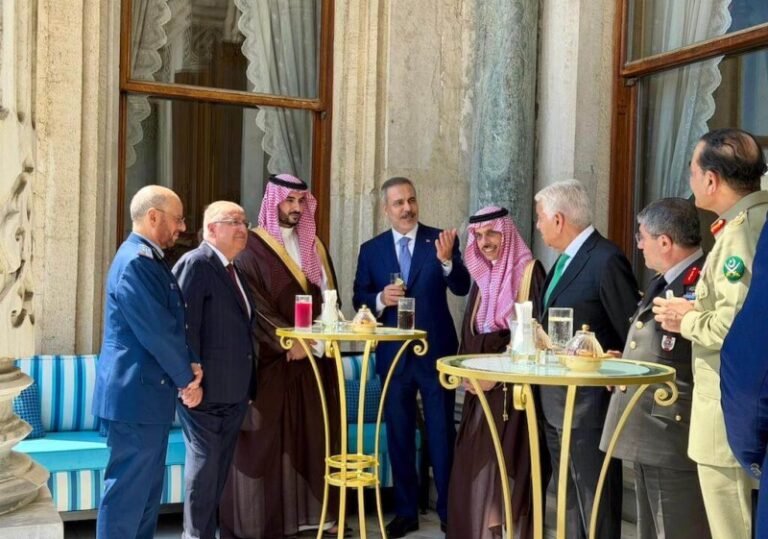
It appears that the United States is closely monitoring and supporting this new phase in Ankara-Baghdad relations. Indeed, U.S. Ambassador to Ankara and Special Representative for Iraq and Syria Tom Barrack met with Foreign Minister Fidan on July 27. The fact that this meeting took place one day before Al-Zaidi’s visit to Ankara indicates that the approaches regarding the future of the new regional order align between Ankara and Washington. Although discussions suggesting that the U.S. prefers to leave Syria and Iraq within Türkiye’s sphere of influence may be exaggerated, it is understood that coordination in this regard will at least continue.
One of the most significant challenges facing Türkiye’s policy toward Iraq on a regional scale is Iran’s influence in Iraq and the severe repercussions of U.S.-Iran tensions on Iraq. It is important to keep in mind that Al-Zaidi, who prioritizes the Western axis, is a potential candidate for compromise within a political landscape dominated by pro-Iranian forces. Despite this reality, Türkiye should encourage Iraq to position itself as a balancing actor that strengthens state capacity, enhances economic connectivity, and alleviates regional constraints. An Iraqi model in which security crises are categorized into manageable categories, trade is separated from political tensions, and state capacity is strengthened will not only anchor relations with Ankara on an institutional foundation but also strengthen ties with the entire region. As long as Iraq fails to break free from Iran’s sphere of influence and adapt to regional norms, its institutionalization efforts will lack a solid foundation.
(Originally published in Turkish by Kriter)

Mehmet Alaca is an academic researcher focusing on Iraq, regional Kurdish politics, and Shia militias in the Middle East. He holds an MA from the Department of Politics and International Relations of the Middle East at Exeter University in the UK.
You can see how this popup was set up in our step-by-step guide: https://wppopupmaker.com/guides/auto-opening-announcement-popups/

Stay informed by subscribing to
our weekly newsletter.
You can see how this popup was set up in our step-by-step guide: https://wppopupmaker.com/guides/auto-opening-announcement-popups/
You can see how this popup was set up in our step-by-step guide: https://wppopupmaker.com/guides/auto-opening-announcement-popups/
You can see how this popup was set up in our step-by-step guide: https://wppopupmaker.com/guides/auto-opening-announcement-popups/
You can see how this popup was set up in our step-by-step guide: https://wppopupmaker.com/guides/auto-opening-announcement-popups/